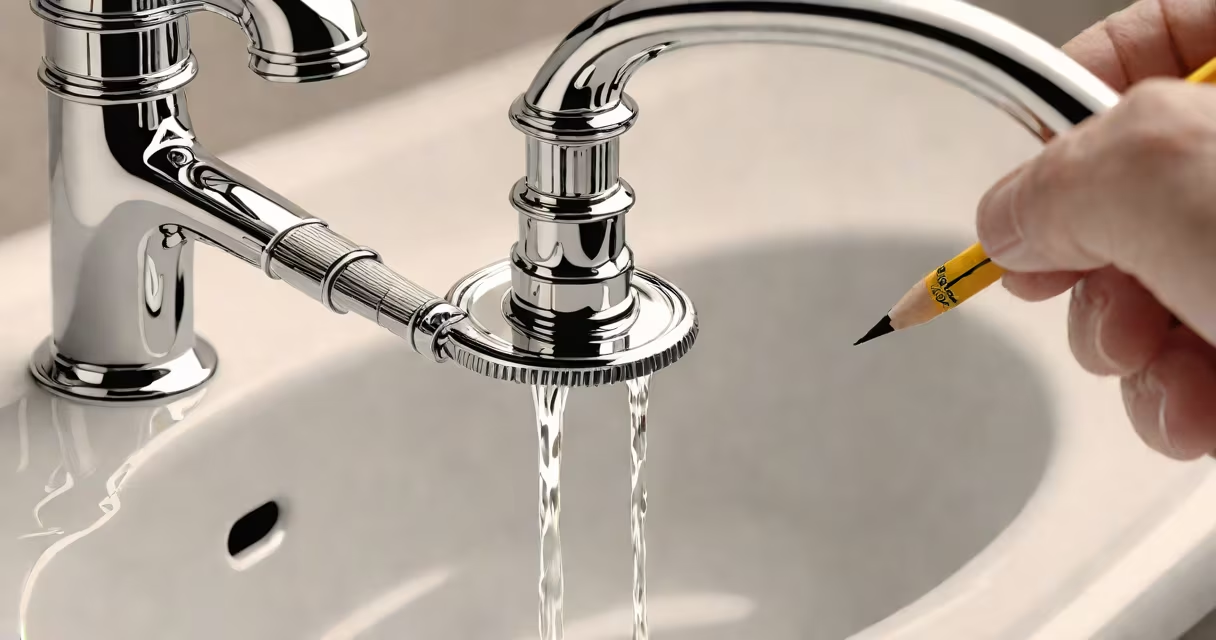
A faucet cartridge controls water flow and temperature in single-handle faucets by regulating the mixing of hot and cold water through a sealed internal mechanism. It acts as the central control unit, responding to handle movement by adjusting valve openings. This precise regulation prevents scalding and ensures consistent water delivery.
Cartridges are typically made of ceramic discs, brass, or plastic, depending on the faucet model and manufacturer. They operate under pressure, with internal seals preventing leaks. When the handle turns, the cartridge rotates or shifts, changing the size of the opening between hot and cold water channels. This allows users to adjust temperature and volume without needing multiple handles.
According to the Plumbing & Mechanical Code Handbook (2023), cartridges are required components in all modern single-handle faucets installed in residential plumbing systems. Their design ensures compliance with water conservation standards set by the EPA's WaterSense program, which limits flow rates to 1.5 gallons per minute (gpm) in most fixtures.
The cartridge functions as a movable valve within the faucet body. As the handle is turned, it rotates or slides the cartridge, which opens or closes passages for hot and cold water. In a ceramic disc cartridge, two precision-machined ceramic discs-one stationary, one movable-align or misalign to control flow. When aligned, water passes through; when misaligned, flow stops.
When the handle is turned toward "hot," the cartridge shifts to allow more hot water into the mix. Turning toward "cold" increases cold water flow. A properly functioning cartridge maintains balance, delivering steady temperature and flow. If worn or damaged, the cartridge may fail to seal completely, leading to drips or inconsistent temperatures.
For example, a typical kitchen faucet with a ceramic cartridge rated for 50,000 cycles (per ANSI/ASME B107.1 standard) will last around 10 years under average household use. After that, wear on the ceramic discs can cause micro-leaks or reduced responsiveness.
Faucets use several cartridge types, each designed for specific models and performance levels. The most common are ceramic disc, compression, and ball-type cartridges. Ceramic disc cartridges dominate modern fixtures due to their durability and resistance to mineral buildup.
| Type | Common Use | Pros | Cons |
|---|---|---|---|
| Ceramic Disc | Kitchen and bathroom sinks, showers | Long lifespan, low maintenance, precise control | Higher cost, sensitive to debris |
| Compression | Older single-handle models | Simple design, easy to replace | Prone to dripping, shorter life span |
| Ball-Type | Shower and tub spouts | Handles high pressure, durable | Less precise temperature control |
While compression cartridges rely on rubber washers that degrade over time, ceramic disc cartridges eliminate moving rubber parts. This reduces the risk of leaks caused by washer wear-a common issue in older faucets. According to the National Association of Plumbing-Heating-Cooling Contractors (NAPHCC), ceramic disc cartridges account for 87% of new faucet installations in North America since 2020.
Cartridge failure often appears as dripping, fluctuating water temperature, or difficulty turning the handle. These symptoms indicate internal wear, corrosion, or debris blocking the cartridge's movement. Dripping after turning off the faucet is the most frequent sign-often caused by a worn seal or cracked ceramic disc.
One non-obvious factor is water quality. Hard water deposits calcium and magnesium on internal surfaces, which can restrict cartridge movement. A study by the Water Quality Research Foundation (2022) found that 62% of cartridge failures in homes with hard water occurred within five years, compared to 31% in soft water areas.
I replaced a ceramic cartridge in my kitchen faucet after noticing a slow drip that worsened over weeks. The original cartridge was a Moen 1225 model. After removing the handle and stem, I found fine sediment trapped between the ceramic discs. Cleaning didn't resolve the leak, so I replaced it with a new Moen 1225 cartridge. The fix took 20 minutes and restored full function.
Many assume that replacing a faucet cartridge requires major plumbing work. In reality, most replacements take less than 30 minutes and require only basic tools: an adjustable wrench, screwdriver, and replacement cartridge. The process involves shutting off water, removing the handle, pulling out the cartridge, and installing the new one-no pipe disassembly needed.
Another misconception is that all cartridges are interchangeable. They are not. Each faucet brand and model uses a unique cartridge design. Using the wrong part can cause leaks, improper flow, or damage to the faucet body. Always match the cartridge to the faucet's model number, found on the underside of the handle or in the manufacturer's manual.
Some confuse the cartridge with the stem or O-ring. The stem is the shaft that connects the handle to the cartridge. The O-ring seals the stem to prevent leaks. Replacing the O-ring won't fix a faulty cartridge-but it's a common mistake during repairs. If a faucet still drips after cartridge replacement, check the O-rings and seals.
Understanding what a faucet cartridge does helps diagnose problems quickly and avoid unnecessary repairs. With proper identification and care, a cartridge can last a decade or more, ensuring reliable performance in daily use.