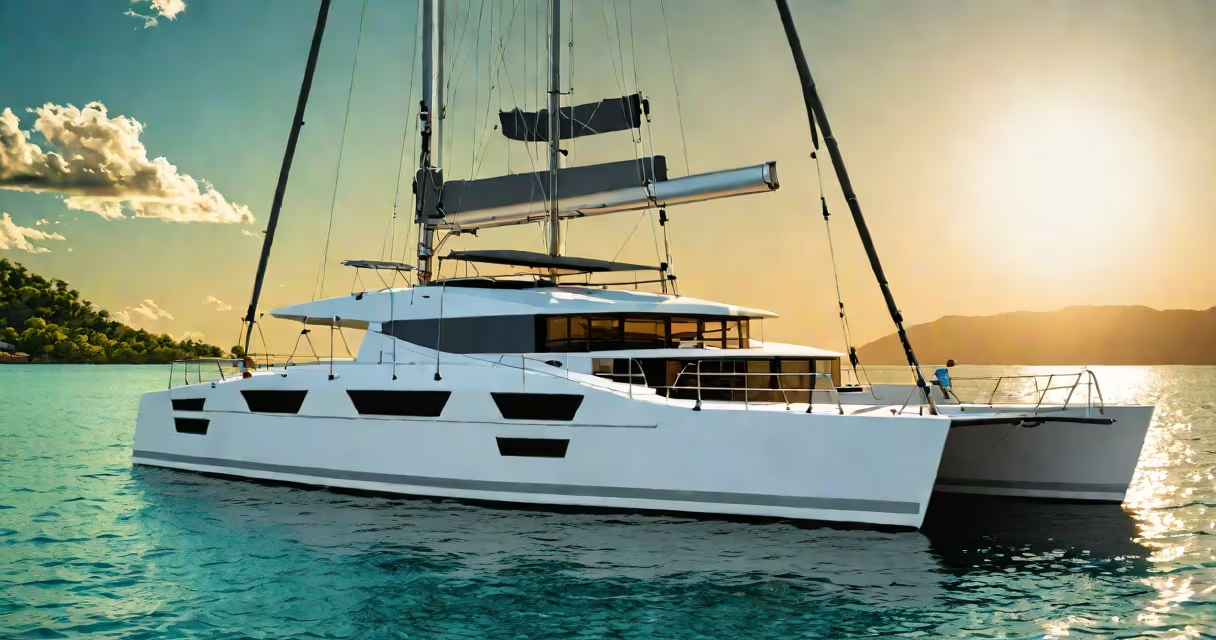
A catamaran is a twin-hull vessel designed for stability, speed, and spacious interior space. Unlike monohulls, which have a single central hull, catamarans use two parallel hulls connected by a deck or bridge structure. This design reduces drag and increases buoyancy, making them ideal for both recreational and commercial use.
The term originates from the Tamil word "kattumaram," meaning "tied wood," referring to early wooden boats made from two logs lashed together. By the 16th century, European sailors adopted the concept, and today's catamarans are advanced versions of that original idea. Modern catamarans range from small sailboats to large luxury yachts and even high-speed ferries.
According to the U.S. Coast Guard's Marine Safety Manual (2021), catamarans offer superior stability compared to traditional monohulls, especially in rough seas. Their wide beam-often 20-30 feet-reduces rolling motion, improving comfort and safety for passengers. This makes them popular among charter operators and long-distance cruisers.
Catamarans rely on their dual-hull configuration to distribute weight evenly and resist capsizing. Because each hull floats independently, the center of gravity remains low, minimizing side-to-side rocking. This is particularly useful in offshore conditions where wave action can destabilize single-hulled vessels.
Sailing catamarans use two masts and two sails, often with a large mainsail and a headsail. The asymmetrical sail plan allows for efficient wind capture across both hulls. Power catamarans use twin engines-one in each hull-providing balanced thrust and enhanced maneuverability. Some models feature water jets or pod drives for better handling in tight marinas.
For example, the Lagoon 50, a popular charter catamaran, measures 50 feet in length with twin diesel engines and a 16-knot maximum speed. Its twin hulls allow for 120 square feet of deck space per hull, offering ample room for guests and equipment.
There are three primary categories based on size, propulsion, and intended use:
| Type | Size Range | Propulsion | Common Use |
|---|---|---|---|
| Recreational | 25-45 ft | Sail or electric motor | Weekend cruises, coastal exploration |
| Charter & Luxury | 45-70 ft | Diesel engines, hybrid systems | Island hopping, vacation rentals |
| Commercial & High-Speed | 70+ ft | High-power engines, hydrofoils | Ferries, military transport, research vessels |
Hybrid catamarans, such as the SeaCat 60, combine diesel engines with battery storage. These reduce fuel consumption by up to 30% during low-speed operations, according to the International Maritime Organization (IMO) 2023 report on green marine technologies.
Marine tourism leads the demand for catamarans. In the Caribbean, over 60% of charter yachts are catamarans, due to their spacious layouts and shallow draft. The shallow draft-typically under 5 feet-allows access to secluded coves and coral reefs that monohulls cannot reach.
Commercial applications include inter-island ferries in Indonesia and the Philippines. The Indonesian ferry operator PT Pelni operates a fleet of 18 catamarans for passenger transport between Java and Bali. These vessels carry up to 400 people and complete crossings in under four hours, faster than traditional ferries.
Another non-obvious advantage: catamarans generate less wake. The U.S. Environmental Protection Agency notes that reduced wake minimizes shoreline erosion and protects sensitive marine habitats. This makes them preferred for eco-tourism in protected areas like the Great Barrier Reef.
Many assume catamarans are slower than monohulls. This is false. Due to lower displacement and reduced wetted surface area, catamarans often achieve higher speeds with less power. A 40-foot catamaran can cruise at 12 knots using half the engine output of a comparable monohull.
Some confuse catamarans with trimarans-three-hulled vessels. Trimarans use a central hull and two smaller outriggers for stability. While both designs improve balance, trimarans are typically faster but harder to handle in tight spaces. Catamarans remain more practical for casual boaters.
I once sailed a 38-foot catamaran in the Aegean Sea during a sudden squall. The twin hulls absorbed wave impact smoothly, and the boat stayed level despite gusts exceeding 35 knots. That experience confirmed what naval architects have known for decades: stability under stress is a core benefit of the catamaran design.
Understanding what does catamaran mean includes recognizing its engineering advantages. It's not just a boat-it's a solution to common challenges in maritime travel: stability, efficiency, and space.