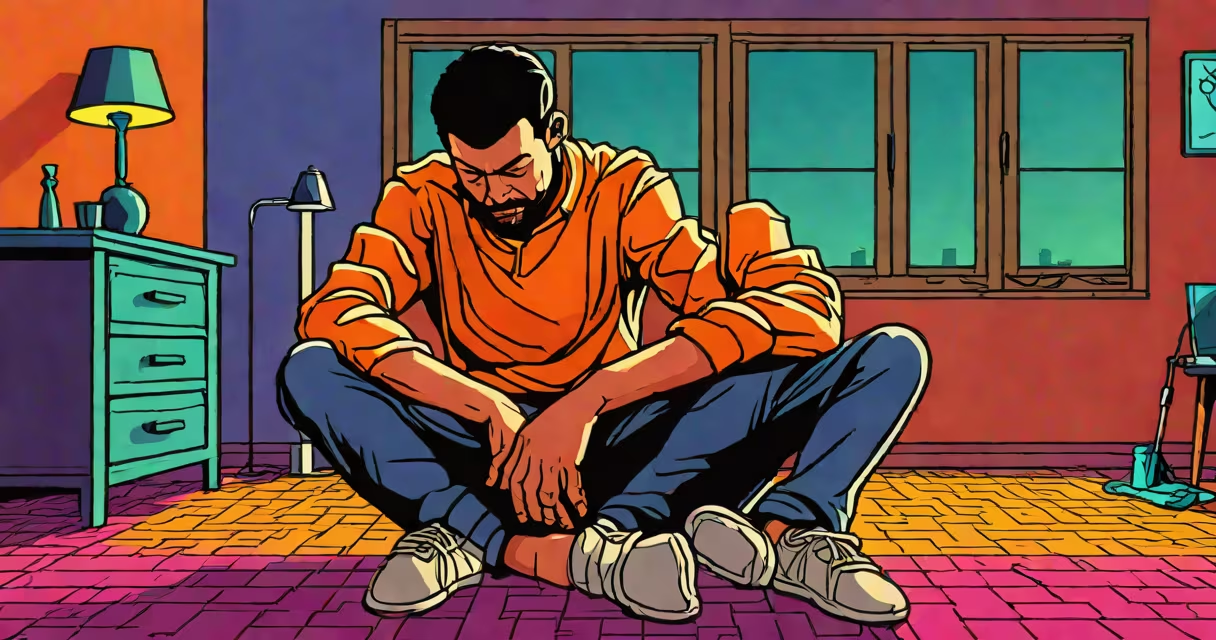
Chronic depression is a persistent state of low mood, fatigue, and emotional numbness lasting two years or longer, marked by an inability to feel joy, maintain focus, or function normally in daily life. It's not sadness that fades with time-it's a deep, unrelenting weight that affects thinking, movement, and relationships.
Unlike situational sadness or temporary low moods, chronic depression doesn't respond to typical coping strategies. It persists through good days and bad, often worsening without clear triggers. People describe it as living underwater-aware of everything around them but unable to move or react.
The American Psychiatric Association defines chronic depression (also called dysthymia or persistent depressive disorder) as symptoms lasting at least two years in adults and one year in children and adolescents. These include low energy, poor concentration, feelings of hopelessness, and changes in sleep or appetite. But the experience goes beyond checklist criteria-it's a lived reality shaped by silence, shame, and invisible effort.
People with chronic depression often report feeling emotionally disconnected-like they're watching their lives from behind glass. Joy feels foreign. Laughter seems to belong to someone else. Even positive events don't trigger relief or excitement. This isn't apathy-it's a neurological dampening of reward signals.
Mental fatigue is constant. Simple decisions-what to wear, whether to call a friend, if to eat-require monumental effort. One participant in a 2021 study published in *JAMA Psychiatry* described waking up each morning with a sense of dread so intense it felt "like carrying a backpack filled with wet cement."
Physical symptoms compound the mental strain. Insomnia or oversleeping, unexplained aches, and digestive issues are common. A 2022 review in *The Lancet Psychiatry* found that 68% of people with chronic depression reported chronic pain, often misdiagnosed as musculoskeletal or autoimmune conditions.
Many assume chronic depression is just "being sad" or "overreacting." But it's not a choice or a phase. It's a medical condition involving brain chemistry, genetics, and long-term environmental stressors. Unlike acute depression, which may follow a trauma or loss, chronic depression often lacks a clear origin story.
It's also frequently mistaken for laziness or lack of motivation. In reality, the effort required to get out of bed, shower, or make eye contact is immense. One patient told me during a support group meeting: "I didn't skip my job because I didn't care-I couldn't move. My body felt like it was made of stone."
Another misunderstanding is that people with chronic depression are always withdrawn. Some appear functional-holding jobs, maintaining routines-but internally, they're exhausted. This is known as "high-functioning depression," a term clinicians use cautiously because it masks suffering and delays treatment.
While the core symptoms remain consistent, the way chronic depression manifests varies. Some people experience more physical symptoms, others report overwhelming guilt or rumination. Here's how patterns differ:
| Pattern | Key Features | Prevalence |
|---|---|---|
| Emotionally flat | Little facial expression, reduced speech, difficulty naming feelings | ~40% |
| Rumination-heavy | Repetitive negative thoughts, self-blame, obsessive worry | ~35% |
| Physical exhaustion | Constant fatigue, muscle tension, headaches, sleep disruption | ~50% |
These patterns aren't mutually exclusive. Many people cycle between them. A 2020 study in *Psychological Medicine* showed that 62% of individuals with chronic depression experienced all three types at different points over a five-year period.
Sarah, a 38-year-old teacher, had been diagnosed with chronic depression at age 29. She described her mornings as "a war against gravity." Getting dressed took 45 minutes. She'd stand in front of the mirror, paralyzed by the thought of choosing clothes. "I wasn't lazy," she said. "I was terrified of making the wrong decision-of failing before I even started."
At work, she taught lessons with precision but felt detached. Students' laughter didn't reach her. She'd sit at her desk after school, staring at her phone, too drained to text friends. "I'd think, 'I should call Mom,' but then I'd think, 'She'll ask how I am,' and I'd panic-because I didn't know how to answer."
Her therapist used cognitive behavioral therapy (CBT) to break down tasks into micro-steps. One day, Sarah set a goal: "Put on shoes." She did it. Then: "Walk to the door." She did it. After three weeks, she walked to the bus stop. "It wasn't heroic," she said. "But it was proof I still existed."
Chronic depression is not a single emotion-it's a system-wide failure. The brain's limbic system, responsible for emotion regulation, shows reduced activity in fMRI scans of people with long-term depression. The prefrontal cortex, involved in decision-making and planning, also underperforms.
Neurotransmitter imbalances-especially serotonin, dopamine, and norepinephrine-are consistently linked to chronic depression. But unlike acute episodes, these imbalances persist, leading to structural changes in the brain over time. A 2023 study in *Nature Neuroscience* found that prolonged depression correlates with reduced hippocampal volume, affecting memory and emotional resilience.
Chronic depression doesn't resolve on its own. Without treatment, it increases the risk of suicide, substance abuse, and cardiovascular disease. The CDC reports that individuals with untreated chronic depression are 2.3 times more likely to die from heart disease than those without depression.
Effective treatment includes medication (such as SSRIs or SNRIs), psychotherapy (especially CBT and interpersonal therapy), and lifestyle adjustments. Research from the National Institute of Mental Health shows that combining therapy with medication improves outcomes in 60-70% of cases over 12 months.
Support groups and peer networks offer validation. One woman in a forum wrote: "When I finally heard someone say, 'I've been tired for ten years too,' I stopped crying. I felt seen."
Chronic depression isn't a personality flaw. It's a medical condition that alters perception, energy, and connection. What it feels like-numbness, heaviness, endless effort-is real, measurable, and treatable. Recognizing it as such is the first step toward healing.