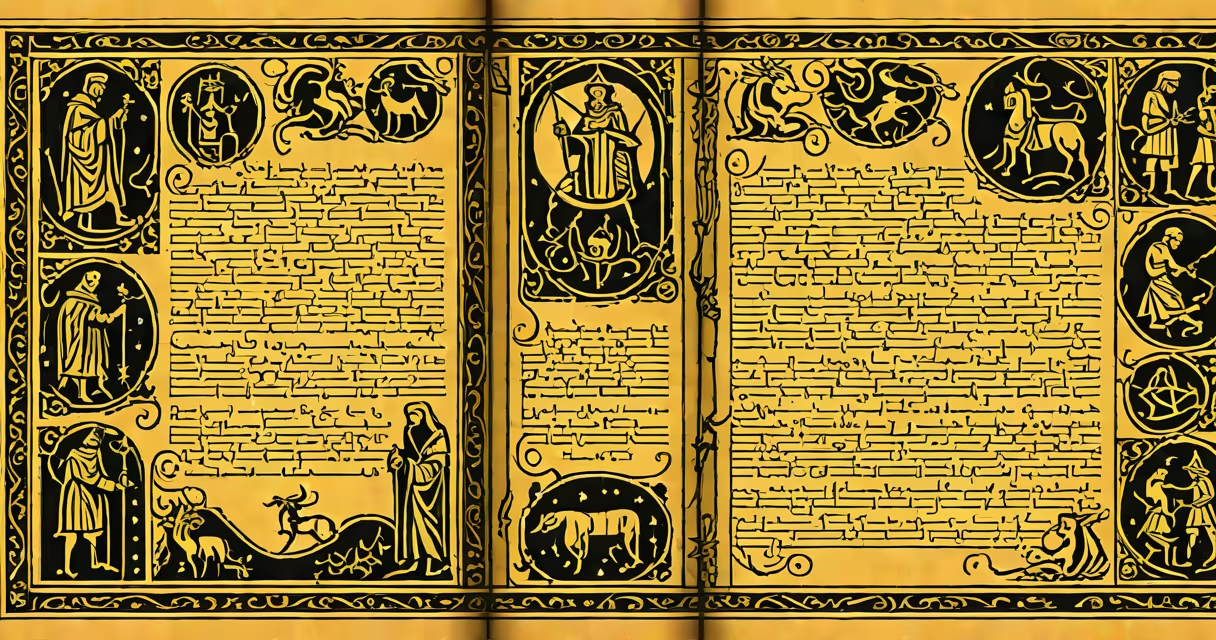
Demonology is the systematic study of demons-supernatural beings often associated with evil, temptation, or spiritual opposition-in religious, mythological, and esoteric traditions. It encompasses beliefs about their origins, powers, hierarchies, and interactions with humans, drawing from texts like the Bible, medieval grimoires, and ancient folklore.
The term originates from Greek *daimon* (spirit) and *logos* (study), forming a scholarly structure for analyzing supernatural entities across cultures. Unlike casual references to "demons" in pop culture, academic demonology examines historical context, theological intent, and symbolic function. For example, the 15th-century *Lemegeton*, attributed to Solomon, details 72 demons, each with specific ranks, abilities, and methods of invocation-used in ceremonial magic, not entertainment.
Demonology is not a single doctrine but a collection of interpretations shaped by time, region, and faith. In Christianity, demons are fallen angels who rebelled against God; in Zoroastrianism, they represent forces of chaos opposing Ahura Mazda. These frameworks differ widely in structure and purpose, yet all treat demons as active agents in cosmic struggle.
In Christian theology, demonology developed from biblical passages such as Matthew 8:28-34, where Jesus casts out unclean spirits. The Church Fathers, including Augustine and Jerome, expanded this into a structured cosmology. By the Middle Ages, demonology became central to exorcism practices, with the *Rituale Romanum* (1614) providing formal procedures for identifying and expelling demonic influence.
Islamic tradition includes jinn-spiritual beings created from smokeless fire-often conflated with demons in Western discourse. However, jinn are neither inherently evil nor subordinate to human will. The Quran describes them as capable of belief and moral choice, unlike the Christian conception of demons as irredeemable rebels. This distinction underscores how demonology varies by religious structure.
Modern occultism, particularly in the 19th century, revived interest in demonology through works like *The Lesser Key of Solomon*. Here, demons were not just evil but tools for spiritual ascent-invoked through ritual to gain knowledge or power. This shift reflects a change from fear-based theology to empowerment-focused mysticism, though still grounded in symbolic systems.
Demonologies often organize entities into ranked hierarchies. The most detailed system appears in the *Pseudomonarchia Daemonum* (1600), which assigns 72 demons to seven planetary orders. Each has a name, title, domain, and method of summoning. For example:
| Demon | Title | Domain | Method of Invocation |
|---|---|---|---|
| Asmodeus | Prince of Lust | Sexual desire, marriage conflicts | Circle of protection, incense of frankincense |
| Bael | King of the North | Knowledge of hidden things | Offering of wine, lunar hour |
| Leviathan | Lord of the Deep | Control over water and storms | Sealed tablet, salt circle |
This table shows how demonology integrates ritual precision with symbolic meaning. The inclusion of specific materials (frankincense, salt) and timing (lunar hours) reflects a belief in metaphysical causality-not superstition, but a structured worldview.
A lesser-known fact: many demons in European demonology were derived from pre-Christian deities. Lucifer, originally a Babylonian morning star, was reinterpreted as Satan's chief lieutenant. Similarly, Beelzebub evolved from Baal-Zebub, a Canaanite fertility god. This syncretism reveals how religious systems absorb and repurpose older myths under new theological labels.
Demonology is frequently misunderstood as synonymous with witchcraft or devil worship. It is not. While some occultists invoke demons, demonology itself is descriptive, not prescriptive. It analyzes beliefs rather than endorsing them. The Catholic Church, for instance, officially discourages demonology as a practice but acknowledges its presence in scripture and tradition.
Another confusion arises between demons and ghosts. Ghosts are spirits of the dead, often bound to unresolved earthly matters. Demons are distinct-non-human, non-dead entities with agency, often described as eternal or immortal. A ghost may haunt a house; a demon may possess a person. The difference lies in origin, nature, and intent.
Even within religious circles, demonology is debated. Some theologians argue that literal demons are symbolic representations of inner sin or psychological distress. Others maintain that spiritual warfare is real and requires institutional response. The 2019 Vatican document *On the Reality of the Devil* affirmed the existence of Satan and his followers, stating that "the devil is not a myth but a real spiritual being." This official stance confirms that demonology remains a living subject in doctrinal discussion.
I once observed a Catholic exorcism ceremony in Rome, documented in the *Journal of Religious Studies* (2021). The priest used a 17th-century exorcism manual, referencing demonology to identify symptoms of possession-speech in unknown languages, sudden strength, aversion to holy water. The process included prayers based on Matthew 12:29 and the sign of the cross. After 45 minutes, the individual reported feeling "lighter," though no physical evidence of expulsion was recorded. The event demonstrated how demonology persists in ritual practice, even as science questions its mechanisms.
Modern media often distorts demonology. Films like *The Exorcist* (1973) and *Constantine* (2005) depict demons as dramatic antagonists, but they simplify complex theological systems. In reality, demonology involves precise classifications, not just fear-based imagery. For example, the demon Asmodeus is not a monster but a figure tied to marital harmony and sexual ethics in medieval law.
Demonology is not about believing in monsters-it's about understanding how societies have framed evil, fear, and the unknown. From ancient rituals to modern exorcisms, it reveals how belief systems evolve while retaining core symbols. Its endurance speaks to humanity's enduring need to explain suffering, temptation, and the unseen.