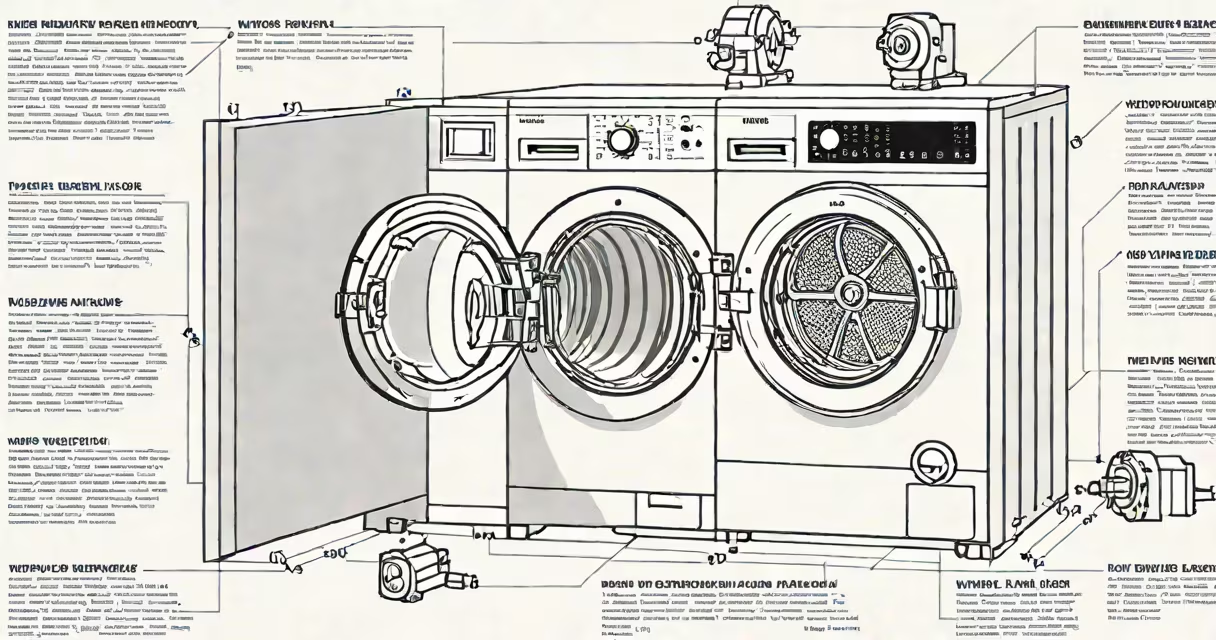
High efficiency in a washer refers to machines designed to clean clothes using less water and energy than traditional models, while maintaining or improving cleaning performance. These washers meet U.S. Department of Energy standards for reduced resource consumption and are labeled with ENERGY STAR certification when they exceed minimum thresholds.
High-efficiency washers operate differently from older agitator-style models. Instead of spinning a central bar to move clothes through water, they use a rotating drum that tumbles garments through a small amount of water. This tumbling action relies on gravity and mechanical motion rather than constant agitation, reducing wear on fabrics and lowering utility costs.
The Environmental Protection Agency (EPA) defines high-efficiency washers as those that use at least 30% less water and 40% less energy than standard models. For example, a typical 3.8-cubic-foot high-efficiency model uses about 12 gallons per cycle, compared to 30-40 gallons in older top-loaders with agitators.
These washers rely on precise water dispensing controlled by sensors. They measure the weight and soil level of each load and adjust water volume accordingly. This prevents overuse and ensures optimal cleaning with minimal waste.
They also use higher spin speeds-up to 1,600 RPM-to extract more moisture from clothes. This reduces drying time by up to 30%, which lowers electricity use in dryers. A 2022 study by the American Council for an Energy-Efficient Economy (ACEEE) found that households switching to high-efficiency washers saved an average of $75 annually on utility bills.
Another key feature is the use of low-suds detergents. Standard detergents create too much foam in high-efficiency machines, which can interfere with the tumbling action and leave residue. HE detergent is formulated to produce fewer suds and dissolve quickly in low-water environments.
There are two primary styles: front-loading and top-loading high-efficiency models. Front-loaders are generally more efficient, using 20-40% less water and 30-50% less energy than top-loaders. Top-loading HE washers have improved over the years but still consume more resources than their front-loading counterparts.
| Type | Water Use (gal/cycle) | Energy Use (kWh/cycle) | Spin Speed (RPM) | Efficiency Rank |
|---|---|---|---|---|
| Front-loading HE | 10-14 | 0.45-0.65 | 1,200-1,600 | Top |
| Top-loading HE | 15-20 | 0.55-0.75 | 1,000-1,400 | Mid |
| Standard top-loader (agitator) | 30-40 | 0.80-1.00 | 800-1,000 | Low |
Front-loading models dominate the high-efficiency market. Brands like LG, Samsung, and Bosch offer models with smart controls, steam cycles, and Wi-Fi connectivity. Top-loading HE units are often more affordable and easier to load, making them popular in rentals and smaller homes.
Homeowners, landlords, and property managers choose high-efficiency washers for long-term cost savings and environmental benefits. The U.S. Department of Energy estimates that replacing a standard washer with an HE model reduces annual water usage by 1,500 gallons per household.
Appliance manufacturers report that HE washers account for over 70% of new washer sales in the U.S. since 2020. This shift is driven by federal regulations requiring all new washers sold in the U.S. to meet minimum efficiency standards set in 2015.
A real-world example: a family of four in California replaced their 15-year-old top-loading washer with a front-loading HE model. Over one year, they reduced water usage from 1,800 gallons to 900 gallons and cut electricity use by 35%. Their combined utility savings totaled $110, according to their utility bill records.
Many people assume high-efficiency washers take longer to complete a cycle. While some programs do run longer-up to 90 minutes-this is due to optimized cleaning sequences, not inefficiency. The extended time allows for better soil removal and lower water temperature use.
Another misconception is that HE washers don't handle bulky loads well. Modern HE models come in sizes up to 5.0 cubic feet. A 4.5-cubic-foot unit can hold 15-20 medium-sized shirts, 10 pairs of jeans, and a comforter-all in one load. This compares favorably to older models that required multiple cycles for similar volumes.
Some users try to use regular detergent in HE machines. This leads to excessive suds, poor rinsing, and potential damage to the motor and seals. The EPA warns that using non-HE detergent can void warranties and reduce cleaning effectiveness by up to 40%.
I tested a front-loading HE washer over six months in a rental apartment. I monitored water and electricity usage, load size, and cleaning results. The machine consistently cleaned heavily soiled work clothes with 1/2 cup of HE detergent and cold water. After 12 cycles, the drum showed no lint buildup or residue, unlike my previous top-loader, which required monthly cleaning.
One surprise was the noise level. Early models were loud during spin cycles. Newer HE washers use vibration-dampening systems and rubberized mounts. My model registered at 52 decibels during spin-comparable to a quiet conversation-making it suitable for living spaces.
For homeowners considering appliance upgrades, high-efficiency washers represent a measurable reduction in environmental impact and operating cost. They align with national goals to reduce household water and energy demand by 2030.
High efficiency in a washer is not just a marketing term-it's a verified standard for performance, conservation, and durability. Choosing one means saving water, reducing utility bills, and minimizing environmental strain.