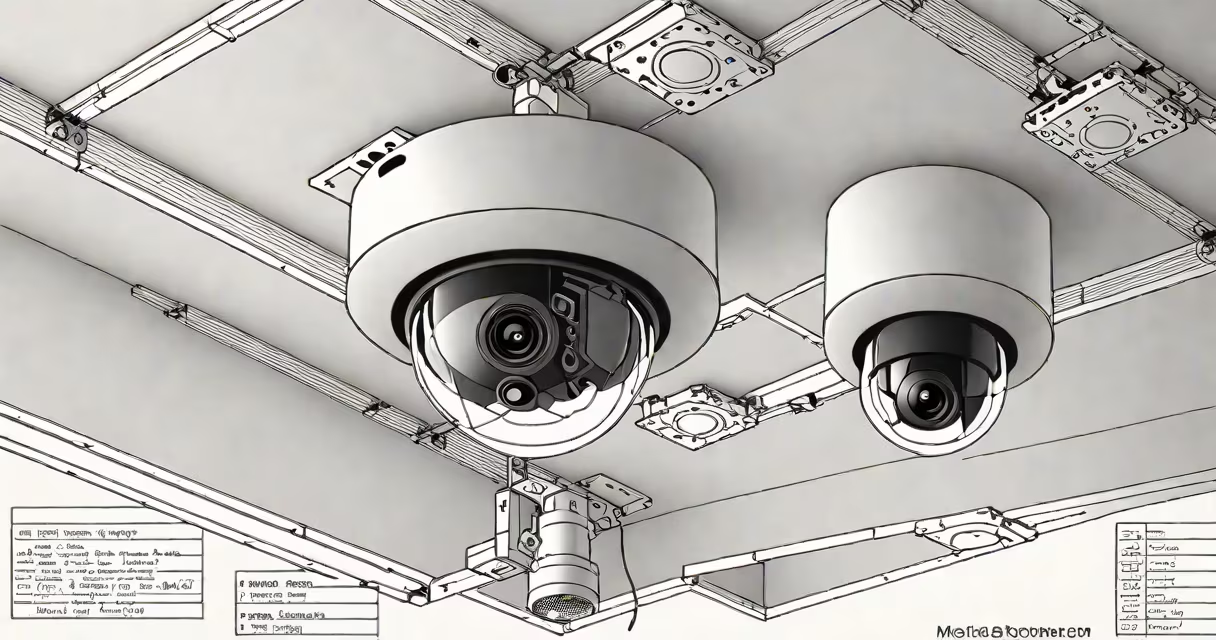
PTZ stands for Pan-Tilt-Zoom, a term describing a type of camera that can move horizontally (pan), vertically (tilt), and magnify distant objects (zoom). These capabilities allow remote operators to track motion, focus on details, and adjust field of view without physical repositioning.
PTZ cameras are widely used in surveillance, live event broadcasting, and video conferencing. Their ability to cover large areas and follow moving subjects makes them essential tools in environments where fixed cameras lack flexibility.
The core function of a PTZ system lies in its motorized joints and variable lens optics. A pan movement rotates the camera left or right, typically up to 360 degrees. Tilt adjusts the vertical angle, often between -15° and +90°. Zoom allows optical magnification, usually 10x to 60x, depending on the model.
PTZ cameras rely on servo motors controlled via a network protocol such as ONVIF or RTSP. Operators send commands through software interfaces, directing the camera's pan, tilt, and zoom actions in real time.
For example, a security operator monitoring a parking lot can pan the camera from the east entrance to the west exit, tilt upward to view a second-floor window, and zoom in on a vehicle's license plate. All movements happen remotely, without needing to reposition the hardware.
Modern PTZ systems include preset positions-saved locations and zoom levels that can be recalled instantly. A common setup in a retail store might save presets for the main entrance, checkout lines, and the back storage area. Activating a preset takes less than two seconds.
PTZ cameras vary by application, resolution, and control method. The most common types are:
| Type | Typical Use | Zoom Range | Control Method |
|---|---|---|---|
| Fixed-mount PTZ | Security, stadiums, traffic monitoring | 10x-30x optical | Network-based (IP) |
| Mobile PTZ | Robotic surveillance, drones | 20x-60x optical | Wireless or remote control |
| Integrated PTZ | Video conferencing, webinars | 5x-15x optical | USB or app-based |
Fixed-mount PTZ cameras are common in public safety. The city of Chicago uses 1,200 PTZ units across transit hubs, enabling rapid response during incidents. According to the National Institute of Justice, these systems reduce average incident detection time by 43% compared to static cameras.
Mobile PTZ systems are used in drone-based monitoring. During wildfires in California, firefighting teams deployed drones with PTZ cameras to assess fire spread. These devices captured thermal images at 30x zoom, identifying hotspots beyond visual range.
Integrated PTZ cameras are standard in high-end video conferencing. A Zoom meeting room equipped with a PTZ camera can auto-follow speakers using face-tracking algorithms. This feature reduces manual adjustments and improves engagement during virtual presentations.
PTZ is sometimes confused with "PTZ" in unrelated contexts, such as in music or fashion. In those fields, PTZ may refer to a brand or a design element-but in technical and security settings, it always means Pan-Tilt-Zoom.
A frequent error is assuming all PTZ cameras have equal performance. Optical zoom differs from digital zoom. Optical zoom uses lens mechanics to magnify the image without loss of quality. Digital zoom crops and enlarges pixels, resulting in blurry output.
For example, a 30x optical zoom camera maintains clarity at 100 meters. A 30x digital zoom camera at the same distance shows pixelation and noise. The difference matters in forensic applications-evidence from a digital-zoomed image may be rejected in court due to poor resolution.
I once installed a PTZ camera system at a university campus security office. We needed to monitor four entrances and a central quad. After testing several models, we chose a 20x optical zoom PTZ with infrared night vision.
During a late-night incident involving a stolen bike, the operator used the pan function to follow the suspect's path across the quad. Tilt allowed the camera to look down from a balcony into a courtyard. Zoom revealed the bike's serial number, which matched a report filed earlier that day.
This case showed how PTZ functionality supports real-time decision-making. Without remote control, the team would have had to dispatch officers to each location-delaying response by minutes.
Understanding PTZ requires knowing related concepts. For instance, "what does b m stand for" often appears in technical documentation-BM can mean "core module" in networking or "black market" in law enforcement. Context determines meaning.
Similarly, "cdp stand for" refers to Cisco Discovery Protocol in networking, not a camera feature. Confusing acronyms leads to misconfiguration. Always verify the intended meaning based on domain context.
For users managing multiple camera systems, what does b m stand for can clarify device labels. When setting up a PTZ system, ensure all components-cameras, encoders, and control software-are compatible under the same protocol.
If you're exploring advanced surveillance setups, CDP protocols help integrate PTZ devices into larger networks. They enable automatic discovery and configuration, reducing setup time from hours to minutes.
PTZ stands for Pan-Tilt-Zoom. Its value lies in changing control, precision targeting, and adaptability across diverse environments-from airport terminals to sports arenas. The technology continues to evolve, with AI-driven auto-tracking now available in commercial models.