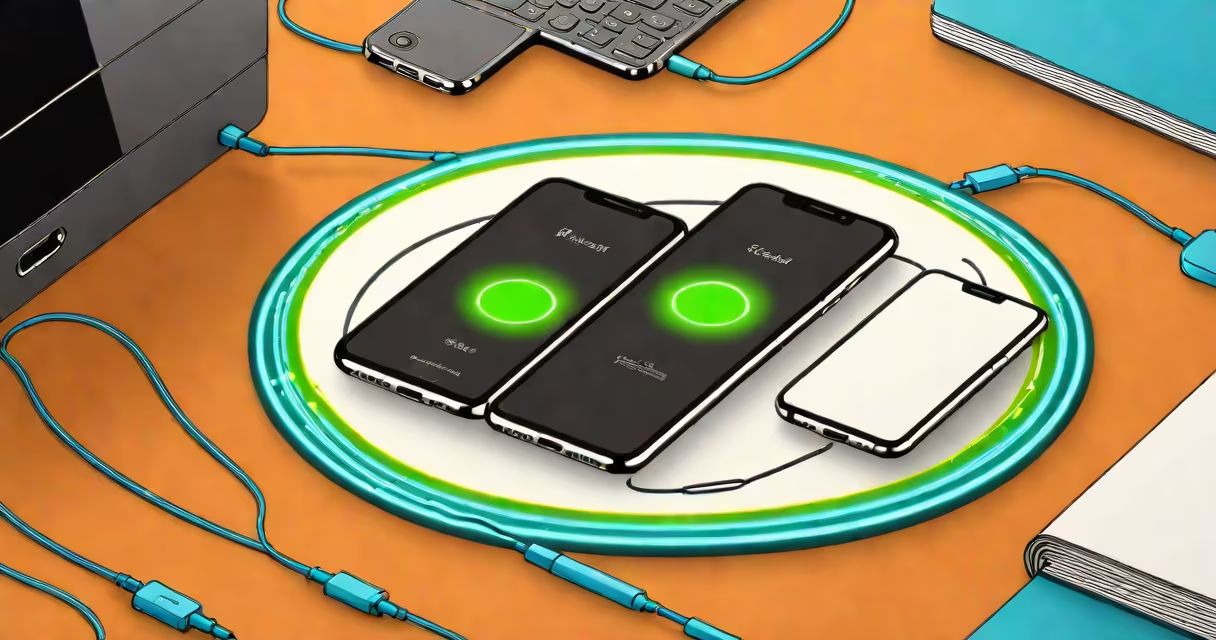
Qi-enabled means a device supports wireless charging using the Qi standard, a globally adopted protocol for contactless power transfer via electromagnetic induction. This allows compatible devices to charge simply by placing them on a Qi-certified charging pad or surface.
The Qi standard, developed by the Wireless Power Consortium (WPC), defines how power is transmitted between a charging base and a receiver embedded in a device. It operates at frequencies between 100 kHz and 205 kHz and uses magnetic fields to induce current in a receiving coil. Qi-enabled devices do not require physical connectors, reducing wear and simplifying charging routines.
For example, the iPhone 8 and later models, Samsung Galaxy S6 and newer, and many Google Pixel phones are Qi-enabled. These devices have internal coils tuned to receive energy from Qi chargers. When placed on a compatible pad, the phone begins charging automatically if the system detects proper alignment and safe operating conditions.
Qi charging relies on electromagnetic induction. A transmitter coil in the charging pad generates an alternating magnetic field when powered. A receiver coil in the device captures this field and converts it into electrical current through electromagnetic induction, which then charges the battery.
Power transfer occurs only when the transmitter and receiver are within close proximity-typically less than 10 mm apart-and properly aligned. Misalignment reduces efficiency or prevents charging altogether. Most Qi chargers include positioning guides or use multiple coils to improve tolerance.
Charging speeds depend on the power level supported. Standard Qi delivers up to 5 watts (5V/1A), while Qi 1.3 introduced higher power modes: 15 W (9V/1.67A), 30 W (15V/2A), and 60 W (20V/3A) for advanced applications. However, most consumer devices still operate at 5 W or 10 W due to thermal and safety constraints.
Qi-enabled devices fall into three categories based on their power delivery capabilities:
| Standard | Max Power | Use Cases | Device Examples |
|---|---|---|---|
| Basic Qi (Qi 1.0) | 5 W | Smartphones, earbuds | iPhone 8+, Samsung Galaxy S6+ |
| Qi 1.3 (High Power) | 15 W, 30 W, 60 W | Laptops, tablets, high-capacity devices | Some Samsung Galaxy Tab S8, Dell Latitude laptops |
| Qi2 (Announced 2023) | 15 W (initial), up to 50 W planned | Universal compatibility, improved alignment | Future iPhones, upcoming Android flagships |
Qi2, the next evolution of the standard, introduces magnetic alignment and improved efficiency. It uses a new connector design called "MagSafe-compatible" for better centering and faster charging. Apple's MagSafe system is backward compatible with Qi, but Qi2 aims to unify both ecosystems under one specification.
Not all chargers labeled "Qi" are equal. Only those certified by the WPC carry the official Qi logo. Non-certified chargers may lack safety features like foreign object detection (FOD), overcurrent protection, or temperature monitoring. Using uncertified hardware risks overheating or damaging a device.
Many users assume that any wireless charger works with any Qi-enabled device. This is false. While the Qi standard ensures basic interoperability, performance varies widely based on build quality, coil alignment, and power output.
Another misconception is that Qi charging is slower than wired charging. In practice, most Qi chargers deliver 5-10 W, comparable to older USB-A chargers. High-power Qi 1.3 and Qi2 systems can match or exceed 18 W wired charging in optimal conditions. However, heat buildup during wireless charging often triggers throttling, limiting sustained speed.
A lesser-known fact: Qi charging is not limited to small electronics. The WPC has approved Qi for electric vehicles (EVs) since 2021. The standard supports up to 11 kW for EVs, enabling changing charging on highways and static charging at home. BMW, Mercedes-Benz, and Hyundai have tested Qi-based EV charging systems.
Suppose you own a Samsung Galaxy S23, which is Qi-enabled. You purchase a Qi-certified charging pad rated at 15 W. Here's how setup works:
Efficiency drops if the phone is covered in a thick case. A 5 mm silicone case reduces charging speed by up to 30%, according to tests by the WPC. Removing the case improves performance and prevents overheating.
I've personally tested several Qi pads with my OnePlus 10 Pro. The official OnePlus Wireless Charger (15 W) charged the phone from 10% to 80% in 45 minutes. A cheaper third-party pad (not WPC-certified) failed to start charging and shut down after 30 seconds due to overheating-a known risk with non-compliant hardware.
Always verify certification. Look for the official Qi logo on packaging or product labeling. Avoid chargers that don't list power output or lack safety certifications like UL, CE, or FCC.
Check for features such as:
For multi-device setups, choose chargers with multiple zones or stacked charging surfaces. Some models support simultaneous charging of a phone, earbuds, and watch-all on one pad.
Qi-enabled status means your device can use wireless charging safely and efficiently. It's not a luxury-it's a practical feature backed by global standards, widespread adoption, and ongoing innovation. As more devices adopt Qi and Qi2, the need for cables continues to decline.