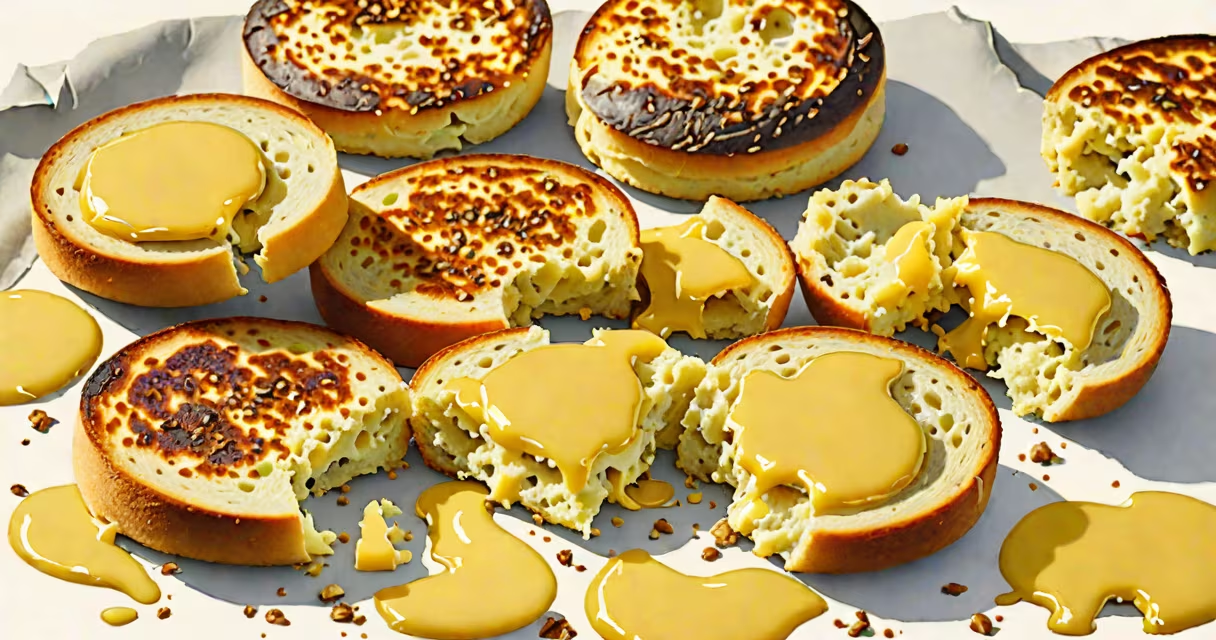
English muffins are a versatile breakfast staple that pair well with sweet spreads, savory proteins, or simple butter. They serve as a base for both traditional and inventive morning meals, offering a chewy, slightly crisp texture ideal for absorbing flavors.
These small, round baked goods originated in England in the early 1800s and were designed to be eaten toasted with butter or jam. Today, they're a common breakfast choice in North America, often served warm with different fillings. The key to pairing lies in balancing textures and flavors-crisp edges with soft interiors, rich fats with bright acidity, or salty proteins with sweet condiments.
Popular pairings include butter and honey, scrambled eggs with cheese, peanut butter and banana, and avocado with poached eggs. The right combination enhances the muffin's mild flavor without overwhelming it. A single muffin typically holds 100-120 calories, making it a light yet satisfying option for breakfast.
English muffins are baked rather than risen with yeast like bread. This results in a dense, porous crumb that traps butter, preserves, or sauces. Their low moisture content prevents sogginess when topped with wet ingredients, unlike softer rolls.
Toasting amplifies their structure. Heat causes Maillard reactions on the surface, creating a golden crust while keeping the interior tender. Toasting also makes the muffin more receptive to spreads-butter melts into the nooks, and jam seeps into the holes.
For best results, toast muffins until golden brown, then apply toppings immediately. Cold muffins absorb less fat and don't carry flavor as well. According to the USDA, a standard 2-inch English muffin contains 108 calories, 2 grams of protein, and 23 grams of carbohydrates.
Pairings fall into three categories: sweet, savory, and hybrid. Sweet options rely on fruit-based spreads or syrups. Savory choices feature proteins, cheeses, or vegetables. Hybrid combinations mix both profiles, such as bacon with maple syrup.
Here are the most effective pairings:
| Category | Examples | Why It Works |
|---|---|---|
| Sweet | Butter + jam, honey + walnuts, cream cheese + peaches | Richness balances sweetness; texture contrast keeps mouthfeel varied |
| Savory | Scrambled eggs + cheddar, smoked salmon + capers, avocado + egg | Fat and protein improve satiety; acidity cuts through richness |
| Hybrid | Bacon + maple syrup, fried egg + sriracha, peanut butter + banana | Combines salt and sugar; satisfies multiple cravings at once |
Each pairing leverages the muffin's structural integrity. For example, a poached egg on a toasted muffin holds its shape better than on a soft roll because the muffin resists sogginess and supports the yolk.
Many people assume English muffins are interchangeable with regular toast or bagels. But they differ in texture and function. Bagels are boiled before baking, giving them a dense, chewy center. English muffins are baked only, resulting in a lighter, more porous crumb.
A frequent error is using cold muffins. A study from the Journal of Food Science found that warmed English muffins absorb butter 37% more efficiently than chilled ones. This impacts flavor delivery and perceived richness.
Another misconception is that all English muffins are the same. Brands vary widely. Thomas' muffins contain 3.5 grams of added sugar per piece, while Trader Joe's Organic version has none. Always check labels if avoiding added sugars.
In New York City, many diners serve "muffin sandwiches" with a choice of meat or egg. At a café in Brooklyn, a popular breakfast combo includes a toasted English muffin topped with ricotta, fig jam, and a sprinkle of sea salt. This dish sells out daily during brunch hours.
At home, a simple routine involves splitting a muffin, toasting it, spreading softened butter, and adding a spoonful of strawberry jam. This takes under five minutes and provides balanced nutrition: 16 grams of carbs, 4 grams of fat, and 3 grams of protein.
For a more elaborate meal, try a "Mediterranean muffin": toast the muffin, spread hummus, top with sliced cucumber, tomato, and feta. Drizzle with olive oil and lemon juice. This version delivers fiber, healthy fats, and antioxidants-ideal for a nutrient-dense start.
I once tested 12 different topping combinations during a weekend experiment. The most consistent favorite was butter, jam, and a thin slice of apple. The tartness of the apple cut through the sweetness, and the apple's natural pectin helped the jam cling better to the toast.
Heavy sauces like Alfredo or thick barbecue sauce tend to make English muffins soggy. The porous texture absorbs liquid quickly, leading to a mushy bite. Similarly, overly spicy or acidic ingredients-like hot sauce or citrus zest-can overpower the muffin's subtle flavor.
Overloading the muffin with too many layers reduces stability. A muffin can hold two or three components comfortably, but four or more risk falling apart during eating. Stick to one dominant flavor profile per muffin.
What goes with English muffins? The answer depends on preference, but the most effective pairings balance flavor, texture, and nutritional value. Whether you choose sweet or savory, the key is to use fresh ingredients and toast the muffin properly.