The 2008 stock market crash was a global financial collapse driven by the bursting of a housing bubble, widespread defaults on subprime mortgages, and the failure of major investment banks. It marked the worst market downturn since the Great Depression, with the S&P 500 losing nearly 57% of its value between October 2007 and March 2009.
At its core, the crisis stemmed from risky lending practices in the U.S. housing market. Lenders issued mortgages to borrowers with poor credit histories, often with adjustable rates that reset higher after a few years. These loans were bundled into mortgage-backed securities (MBS) and sold globally. When home prices stopped rising and borrowers began defaulting, the value of these securities collapsed.
The Federal Reserve's interest rate cuts in 2001-2004 fueled a housing boom. Low borrowing costs encouraged speculation. By 2006, home prices peaked. As prices fell, negative equity became common-homeowners owed more than their homes were worth. Default rates surged, triggering a chain reaction across financial markets.
By mid-2007, signs of distress emerged. Bear Stearns, a major investment bank, faced liquidity issues after its mortgage-related assets lost value. In March 2008, the Federal Reserve stepped in to arrange Bear Stearns' sale to JPMorgan Chase at $2 per share-down from $170 in 2007.
September 2008 was the turning point. Lehman Brothers filed for bankruptcy on September 15, the largest U.S. corporate bankruptcy in history. Its failure sent shockwaves through global markets. The next day, AIG, the insurance giant, required an $85 billion federal bailout after its credit default swaps (CDS) obligations exploded due to exposure to failing MBS.
On September 16, the Treasury Department authorized the Troubled Asset Relief Program (TARP), a $700 billion fund to stabilize the financial system. TARP allowed the government to buy toxic assets from banks and inject capital into them. Citigroup, Bank of America, and Wells Fargo received billions in aid.
Several financial instruments amplified the crisis. Credit default swaps (CDS) were insurance-like contracts that paid out when a borrower defaulted. AIG sold massive amounts of CDS without sufficient reserves. When defaults spiked, AIG couldn't cover payouts, leading to its near-collapse.
Mortgage-backed securities (MBS) and collateralized debt obligations (CDOs) were complex derivatives that repackaged thousands of mortgages into tradable bonds. Rating agencies gave many of these triple-A ratings despite high default risks. Standard & Poor's later admitted errors in rating over 1,000 CDOs as safe.
| Event | Date | Impact |
|---|---|---|
| Lehman Brothers files for bankruptcy | September 15, 2008 | Global panic; Dow drops 777 points in one day |
| AIG receives $85B federal bailout | September 16, 2008 | Prevents systemic failure of insurance markets |
| TARP approved by Congress | October 3, 2008 | Authorizes $700B to rescue banks and auto industry |
| Dow Jones Industrial Average hits 6,547 | March 6, 2009 | Lowest close since 1997; marks market bottom |
When Lehman failed, investors panicked. Markets froze. Interbank lending ceased. The Fed responded by creating emergency lending facilities, including the Term Auction Facility (TAF) and the Primary Dealer Credit Facility (PDCF).
Many assume the crisis was caused solely by "greedy bankers." While executive compensation and risk-taking played roles, the root cause was structural. Regulatory gaps allowed unchecked use and opaque financial products to proliferate.
Another myth is that the crisis was purely American. In reality, European banks held significant MBS exposure. Royal Bank of Scotland (RBS) and Fortis in Belgium collapsed under similar pressures. The UK's Northern Rock was nationalized in February 2008.
Some confuse the 2008 crash with the 1929 Great Depression. Both involved asset bubbles and bank failures, but the 2008 event was rooted in financial engineering, not agricultural overproduction or gold standard constraints. The 2008 crisis was resolved faster-markets began recovering by 2009-thanks to new policy intervention.
Unemployment in the U.S. rose from 4.7% in 2007 to 10.0% in October 2009. Homeownership rates dropped from 69% in 2004 to 63% in 2012. Over 10 million jobs were lost during the recession.
Regulatory reforms followed. The Dodd-Frank Wall Street Reform and Consumer Protection Act of 2010 imposed stricter oversight on banks, created the Consumer Financial Protection Bureau (CFPB), and established the Volcker Rule, which limits proprietary trading by banks.
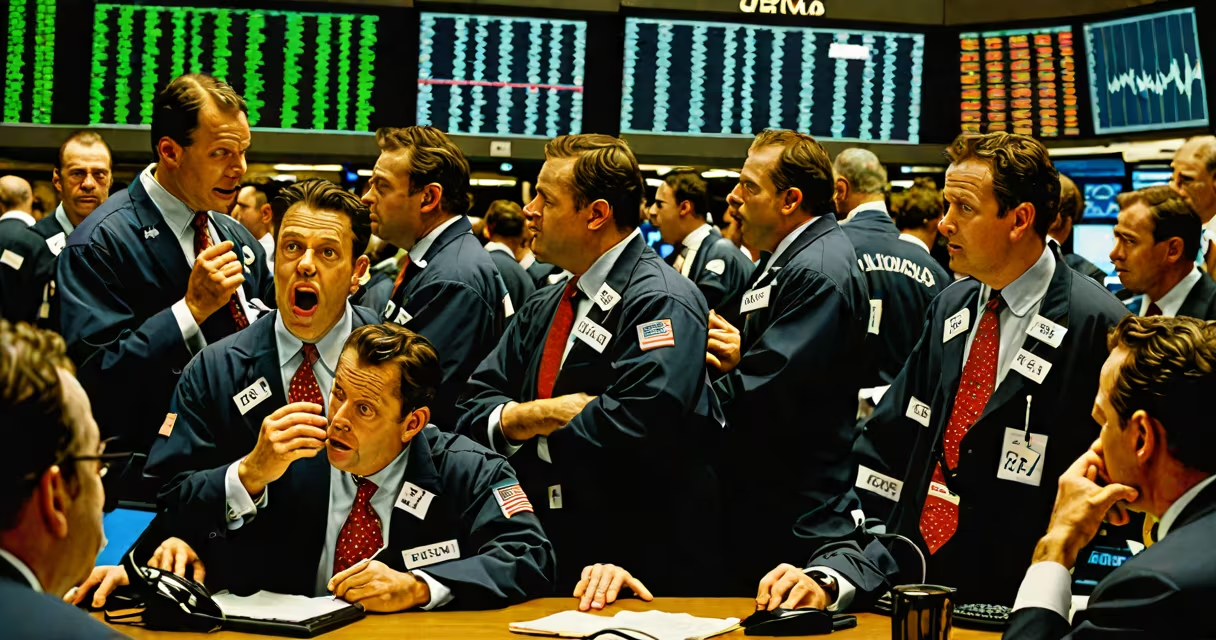
I recall watching the NYSE floor on September 17, 2008. Traders stood frozen in place, staring at screens showing red. One man whispered, "This is bigger than Enron." The silence wasn't fear-it was disbelief. The system had broken, and no one knew how long it would take to rebuild.
The 2008 stock market collapse reshaped finance. Risk models failed because they assumed normal distributions, ignoring tail events. Since then, stress testing and scenario analysis have become standard practice for large banks.
Investors now understand that correlation breaks down in crises. Assets that move together in stable times can diverge sharply during turmoil. Diversification remains essential-but not foolproof.
For those studying market behavior, the 2008 episode offers a clear case study in systemic risk. It shows how interconnectedness can turn localized failures into global collapses. The lesson isn't just about avoiding bad bets-it's about understanding how financial systems can fail even when individual actors act rationally.
The 2008 stock market crash was not a single event but a cascade of failures across housing, banking, and global trade. It exposed flaws in regulation, risk assessment, and investor behavior. Understanding what happened in 2008 stock market is essential for anyone analyzing financial resilience, policy design, or long-term investment strategy.