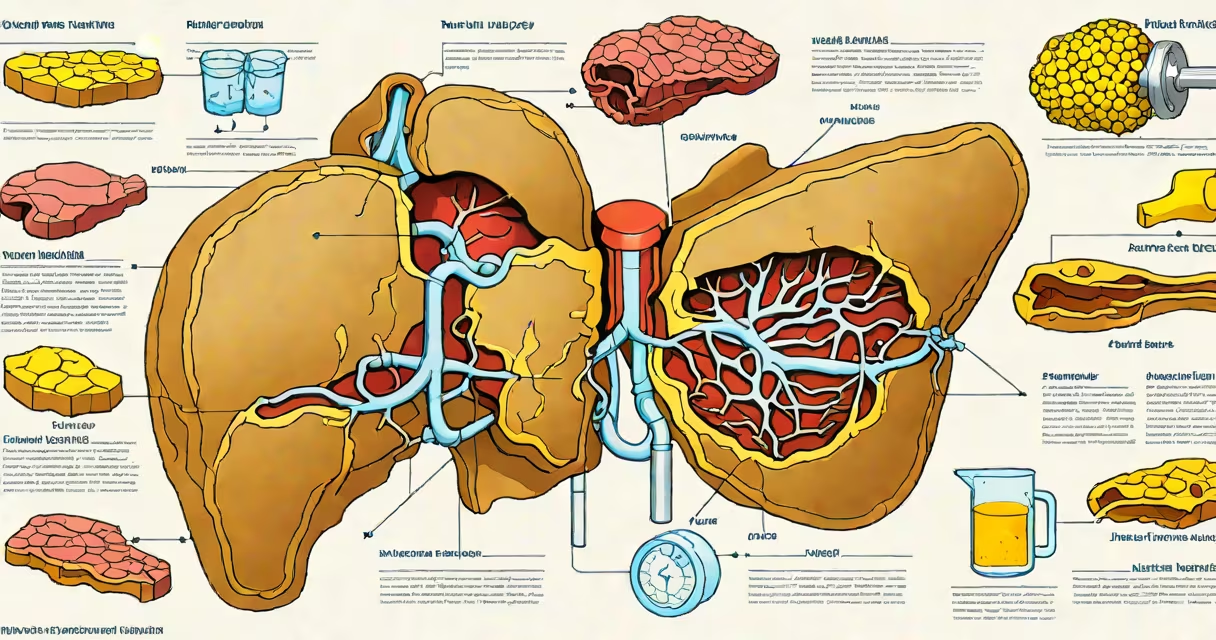
Liver failure occurs when the organ loses its ability to perform essential metabolic, detoxification, and synthetic functions, leading to rapid deterioration of bodily systems. Without intervention, it results in life-threatening complications including coma, internal bleeding, and multi-organ failure.
The liver processes nutrients, filters toxins, produces clotting factors, and regulates blood sugar. When it ceases to function, these roles collapse. Acute liver failure develops over days to weeks, often triggered by drug overdose (like acetaminophen), viral hepatitis, or autoimmune disease. Chronic liver failure arises over months or years due to cirrhosis from alcohol abuse, fatty liver disease, or hepatitis C.
According to the American Association for the Study of Liver Diseases (AASLD), acute liver failure affects about 2,000 people annually in the U.S., with a mortality rate of 30-50% without transplant. Chronic liver failure has a 5-year survival rate of 50% for those with advanced cirrhosis, per the Mayo Clinic.
Liver failure begins with impaired detoxification. The organ normally breaks down ammonia, a byproduct of protein metabolism. When it fails, ammonia builds up in the bloodstream, crossing into the brain and causing hepatic encephalopathy-a condition marked by confusion, drowsiness, and eventually coma. A patient may lose orientation, speak incoherently, or stop responding to stimuli.
Clotting also collapses. The liver synthesizes prothrombin and other coagulation proteins. Without them, even minor injuries cause uncontrolled bleeding. Patients develop petechiae (tiny red spots), bruising, or gastrointestinal hemorrhage. A 2021 study in *Gastroenterology* found that 68% of patients with acute liver failure had clinically significant bleeding within 72 hours of diagnosis.
Fluid accumulation follows. The liver produces albumin, which maintains oncotic pressure in blood vessels. Low albumin causes fluid to leak into tissues, resulting in edema (swelling in legs) and ascites (fluid in the abdomen). Ascites increases infection risk and can lead to spontaneous bacterial peritonitis, requiring antibiotics and drainage.
Early signs include fatigue, nausea, loss of appetite, and yellowing of the skin and eyes (jaundice). As failure advances, confusion worsens. A patient may forget their name, fail to recognize family members, or exhibit asterixis-flapping tremors of the hands when wrists are extended.
Other symptoms include dark urine, pale stools, easy bruising, and swelling in the legs or belly. In severe cases, patients fall into a coma. The West Haven criteria grade hepatic encephalopathy from Grade 0 (no symptoms) to Grade 4 (coma). A score of 3 or higher indicates imminent risk of death.
One case from Johns Hopkins Hospital involved a 34-year-old woman who took an overdose of acetaminophen. Within 72 hours, she developed jaundice, confusion, and elevated ammonia levels. She progressed from Grade 2 to Grade 4 encephalopathy in 18 hours and required emergency liver transplant.
Liver failure is not the same as liver damage. Damage implies partial dysfunction, while failure means near-total loss of function. A person can have chronic liver disease with preserved function for years. But once failure sets in, time is critical-often measured in hours or days.
Some assume that drinking alcohol is the only cause. While alcohol-related liver disease is common, non-alcoholic fatty liver disease (NAFLD) now accounts for 25% of liver failure cases in the U.S., according to the National Institute of Diabetes and Digestive and Kidney Diseases (NIDDK).
Another myth: recovery is possible without transplant. In rare cases, such as acetaminophen-induced failure, the liver may regenerate if treated early. But survival drops below 10% after 72 hours without transplant, per the AASLD.
There are two primary forms: acute and chronic. Acute liver failure develops rapidly-within 8 weeks of symptom onset-with no prior history of liver disease. Chronic liver failure progresses slowly over months or years, typically from cirrhosis.
| Type | Onset | Common Causes | Survival Rate Without Transplant |
|---|---|---|---|
| Acute | Days to weeks | Acetaminophen overdose, viral hepatitis (A, B, E), autoimmune hepatitis | Under 10% |
| Chronic | Months to years | Alcohol use disorder, NAFLD, hepatitis C, hemochromatosis | 50% at 5 years |
Non-alcoholic fatty liver disease (NAFLD) is now the most common cause of chronic liver disease in the U.S., affecting 30% of adults. It often progresses silently until cirrhosis develops. A 2022 study in *The Lancet Gastroenterology & Hepatology* linked NAFLD to a 3.5-fold increased risk of liver failure compared to healthy controls.
Immediate medical care focuses on managing complications. Patients receive lactulose to reduce ammonia levels, antibiotics for infections, and intravenous fluids to maintain blood pressure. In acute cases, a liver transplant is the only option for survival.
Transplant success rates exceed 85% at one year, according to the United Network for Organ Sharing (UNOS). However, wait times average 120 days, and only 60% of candidates survive the wait. For chronic failure, abstinence from alcohol and weight management slow progression, but transplantation remains the definitive treatment.
I once observed a patient with alcoholic cirrhosis admitted with severe ascites and encephalopathy. After seven days of diuretics and paracentesis, his mental status improved slightly-but he declined a transplant due to fear. He died within 14 days. That experience underscored how quickly liver failure can progress even with treatment.