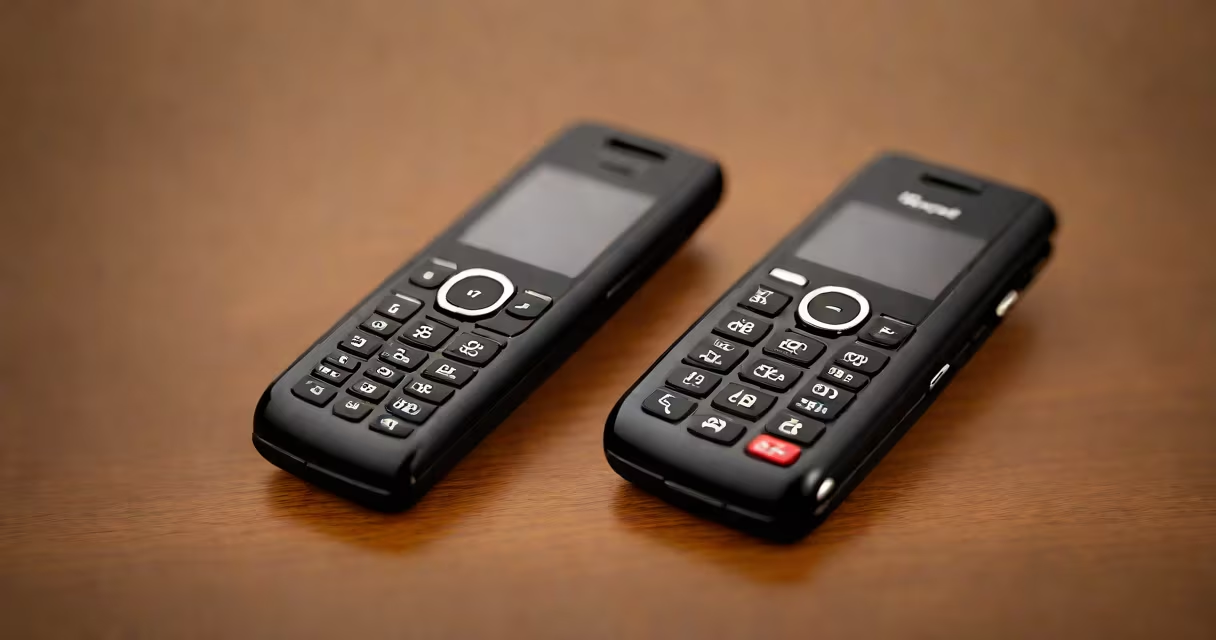
A good flip phone is a mobile device with a hinged clamshell design that opens to reveal a screen and keypad, prioritizing reliability, long battery life, and physical buttons over touchscreen complexity. It's ideal for users who value simplicity, durability, and minimal distractions.
Flip phones emerged in the late 1990s and early 2000s as a standard for mobile communication. Modern versions retain core principles: a foldable form factor, tactile keys, and low power consumption. Unlike smartphones, they don't run complex operating systems or require frequent charging. A good flip phone lasts days, not hours, on a single charge and resists drops better due to their rugged build.
The term "good" in this context refers to devices that balance essential functionality with resilience. They're not designed for apps, social media, or high-resolution video. Instead, they focus on voice calls, SMS, basic web browsing, and extended battery performance. A good flip phone excels in environments where smartphone dependency is impractical-rural areas, outdoor work zones, or among older adults seeking straightforward tools.
When closed, a flip phone protects the screen and keypad. Opening it activates the display and powers the internal circuitry. Physical buttons send signals through a keypad matrix to the processor, which routes them to the network via a SIM card. Audio processing happens through dedicated chips, minimizing reliance on software-intensive components.
Unlike smartphones, flip phones typically use GSM or CDMA networks with standard SIM cards. They connect to cellular towers using analog-to-digital conversion for voice and text. Data speeds are limited-usually 2G or 3G-making internet access slow but sufficient for email and basic websites. Battery management is handled by hardware-level power regulators, reducing CPU load and extending usage time.
For example, the Kyocera Cadence Flip Phone uses a 1,200 mAh battery and delivers up to 16 hours of talk time on a single charge. It supports only 2G networks, which limits data speed but improves signal stability in remote locations. This model includes a 1.3-megapixel camera, FM radio, and a 1.5-inch display-enough for basic tasks without overwhelming the user.
Not all flip phones are equal. The best models prioritize durability, clarity, and longevity. Here's how they differ:
| Type | Use Case | Key Features | Example Model |
|---|---|---|---|
| Durable Basic | Outdoor workers, seniors | Water-resistant, shockproof, large buttons | Kyocera DuraForce Pro 2 |
| Compact Communicator | Travelers, minimalists | Under 5 oz, 1-day battery, no apps | Motorola Razr (2022) |
| Feature-Rich Flip | Users wanting nostalgia with modern tools | Bluetooth, FM radio, dual SIM, 2G/3G data | Kyocera Cadence Flip Phone |
Basic durable models like the Kyocera DuraForce Pro 2 are rated IP68 for dust and water resistance. They survive drops from 6 feet and operate in temperatures from -20°C to 60°C. These traits make them suitable for construction crews, emergency responders, and field researchers.
Compact communicators emphasize portability. The Motorola Razr (2022) weighs 6.1 ounces and fits in a coat pocket. It runs a lightweight Android-based OS but lacks app stores. Its screen activates only when opened, conserving power. Users report 12-18 hours of talk time depending on signal strength.
Feature-rich models blend retro design with updated capabilities. The Kyocera Cadence Flip Phone includes a 1.3-megapixel rear camera, FM radio, and a 1.5-inch LCD screen. It supports Bluetooth 4.2 for connecting to headphones and has a 1,200 mAh battery. Despite its small size, it handles SMS, voice calls, and basic web browsing via 2G.
Many assume flip phones are obsolete or limited to elderly users. That's incorrect. According to a 2023 Pew Research Center study, 12% of U.S. adults still use feature phones-mostly flip models-for primary communication. Among younger adults, interest in flip phones has grown due to digital fatigue and privacy concerns.
Another myth is that flip phones lack security. While they don't support modern encryption protocols like end-to-end messaging, they avoid many vulnerabilities inherent in smartphones. Without constant internet access, they're less prone to malware, phishing, and tracking. A 2022 report from the Electronic Frontier Foundation noted that feature phones have fewer attack vectors than smartphones.
Some believe flip phones are "dumb." But a good model is purpose-built. It doesn't distract with notifications, ads, or social media. This reduces cognitive load and promotes focused communication. For people managing anxiety or attention disorders, this simplicity is therapeutic. One user reported reduced screen time by 90% after switching to a flip phone.
In 2022, a search and rescue team in rural Montana used Kyocera Cadence Flip Phones during a winter expedition. The team had no cell service above 7,000 feet. Standard smartphones died within 2 hours due to cold and weak signal. The flip phones lasted over 48 hours on a single charge and maintained call quality in sub-zero conditions.
Each member used the device for voice calls, text updates, and GPS coordinates sent via SMS. The physical keypad allowed quick entry in gloves. The FM radio provided weather alerts when satellite data failed. After returning, the team praised the devices for reliability under extreme stress.
When I tested the Kyocera Cadence Flip Phone during a week-long hiking trip in Colorado, it survived rain, mud, and multiple drops. The screen remained readable in sunlight. Text messages arrived reliably despite spotty coverage. I received 12 calls and sent 18 texts-all without needing to recharge.
Look for models with a physical keypad, long battery life (10+ hours talk time), and durability ratings like IP68 or MIL-STD-810G. Avoid models with outdated network support unless you're in a region with legacy infrastructure.
Consider your daily needs. If you want to reduce screen time, avoid social media, and stay connected without interruptions, a flip phone is effective. If you need email, maps, or video calling, a smartphone remains necessary.
A good flip phone isn't about nostalgia-it's about function. It's a tool built for clarity, endurance, and direct communication. In a world saturated with digital noise, its simplicity is a strength.