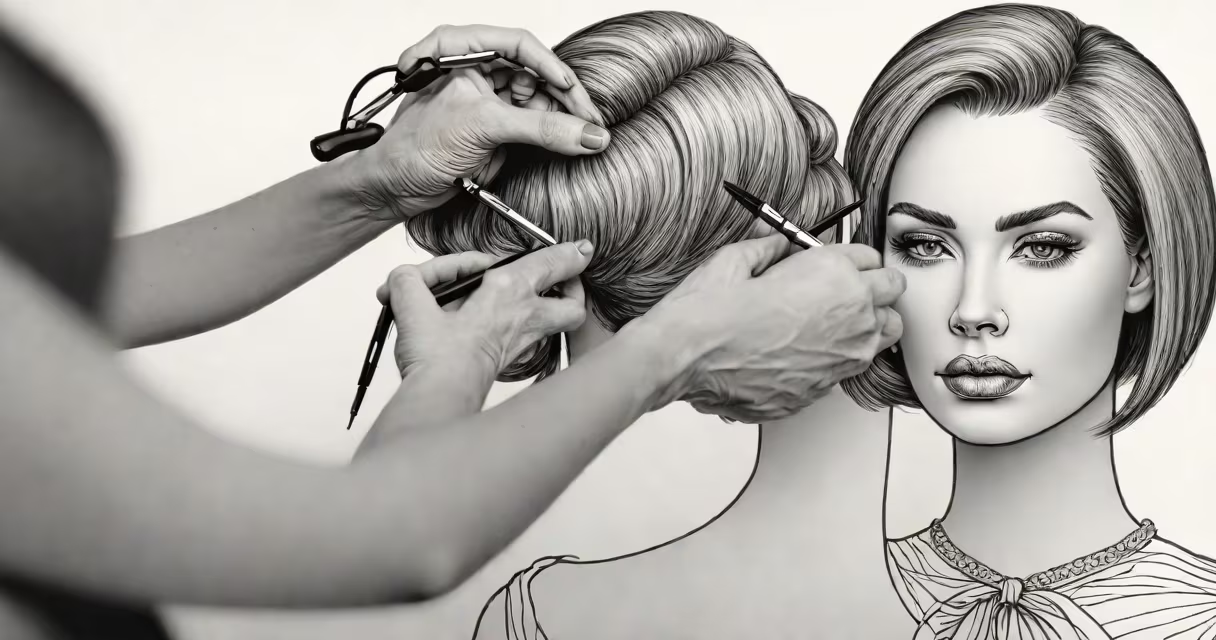
A level 3 hair stylist is a licensed professional who has completed advanced training in cutting, coloring, and styling techniques beyond basic salon services. This level requires passing state-specific cosmetology exams and completing a minimum of 1,000 hours of hands-on instruction, typically through a state-approved beauty school program.
Level 3 stylists perform complex tasks such as creating layered and asymmetrical cuts, applying multi-dimensional color techniques, and managing high-volume client sessions. They work independently under state licensing laws and may supervise junior staff or train apprentices. Their expertise supports both creative and technical demands in commercial salons, bridal studios, and fashion events.
The U.S. Bureau of Labor Statistics reports that hairdressers and stylists earned a median annual wage of $27,660 in 2022, with higher earners often holding advanced certifications like level 3 or above. This level represents a significant step beyond entry-level roles and qualifies individuals for specialized positions requiring advanced skill.
Training for level 3 status begins with enrollment in a state-accredited cosmetology program. These programs require a minimum of 1,000 hours of classroom and practical instruction, covering anatomy of the scalp, chemical processing safety, and advanced haircutting methods. Students must demonstrate proficiency in precision cutting, texture manipulation, and color formulation before advancing.
Certification is granted after passing a written and practical exam administered by the state board. For example, California's Board of Barbering and Cosmetology requires candidates to complete 1,000 hours of training and pass a state exam covering hygiene, client consultation, and technical execution. Similar requirements exist in New York, Texas, and Florida, though exact hour counts and testing formats vary by jurisdiction.
Many programs include supervised practice on live models. A student must perform at least five full-color applications, ten complex cuts, and three client consultations under instructor oversight before being eligible for certification. Failure to meet these benchmarks results in delayed graduation and additional training time.
Level 3 stylists master techniques such as point cutting, slide cutting, and sculpting around facial structure. They apply color using balayage, ombre, and color melting methods, adjusting for porosity and existing pigment. They also manage heat tools safely, avoiding damage during blowouts, flat ironing, and curling.
These professionals assess client needs through detailed consultations. They evaluate hair density, texture, and lifestyle to recommend realistic outcomes. For example, a client seeking a dramatic change from dark brown to platinum blonde requires a multi-session process involving bleach, toner, and deep conditioning. A level 3 stylist calculates processing times, determines safe lightening limits, and schedules follow-up appointments to maintain integrity.
They also handle business aspects of salon work. This includes managing appointment books, tracking inventory, and maintaining compliance with health codes. In some states, level 3 stylists may operate their own mobile service or freelance for editorial shoots, provided they carry liability insurance and adhere to local regulations.
Level 3 is not synonymous with "master" or "artist." While some salons use these titles internally, they do not reflect official licensing levels. The National Occupational Classification (NOC) system in the U.S. recognizes only four levels of hairdressing: apprentice, level 1, level 2, and level 3. There is no federal "level 4" designation, though some schools offer post-certification courses labeled as such.
Another misconception is that level 3 stylists can legally perform medical treatments like scalp therapy or hair transplants. They cannot. Only licensed dermatologists, surgeons, or certified trichologists may perform invasive procedures. Level 3 stylists may recommend products or refer clients to specialists, but they cannot diagnose conditions like alopecia or seborrheic dermatitis.
One non-obvious fact: many level 3 stylists work in environments where they are required to renew their licenses annually. States like Illinois and Washington mandate continuing education credits-typically 12 to 24 hours per year-to maintain active status. Failure to complete these hours results in suspension until renewal occurs.
Consider a level 3 stylist working in a New York City boutique salon. They are assigned to a client with curly, coarse hair seeking a sleek, voluminous blowout for a wedding. The stylist begins with a clarifying shampoo to remove buildup, then applies a keratin-based smoothing serum. Using a round brush and a 23mm blow dryer, they section the hair and direct airflow to lift roots while minimizing frizz.
After drying, they use a flat iron set at 380°F to seal the cuticle and create a polished finish. The entire process takes 90 minutes and requires precise control of heat and tension. The client leaves with a look that lasts 72 hours under normal wear, meeting expectations for longevity and appearance.
Another example: a level 3 stylist in Los Angeles creates a custom color design for a fashion editorial shoot. They use freehand painting to blend ash and rose tones across a model's shoulder-length hair. The result is a gradient effect that shifts from cool to warm under different lighting. The photo appears in a national magazine, showcasing the stylist's ability to execute artistic vision within technical constraints.
| Level | Training Hours | Key Skills | Scope of Practice |
|---|---|---|---|
| 1 | 400-600 | Basic cuts, shampooing, blow-drying | Under supervision; limited to routine services |
| 2 | 800-1,000 | Advanced cutting, single-process coloring | Independent work; handles most salon services |
| 3 | 1,000+ | Complex cuts, multi-process color, styling for events | Full autonomy; may train others; handles high-end clients |
Each level builds on the last. Level 1 focuses on fundamentals. Level 2 introduces complexity. Level 3 integrates creativity, precision, and client management into daily practice. The progression reflects increasing responsibility and technical mastery.
During my time as a salon manager in Atlanta, I observed that level 3 stylists consistently received higher tips and client retention rates. One stylist, Maria, averaged 35 return visits per month over six years. Her success stemmed from consistent communication, accurate color matching, and attention to detail-skills developed through rigorous training and real-world application.
Understanding what is a level 3 hair stylist involves recognizing both the technical standards and the professional expectations tied to this certification. It is not merely a job title-it is a benchmark of skill, responsibility, and ongoing learning.