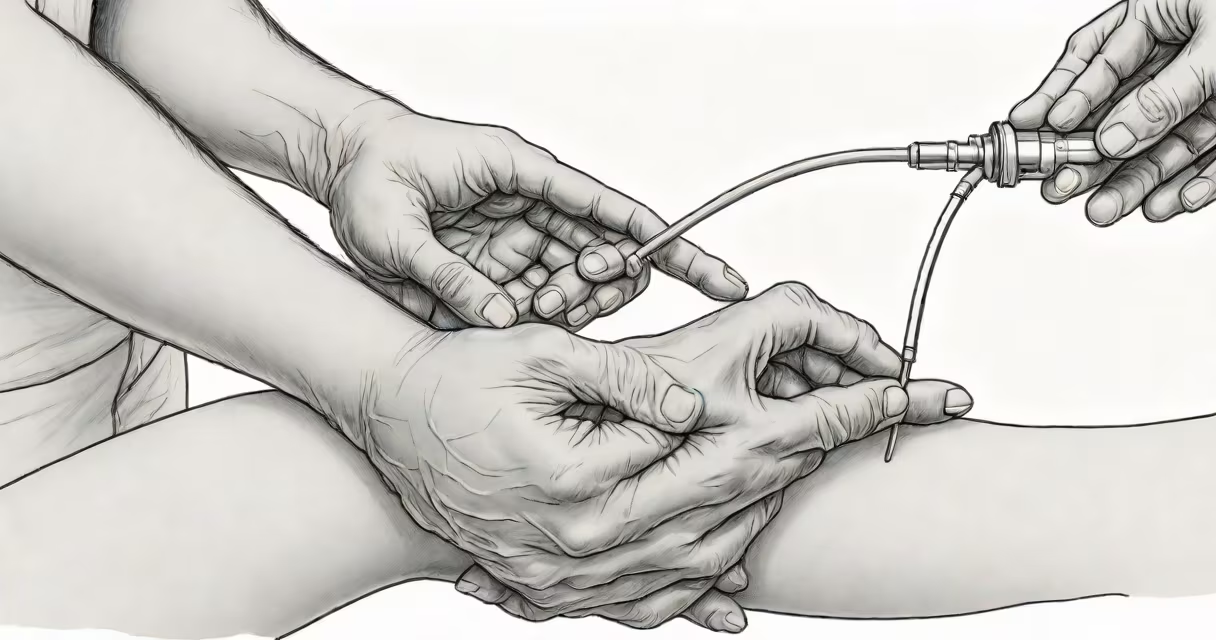
An IV, or intravenous infusion, is a medical procedure that delivers fluids, medications, or nutrients directly into a vein through a thin tube inserted under the skin. This method bypasses the digestive system and allows rapid absorption into the bloodstream.
IV therapy is standard in hospitals, clinics, and emergency care. It enables precise control over dosage and timing, making it essential during surgery, trauma, dehydration, or infection treatment. The most common IV solution is normal saline (0.9% sodium chloride), used to maintain fluid balance and support circulation.
According to the American Society of Health-System Pharmacists (ASHP), IV administration accounts for over 60% of medication delivery in acute care settings. The U.S. Food and Drug Administration (FDA) regulates IV solutions and devices to ensure sterility and safety. Failure to follow sterile technique increases the risk of bloodstream infections, which occur in approximately 1 in 300 IV insertions according to CDC data.
The process begins with site selection-usually the antecubital fossa (inner elbow) or hand veins. A needle attached to a plastic catheter is inserted into the vein. Once blood return confirms placement, the needle is removed, leaving the catheter in place. A clear plastic tube connects the catheter to a bag of fluid suspended above the patient.
Gravity or a pump controls flow rate. For example, a typical adult may receive 100 mL/hour of normal saline. Flow rates are adjusted based on patient weight, condition, and medication requirements. A standard IV setup includes a drip chamber to monitor drops per minute. At 15 drops/mL, 100 mL/hour equals 25 drops per minute.
When used for antibiotics, such as vancomycin, IV delivery ensures therapeutic levels in the blood within minutes. Oral antibiotics take longer to reach effective concentrations due to digestion and liver metabolism. IV therapy reduces treatment time and improves outcomes in severe infections.
IV solutions are classified by tonicity-hypotonic, isotonic, or hypertonic-based on solute concentration relative to blood plasma.
| Type | Solute Concentration | Common Uses | Example |
|---|---|---|---|
| Isotonic | Equal to plasma (280-300 mOsm/L) | Volume replacement, dehydration | Normal saline (0.9% NaCl) |
| Hypotonic | Lowers osmotic pressure | Cell hydration, hypernatremia | 0.45% NaCl |
| Hypertonic | Raises osmotic pressure | Severe hyponatremia, edema reduction | 3% NaCl |
Isotonic solutions like normal saline are most frequently used because they do not cause fluid shifts between cells and blood. Hypotonic solutions can lead to cellular swelling if administered too quickly. Hypertonic solutions are reserved for critical cases due to the risk of tissue damage and nerve irritation.
A 2022 study in *Critical Care Medicine* found that using balanced crystalloids (like lactated Ringer's) instead of normal saline reduced acute kidney injury risk by 18% in ICU patients. This shift reflects growing evidence that not all IV fluids are equally safe.
IV therapy is routine in surgical centers, intensive care units, and emergency rooms. It supports resuscitation during shock, treats severe dehydration from vomiting or diarrhea, and delivers chemotherapy agents safely.
In outpatient settings, IVs are used for home infusion therapy. Patients with chronic conditions like Crohn's disease or multiple sclerosis may receive biologic drugs via IV at home. A nurse visits weekly to administer infliximab, a TNF-alpha inhibitor, reducing flare-ups by 60% compared to oral therapy alone.
Some wellness clinics offer IV vitamin cocktails marketed for energy boosts or hangover relief. These often contain high-dose B-complex vitamins, vitamin C, and magnesium. However, the FDA warns that unregulated IV supplements carry risks including fluid overload, electrolyte imbalance, and allergic reactions. There is no proven benefit for healthy individuals beyond what diet provides.
Many people assume IV therapy is always faster or better than oral intake. That's false. Oral medications are safer for long-term use and avoid complications like phlebitis or infiltration. Not every illness requires IV treatment.
Another misconception is that IVs "detox" the body. The liver and kidneys handle detoxification naturally. IV fluids don't improve this process. Excess fluids can cause pulmonary edema or heart strain, especially in elderly patients with compromised cardiac function.
I experienced this firsthand during a hospital rotation. A 78-year-old man with mild confusion was given a 1-liter bolus of normal saline for dehydration. Within 30 minutes, his breathing worsened. A chest X-ray showed pulmonary edema. His heart couldn't handle the sudden volume increase. He required diuretics and oxygen. This case highlights why IV decisions must consider comorbidities.
Complications include infiltration (fluid leaking into surrounding tissue), phlebitis (vein inflammation), and air embolism (air entering the bloodstream). Air embolism is rare but fatal if large volumes enter the right heart. Modern IV sets include filters and air traps to prevent this.
IV differs from subcutaneous (SC) and intramuscular (IM) injections. SC injections deliver medication under the skin-slower absorption, less volume. IM injections go into muscle tissue, used for vaccines and certain hormones. IV is fastest and most direct.
Oral medications pass through the gastrointestinal tract. They're metabolized by the liver (first-pass effect), reducing effectiveness. IV bypasses this, giving full bioavailability. But it also removes the safety buffer of digestion.
For example, morphine given IV reaches peak pain relief in 5 minutes. Oral morphine takes 30-45 minutes and may be partially broken down before reaching the brain. IV is preferred in acute pain management, but oral forms remain standard for chronic pain due to lower addiction risk and ease of use.
Understanding the role of IV therapy helps patients and providers make informed choices. It's not a miracle cure-it's a tool. When used appropriately, it saves lives. When misused, it causes harm.