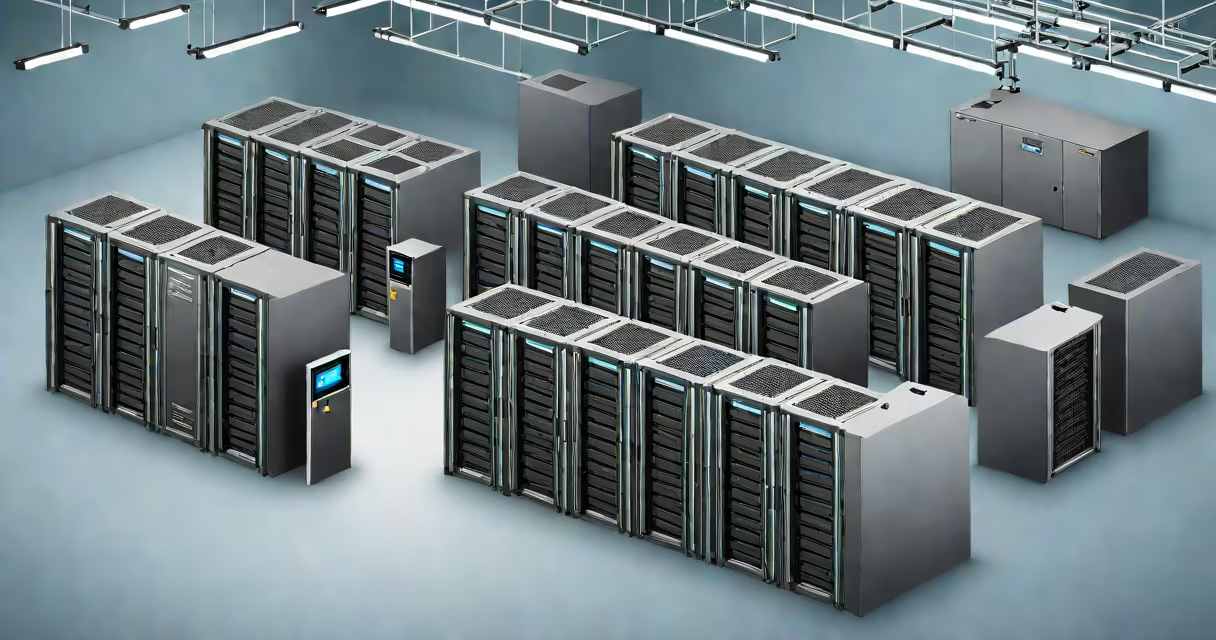
An enterprise data center is a purpose-built facility housing an organization's core IT infrastructure, including servers, storage systems, networking equipment, and power and cooling systems. It supports high-availability applications, large-scale data processing, and centralized management of critical business operations.
These centers differ from basic server rooms by design, scale, and operational rigor. They are engineered for continuous uptime, often achieving 99.995% availability-equivalent to less than 26 minutes of downtime annually. This level of reliability underpins financial transactions, healthcare records, and global supply chain logistics.
Enterprise data centers are not just buildings with servers. They integrate redundant power feeds, multiple cooling zones, physical access controls, and real-time monitoring. According to the Uptime Institute, Tier IV data centers-the highest certification level-feature fault-tolerant designs with no single points of failure. These facilities serve companies like Amazon, JPMorgan Chase, and Microsoft as backbones for their internal and customer-facing services.
At its core, an enterprise data center operates through layered redundancy and automated orchestration. Power enters via dual utility feeds, each connected to independent substations. If one fails, a diesel generator activates within seconds, maintaining power during outages. Cooling systems use chilled water loops and precision air handlers to maintain temperatures between 20°C and 24°C (68°F-75°F), preventing overheating.
Network traffic flows through redundant fiber paths. A single switch failure doesn't disrupt connectivity because failover occurs in milliseconds. Virtual machines and containers run on hypervisors like VMware ESXi or Kubernetes, managed through centralized platforms such as Red Hat OpenShift or Microsoft Azure Stack.
For example, a major U.S. bank uses a multi-site enterprise data center model. Its primary site in Chicago processes 1.2 million daily transactions. A secondary site in Atlanta mirrors all data in real time using synchronous replication. If Chicago experiences a blackout, Atlanta takes over within 90 seconds-automatically rerouting traffic via DNS failover and load balancers.
Enterprise data centers consist of five interdependent layers:
| Layer | Function | Example Technologies |
|---|---|---|
| Power | Redundant electrical supply and backup generation | UPS systems, diesel generators, PDU distribution |
| Cooling | Temperature and humidity control | CRAC units, liquid cooling, hot/cold aisle containment |
| Networking | High-speed internal and external connectivity | 10 Gbps+ switches, SD-WAN, firewalls |
| Storage | Data persistence and recovery | RAID arrays, SAN/NAS, backup tapes |
| Security | Physical and digital protection | Biometric access, intrusion detection, encryption |
Facilities are rated by the Uptime Institute's Tier Classification system. Tier I offers basic redundancy; Tier IV delivers fault tolerance. Most enterprises deploy Tier III or Tier IV setups for production environments. A Tier IV facility includes dual independent power paths, redundant cooling systems, and 24/7 on-site engineering staff.
Some organizations operate private data centers on-premises. Others lease space in colocation facilities or use cloud provider infrastructure. The choice depends on workload sensitivity, regulatory requirements, and cost structure. For instance, a pharmaceutical company handling FDA-regulated clinical trial data may build a private, air-gapped data center to meet HIPAA and 21 CFR Part 11 compliance.
Many assume that "enterprise data center" means only massive facilities like those operated by Google or Meta. But a mid-sized insurance firm with 500 employees can have an enterprise-grade data center-even if it occupies a single floor of a leased building. The defining factor is operational standardization, not size.
Another confusion: equating enterprise data centers with cloud services. While both host applications and store data, they differ fundamentally. Cloud providers offer elastic, pay-per-use resources accessed over the internet. An enterprise data center runs dedicated hardware owned and managed by the organization. You can run hybrid models-some workloads in the cloud, others on-premises-but the underlying architecture remains distinct.
A lesser-known fact: most enterprise data centers consume more energy than small cities. The U.S. Department of Energy reports that data centers accounted for 2% of national electricity use in 2023-about 130 terawatt-hours. This drives growing adoption of renewable-powered facilities. Companies like Apple and Google now run 100% renewable energy in their data centers, reducing carbon footprints while meeting sustainability goals.
Enterprises use these centers for mission-critical functions. Financial institutions rely on low-latency trading systems hosted in colocated data centers near stock exchanges. Retailers use real-time inventory tracking across thousands of stores, synchronized through central data centers. Healthcare providers store electronic health records compliant with HIPAA, ensuring patient data privacy and audit trails.
I once visited a data center in Northern Virginia that served as the hub for a national e-commerce platform. During Black Friday, it processed over 1.8 million orders per hour. The facility used AI-driven thermal mapping to adjust cooling based on rack heat density, reducing energy consumption by 19% compared to static settings.
Understanding what is enterprise data center reveals it as a strategic asset-not just a technical environment. It combines engineering excellence, regulatory alignment, and operational discipline to enable digital transformation at scale.