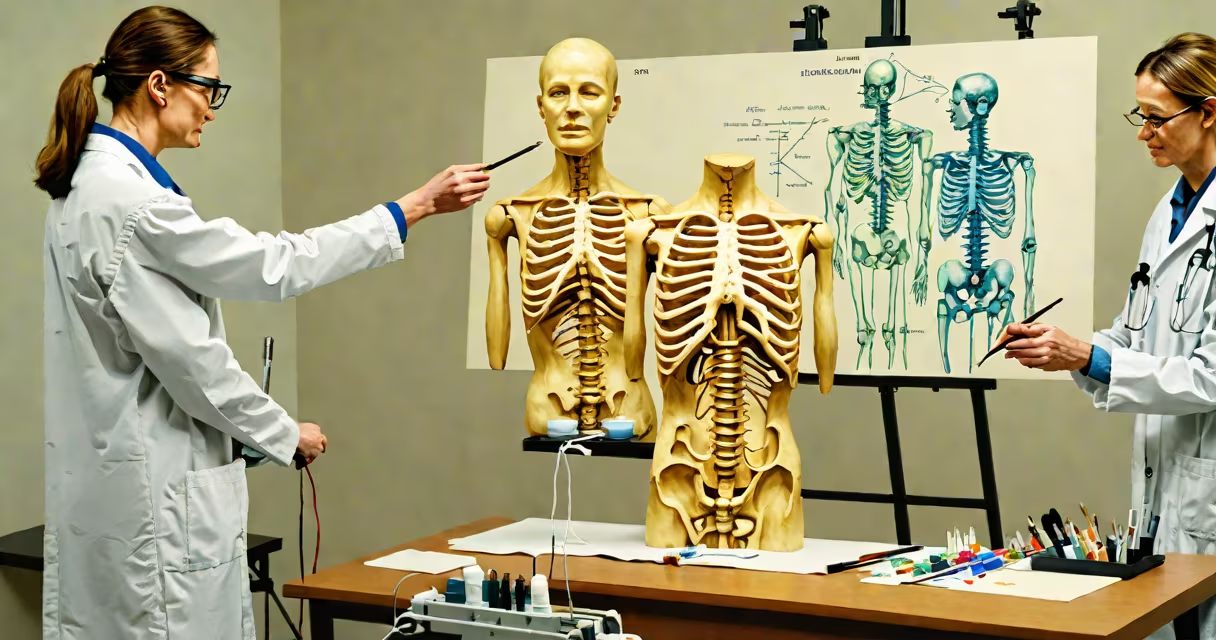
Colleges for radiology technician offer accredited associate degree programs that prepare students to perform medical imaging procedures such as X-rays, CT scans, and MRIs under physician supervision. These programs combine classroom instruction in anatomy, radiation safety, and patient care with hands-on clinical training in hospitals and imaging centers.
Students complete courses in human biology, medical terminology, and radiographic positioning. They learn to operate imaging equipment, follow safety protocols, and communicate with patients during exams. Most programs take 20 months to two years to complete and lead to eligibility for certification through the American Registry of Radiologic Technologists (ARRT).
Graduates work in hospitals, outpatient clinics, and diagnostic imaging centers. The U.S. Bureau of Labor Statistics projects 7% growth in radiologic technician jobs from 2022 to 2032, faster than average for all occupations. This demand stems from aging populations requiring more diagnostic imaging and advances in medical technology.
Colleges for radiology technician typically require applicants to have a high school diploma or GED, along with prerequisite courses in algebra, biology, and chemistry. Some programs also require a minimum GPA or standardized test scores. Applicants often submit transcripts, letters of recommendation, and complete a personal statement.
Once admitted, students attend classes in radiographic physics, image analysis, and patient assessment. They spend 16 to 20 hours per week in clinical rotations at approved healthcare facilities. During these rotations, they practice positioning patients, adjusting machine settings, and producing diagnostic-quality images under direct supervision.
Clinical sites vary by school. For example, the University of Texas Health Science Center at San Antonio partners with Methodist Hospital and Baptist Health System for student placements. Students rotate through departments including emergency radiology, orthopedic imaging, and pediatric radiography to gain diverse experience.
Most colleges for radiology technician offer an Associate of Applied Science (AAS) degree. AAS programs focus on practical skills and job readiness. Some institutions also provide certificate-only tracks for individuals who already hold a related health science credential.
Accreditation ensures program quality and eligibility for ARRT certification. The Joint Review Committee on Education in Radiologic Technology (JRCERT) accredits programs in the U.S. Only JRCERT-accredited programs allow graduates to sit for the ARRT certification exam. Schools must meet strict standards for faculty qualifications, curriculum content, and clinical site agreements.
| Program Type | Duration | Accreditation Required | Job Entry Level |
|---|---|---|---|
| Associate Degree (AAS) | 20-24 months | Yes (JRCERT) | Entry-level technician |
| Certificate Program | 12-18 months | Yes (JRCERT) | Entry-level technician |
| Bachelor's Degree (rare) | 4 years | Yes (JRCERT) | Leadership or advanced imaging roles |
Some schools offer hybrid formats combining online coursework with in-person clinicals. For example, Penn Build College provides a radiography program with 80% online learning and 20% supervised clinical time. Students must secure their own clinical site, which requires approval from the program director.
Colleges for radiology technician serve both career changers and recent high school graduates seeking a stable healthcare profession. Median annual pay for radiologic technicians was $65,000 in 2023, according to the BLS. Salaries vary by location, with higher wages in metropolitan areas and specialized settings like trauma centers.
Many programs prioritize workforce development in underserved regions. For instance, the University of Alaska Anchorage offers a radiology technician program focused on serving rural Alaskan communities. Graduates often return to their home regions, helping close gaps in access to diagnostic imaging services.
Programs also differ in their focus on specific imaging modalities. While most train students in conventional X-ray and fluoroscopy, some include limited training in computed tomography (CT) and mammography. Advanced training in these areas may require additional certification or post-graduate education.
One widespread misunderstanding is that radiology technician programs are interchangeable. Not all schools offer the same level of clinical exposure or graduate support. A 2022 study by the National Association of Healthcare Recruiters found that 43% of employers reported hiring candidates from programs with low clinical hour requirements, leading to longer onboarding times.
Another error is assuming that online-only radiology technician programs are valid. The JRCERT explicitly states that no program can be fully remote. Clinical experience must occur in person at a facility with proper equipment and trained supervisors. Online components cannot replace hands-on training in patient positioning or radiation protection.
A third misconception is that certification guarantees employment. While ARRT certification is required for most jobs, placement depends on local demand, geographic mobility, and interview performance. In 2023, the national average job placement rate for JRCERT-accredited programs was 87%, but individual schools ranged from 68% to 96%.
In 2022, a student named Maria enrolled in the radiography program at Central Piedmont Community College in Charlotte, North Carolina. She completed 16 weeks of classroom instruction covering radiation biology, anatomy, and ethics. Her clinical rotation included 12 shifts at Carolinas Medical Center, where she assisted in 320 patient exams.
Maria passed the ARRT certification exam on her first attempt. She secured a position at a private imaging center within six weeks of graduation. Her starting salary was $62,000, above the regional average. She attributes her success to the program's emphasis on patient communication and technical precision during clinicals.
She now mentors new students, advising them to prioritize attention to detail and consistent practice. "The machines don't lie," she says. "If you're off by half an inch in positioning, the image is useless. That's why we rehearsed every scan type until it became muscle memory."
When evaluating colleges for radiology technician, prioritize programs with high pass rates on the ARRT exam, strong job placement records, and partnerships with local hospitals. Check the JRCERT website to confirm a program's current accreditation status. Programs must be reaccredited every five years.
Ask about clinical site availability. Some schools guarantee placements; others expect students to apply and interview for spots. The cost of transportation, housing, and uniforms can add up. The average tuition for a public community college program ranges from $8,000 to $15,000, while private institutions charge $20,000 or more.
Consider long-term career paths. While most technicians start in general radiography, opportunities exist in specialized fields like interventional radiology, cardiac imaging, or mobile imaging units. Some schools offer elective courses or pathways toward advanced certifications in ultrasound or nuclear medicine.
Colleges for radiology technician provide a clear path into a growing healthcare field. With proper accreditation, hands-on training, and strong job placement outcomes, these programs deliver measurable results for students seeking stable, skilled careers in medical technology.