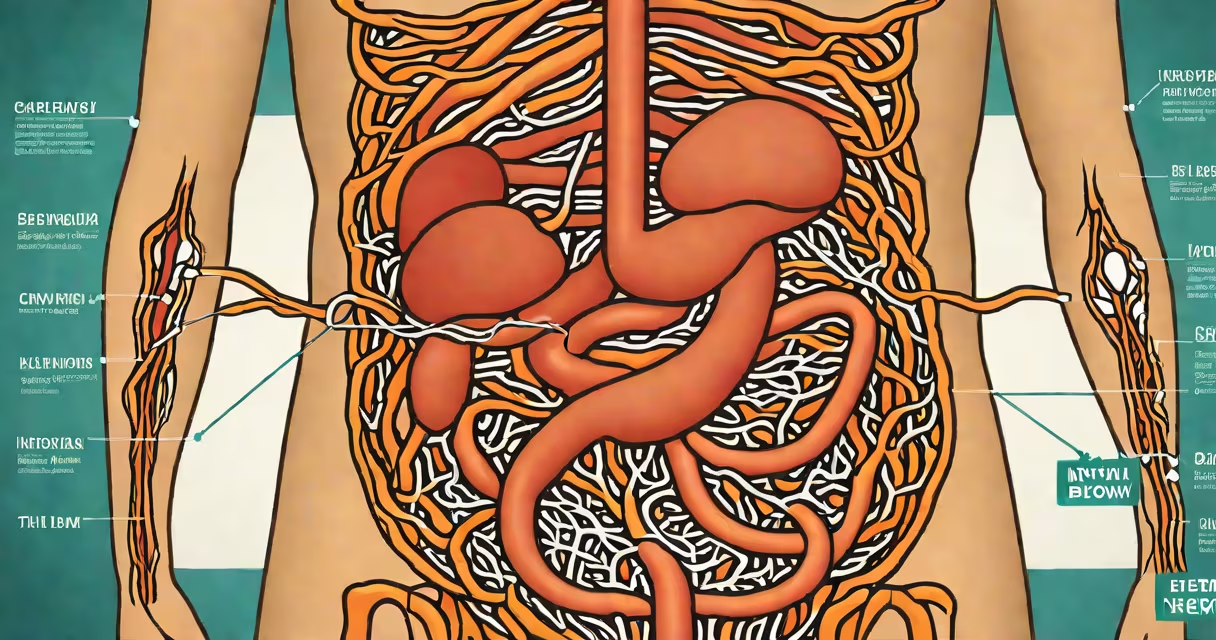
Irritable bowel syndrome (IBS) is a functional gastrointestinal disorder characterized by recurrent abdominal pain and changes in bowel habits-such as diarrhea, constipation, or both-without detectable structural or biochemical abnormalities in the intestines. It affects approximately 10-15% of adults globally, with higher prevalence among women and individuals under 50.
IBS results from disrupted communication between the brain and the gut, leading to abnormal muscle contractions in the colon and heightened sensitivity to normal digestive processes. Unlike inflammatory bowel diseases such as Crohn's or ulcerative colitis, IBS does not cause visible damage to the intestinal lining. Diagnosis relies on symptom patterns rather than imaging or lab tests.
The Rome IV criteria, established by the International Foundation for Gastrointestinal Disorders, define IBS as abdominal pain occurring at least once per week over the past three months, associated with two or more of the following: improvement with defecation, onset associated with a change in stool frequency, or onset associated with a change in stool form.
IBS stems from dysregulation in the brain-gut axis-the bidirectional communication network linking the central nervous system and the enteric nervous system in the gut. Signals from the brain can amplify gut sensations, making normal contractions feel painful. Conversely, gut irritation can send distress signals to the brain, contributing to anxiety and mood disturbances.
Altered motility plays a key role. In IBS-D (diarrhea-predominant), colonic contractions are too frequent and forceful, leading to loose stools. In IBS-C (constipation-predominant), contractions are slow and weak, resulting in hard, infrequent bowel movements. Mixed-type IBS involves alternating episodes of both.
A 2021 study published in *Gastroenterology* found that 60% of IBS patients reported symptom onset within six months of a gastrointestinal infection, suggesting post-infectious IBS may develop due to lasting immune activation and altered gut microbiota.
IBS is classified by predominant bowel pattern. The most common subtypes are:
| Type | Predominant Symptom | Prevalence | Key Mechanism |
|---|---|---|---|
| IBS-D | Diarrhea | 30-40% | Increased colonic motility, fluid secretion |
| IBS-C | Constipation | 20-30% | Reduced motility, delayed transit time |
| IBS-M | Mixed (both) | 30-40% | Fluctuating motility, often triggered by diet or stress |
Non-constipated IBS accounts for nearly half of cases. A 2022 review in *The American Journal of Gastroenterology* noted that IBS-M patients often report greater symptom severity and reduced quality of life compared to other subtypes.
Diet is a major trigger. High-FODMAP foods-fermentable oligosaccharides, disaccharides, monosaccharides, and polyols-include onions, garlic, wheat, dairy, and certain fruits. These ferment in the colon, producing gas and distension. A 2014 randomized controlled trial showed that a low-FODMAP diet reduced symptoms in 76% of IBS patients over eight weeks.
Stress is another key factor. While stress doesn't cause IBS, it can worsen symptoms by increasing gut sensitivity and altering motility. Anxiety disorders co-occur in 40-60% of IBS patients, according to the National Institute of Diabetes and Digestive and Kidney Diseases (NIDDK).
Many confuse IBS with celiac disease or inflammatory bowel disease (IBD). Unlike celiac, IBS does not involve an autoimmune response to gluten. Unlike IBD, there is no intestinal inflammation or risk of colorectal cancer. A blood test for tissue transglutaminase antibodies and a colonoscopy can rule out celiac and IBD.
Consider a 32-year-old woman presenting with cramping abdominal pain that improves after bowel movements, alternating between loose stools and hard lumps. She reports bloating after eating beans or apples. Her physical exam and routine blood work are normal. Colonoscopy shows no inflammation or polyps.
Based on Rome IV criteria, she meets diagnostic thresholds for IBS-M. A low-FODMAP diet trial reduces her symptoms by 60% over four weeks. She identifies stress from work as a recurring trigger. Cognitive behavioral therapy (CBT) helps manage her response to stress. Her symptoms improve over six months with lifestyle adjustments.
This case illustrates that IBS is manageable through targeted interventions-even without medication. It also highlights that symptom patterns, not isolated events, define the condition.
First-line management includes dietary modifications, stress reduction, and symptom-specific medications. Linaclotide (for IBS-C) and rifaximin (for IBS-D) are FDA-approved drugs that target underlying mechanisms. However, many patients respond well to non-pharmacological approaches.
Red flags requiring further evaluation include unintentional weight loss, rectal bleeding, nocturnal symptoms, or family history of IBD or colon cancer. These suggest alternative diagnoses and warrant referral to a gastroenterologist.
One non-obvious fact: IBS symptoms often improve during sleep and worsen with prolonged sitting or standing. This is linked to autonomic nervous system shifts. A 2019 study in *Neurogastroenterology & Motility* found that patients with IBS reported 30% less pain during rest compared to periods of sustained activity.
As someone who managed my own IBS through food journaling and a structured elimination diet, I learned that identifying personal triggers takes time-but the payoff is consistent symptom control. I eliminated dairy and high-fructose corn syrup, then reintroduced items one at a time. After 12 weeks, I could eat most foods without discomfort.
What is irritable bowel? It is a chronic condition rooted in altered gut-brain signaling, not structural disease. With proper diagnosis and personalized care, most people achieve meaningful symptom relief and improved quality of life.