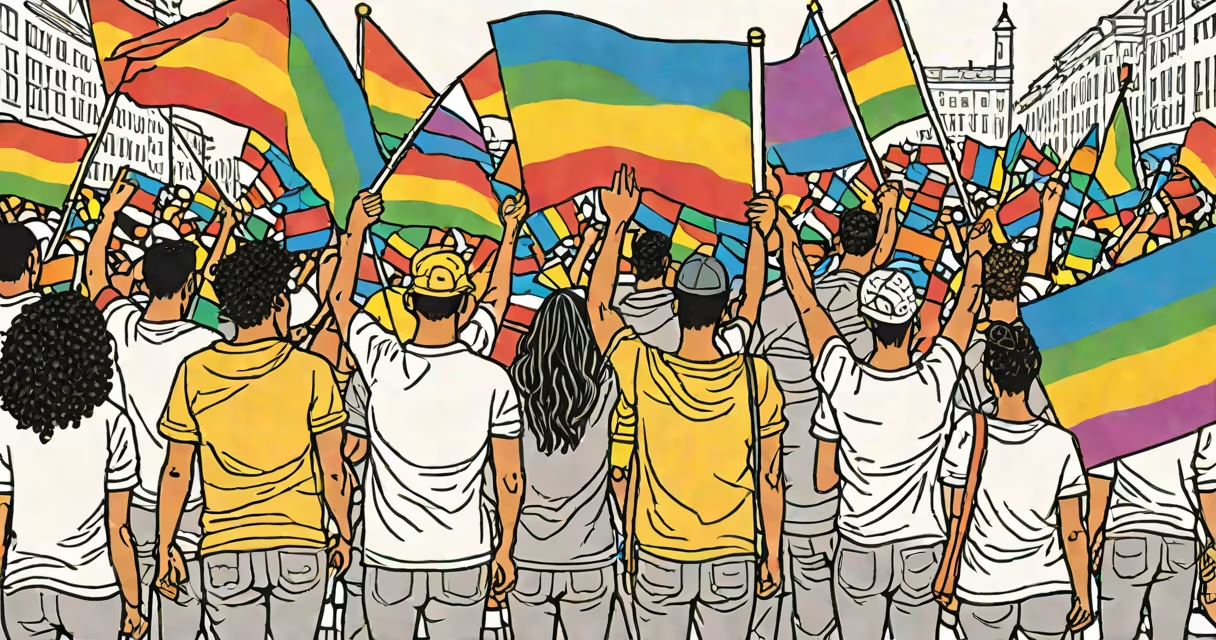
The acronym LGBTQI stands for lesbian, gay, bisexual, transgender, queer, and intersex. It represents a spectrum of sexual orientations and gender identities, serving as a collective identifier for people whose identities fall outside heterosexual and cisgender norms.
LGBTQI is not a single identity but a structure that acknowledges diverse experiences. The letters reflect distinct aspects of human expression: sexuality (lesbian, gay, bisexual), gender identity (transgender), identity beyond binary constructs (queer), and biological sex characteristics (intersex).
Each term within the acronym holds specific meaning. Lesbian refers to women who are romantically or sexually attracted to other women. Gay typically describes men who are attracted to men, though it's sometimes used broadly for anyone with same-sex attraction. Bisexual individuals are attracted to more than one gender. Transgender people have a gender identity that differs from their assigned sex at birth. Queer is an umbrella term for non-heteronormative identities, often reclaimed from historical derogatory use. Intersex individuals are born with physical sex characteristics that don't fit typical binary definitions of male or female.
When used together, LGBTQI creates a shorthand for inclusion. It allows communities to organize under shared visibility and advocacy goals. The acronym functions as both a personal identifier and a political tool, especially in movements for equal rights and anti-discrimination legislation.
Not all individuals identify with every letter. Some may use only parts of the acronym, while others prefer alternative terms such as LGBTQIA+ or simply "queer." The presence of multiple letters reflects the diversity within the community rather than a requirement for inclusion.
For example, a person may identify as gay and transgender but not use the term "bisexual" or "intersex," depending on their lived experience. The acronym is flexible and context-dependent, not a rigid checklist.
While LGBTQI is widely recognized, variations exist based on regional usage, cultural context, and evolving language. The most common extension is LGBTQIA+, where the "A" stands for asexual and aromantic people, and the "+" includes identities not explicitly named.
| Letter | Meaning | Source |
|---|---|---|
| L | Lesbian - woman attracted to women | Human Rights Campaign, 2023 |
| G | Gay - man attracted to men (often used broadly) | GLAAD Media Reference Guide, 2022 |
| B | Bisexual - attracted to more than one gender | APA Division 44, 2021 |
| T | Transgender - gender identity differs from assigned sex | World Health Organization, 2022 |
| Q | Queer - umbrella term for non-normative identities | GLAAD, 2022 |
| I | Intersex - variation in sex characteristics | UN Human Rights Office, 2021 |
The "+" in LGBTQIA+ is not decorative. It signals that the acronym is incomplete and intentionally inclusive of identities not listed, such as pansexual, non-binary, Two-Spirit, and others. The symbol is functional: it resists erasure and acknowledges that identity exists along a continuum.
A lesser-known fact is that "queer" was historically used as a slur. Its reclamation began in academic and activist circles during the 1980s and 1990s. Today, many younger people adopt "queer" as a preferred label due to its flexibility and resistance to categorization.
LGBTQI is used in education, healthcare, government policy, and media to promote inclusivity. Schools use it in anti-bullying programs. Hospitals include it in patient intake forms. Governments reference it in equality reports and nondiscrimination policies.
In the United States, the Department of Health and Human Services includes LGBTQI in federal health guidelines. The Centers for Disease Control and Prevention (CDC) uses the term in public health campaigns related to HIV prevention and mental health disparities among LGBTQ+ youth.
For example, CDC data from 2022 shows that LGBTQ+ youth are nearly three times more likely to attempt suicide than their heterosexual peers. Programs targeting this population use the acronym to ensure messaging reaches the intended audience and avoids exclusion.
People often assume that LGBTQI refers only to sexual orientation, but it includes gender identity and sex characteristics. Misunderstanding this leads to misrepresentation in media and policy. A person can be transgender and straight, or gay and intersex - the categories are independent.
Another misconception is that "queer" is interchangeable with "gay." While overlapping, "queer" is broader and more fluid. It can describe someone who rejects fixed labels altogether. Using "queer" as a synonym for "gay" reduces its power as a tool of resistance and self-definition.
Some assume the acronym is permanent. But language evolves. Terms like "homosexual" were once standard but are now considered outdated and clinical. Similarly, "transgender" is increasingly preferred over "transsexual" in medical contexts. The acronym itself is not static - it adapts as communities define themselves.
I once attended a community workshop where a facilitator asked participants to share which letters in LGBTQI resonated with them. One attendee, a non-binary person assigned female at birth, said they identified with "T" and "Q" but not "L" or "G." They explained that while they had romantic feelings for people of various genders, their identity wasn't rooted in attraction but in gender expression. Their story highlighted how the acronym supports connection without demanding uniformity.
The "+" in LGBTQIA+ is not optional. It represents the existence of identities that do not fit neatly into the original six letters. These include people who identify as agender, bigender, pangender, or as part of Indigenous gender systems like Two-Spirit.
Some institutions list "+" as a placeholder for "and more." Others use it to signal ongoing inclusion. The symbol is not a marketing gimmick - it's a structural acknowledgment of diversity.
For example, a university student center in Portland, Oregon, updated its website to read "LGBTQIA+ Community Hub." The change came after feedback from students who felt excluded by the shorter version. The addition of the "+" led to a 40% increase in event attendance from underrepresented groups.
Understanding what is LGBTQI stand for begins with recognizing that it is not a fixed list but a living structure. It reflects the complexity of human identity and the ongoing effort to create space for everyone. The acronym remains relevant because it evolves alongside the people it serves.