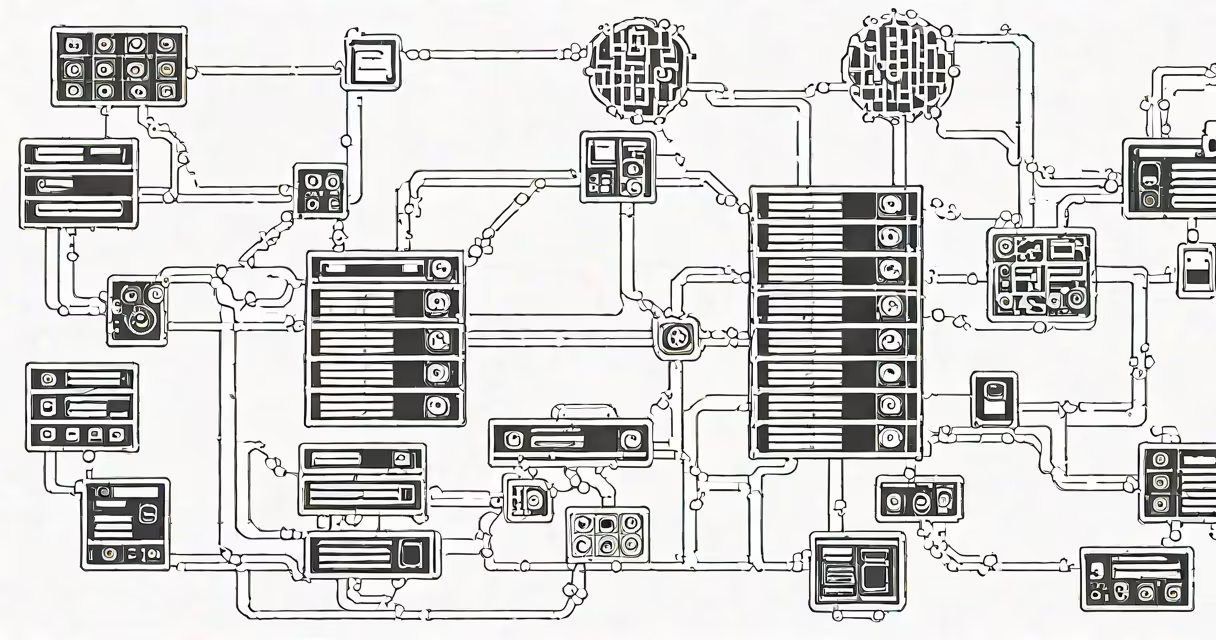
Network firewall security is a system that monitors and controls incoming and outgoing network traffic based on predefined security rules. It acts as a barrier between trusted internal networks and untrusted external sources like the internet, blocking malicious traffic while allowing legitimate communication.
Firewalls operate at the network layer, analyzing packets based on source and destination IP addresses, port numbers, and protocols. They enforce access control policies set by administrators, preventing unauthorized connections and reducing exposure to cyber threats such as malware, ransomware, and data exfiltration attempts.
Modern firewalls integrate deep packet inspection, stateful tracking, and application awareness. They are essential components of any organization's defense strategy, protecting systems from both external attacks and internal policy violations.
A firewall processes every network packet entering or leaving a protected network. It evaluates each packet against a set of rules-such as "allow HTTP traffic from known web servers" or "block all inbound traffic from suspicious IP ranges." Only traffic matching permitted criteria passes through.
Stateful firewalls maintain context about active connections. For example, if a device inside the network initiates a connection to a web server, the firewall records that session and automatically allows return traffic. This prevents attackers from spoofing responses to unsolicited requests.
New firewalls (NGFWs) go beyond basic filtering. They inspect payload content, detect known attack signatures, and identify applications by behavior rather than just port numbers. A request to port 80 might be HTTP-but it could also be a covert data transfer disguised as web traffic. NGFWs analyze patterns to distinguish between normal and malicious activity.
Firewalls differ in deployment model, inspection depth, and architecture. The most common types include:
| Type | Inspection Level | Use Case | Example |
|---|---|---|---|
| Packet-filtering | Layer 3 (IP) and Layer 4 (TCP/UDP) | Basic access control | Blocking all traffic from a known malicious IP range |
| Stateful inspection | Layer 3-4 with session tracking | Changing traffic management | Allowing return traffic for established sessions |
| Application-layer | Layer 7 (application protocols) | Content-aware filtering | Blocking file uploads via HTTP if they contain executable code |
| New (NGFW) | Layer 7 with threat intelligence and sandboxing | Advanced threat detection | Identifying encrypted malware in HTTPS traffic using SSL/TLS decryption |
Each type serves different security needs. Packet-filtering firewalls are fast and lightweight but lack context. Stateful firewalls improve accuracy by tracking connection states. Application-layer firewalls provide deeper visibility into what applications are doing. NGFWs combine multiple techniques, including intrusion prevention and sandbox analysis, to stop zero-day exploits.
Many assume that installing a firewall makes a network completely secure. That's incorrect. A firewall is one layer in a defense-in-depth strategy. It cannot prevent phishing attacks, insider threats, or compromised credentials-common vectors for breaches.
Another misconception is that firewalls are only for large enterprises. Small businesses and home offices use them too. A consumer-grade router with built-in firewall features protects against unsolicited inbound connections. But these often lack advanced logging, centralized management, or integration with threat intelligence feeds.
Also, firewalls do not inherently protect against lateral movement within a network. Once an attacker gains access through a vulnerable endpoint, they may move freely between internal systems unless segmented by VLANs, micro-segmentation, or additional tools like endpoint detection and response (EDR).
A retail chain operates 12 stores across the U.S., each connected via a site-to-site VPN to headquarters. The corporate IT team configures a new firewall at each location to enforce consistent security policies.
Rules are set to allow only outbound HTTPS (port 443) and DNS (port 53) traffic from store devices. All inbound traffic is blocked unless explicitly permitted-for example, updates from the central software server.
During a routine audit, the firewall logs show repeated failed login attempts from an IP address in Eastern Europe. The system flags this as suspicious and automatically adds the IP to a block list. No breach occurs because the firewall denied access before authentication was attempted.
This scenario illustrates how network firewall security prevents reconnaissance and brute-force attacks before they succeed. Without the firewall, the attacker could have gained access to point-of-sale systems and stolen customer payment data.
Network firewall security differs from endpoint security. While firewalls manage traffic at the network boundary, endpoint protection focuses on individual devices-detecting malware, encrypting files, and responding to anomalies in real time. Both are necessary.
Firewall rules should follow the principle of least privilege: only allow what is required. Overly permissive rules increase risk. For example, opening port 22 (SSH) to all public IPs invites brute-force attacks. Instead, restrict access to specific administrative workstations using static IP whitelisting.
Regular rule reviews are critical. Unused or outdated rules create blind spots. According to the National Institute of Standards and Technology (NIST), organizations should audit firewall configurations quarterly to ensure compliance with security baselines.
I once reviewed a client's firewall configuration during a penetration test. They had left a legacy rule open for port 1433 (SQL Server) to the entire internet. This exposed their database server to automated scanning tools. After removing the rule and implementing a restricted access policy, we reduced the attack surface.
Network firewall security is not standalone. It works best when integrated with other layers of defense. For instance, firewalls feed logs into SIEM (Security Information and Event Management) systems, enabling correlation with other alerts.
When combined with intrusion prevention systems (IPS), firewalls can actively block known exploit patterns. A single firewall rule might block traffic containing the string "SELECT * FROM users" in SQL queries-indicative of injection attacks.
Internal segmentation firewalls can isolate sensitive areas like HR databases or financial systems. These are especially useful in regulated industries such as healthcare (HIPAA) and finance (GLBA), where data isolation is mandated.
Network firewall security is a foundational element of modern cybersecurity. It filters traffic based on rules, prevents unauthorized access, and reduces the risk of data breaches. Understanding its types, limitations, and integration points ensures effective deployment.
While no single tool provides complete protection, network firewall security remains essential. It forms the first line of defense, working alongside encryption, multi-factor authentication, and continuous monitoring to maintain trust in digital infrastructure.