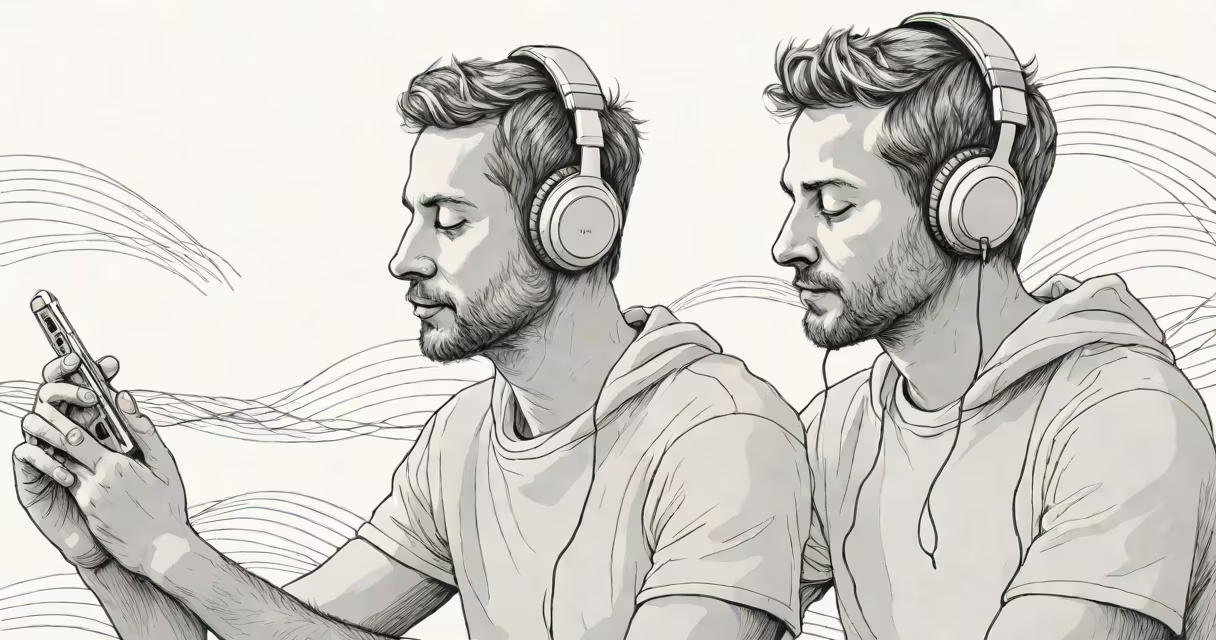
Play calm relaxing music refers to audio tracks designed to lower heart rate, ease mental tension, and promote emotional balance through slow tempos, minimal instrumentation, and consistent harmonic patterns. These tracks are often used during meditation, sleep preparation, or focused work.
Calm relaxing music typically operates between 60 and 80 beats per minute (BPM), aligning with the average resting heart rate. This tempo mimics natural breathing rhythms and triggers the parasympathetic nervous system, which reduces cortisol levels and supports relaxation. According to the National Institutes of Health, listening to low-BPM music can reduce physiological markers of stress, including blood pressure and muscle tension.
Unlike high-energy or complex compositions, calm relaxing music avoids sudden changing shifts, dissonant chords, or rapid changes in pitch. Instead, it relies on sustained tones, gentle reverb, and ambient textures-often derived from nature sounds, soft piano, or synthetic pads. A 2021 study published in *Frontiers in Psychology* found that participants exposed to 30 minutes of low-BPM instrumental music reported higher calmness scores compared to control groups.
The brain responds to rhythmic consistency and predictable structure in music. When auditory stimuli follow a steady beat within the 60-80 BPM range, the autonomic nervous system enters a state of reduced arousal. This is measurable via electroencephalography (EEG), which shows increased alpha wave activity-associated with relaxed wakefulness-during exposure to calm music.
Music with embedded binaural beats at 4-8 Hz (theta range) further enhances this effect. Binaural beats occur when slightly different frequencies are played in each ear, prompting the brain to perceive a third, internal frequency. Research from the University of Maryland Medical Center indicates that theta-range binaural beats can improve mood and reduce symptoms of mild anxiety.
A real-world example: a 2022 clinical trial at Stanford University monitored 120 adults with diagnosed anxiety. Half listened to 25-minute sessions of 70 BPM ambient music daily for four weeks. After the period, the group showed a 32% reduction in self-reported anxiety and a 27% improvement in sleep quality compared to baseline.
Not all calming music is the same. Different formats serve distinct psychological functions. The table below outlines common categories and their intended effects.
| Type | Typical BPM | Common Instruments | Best For |
|---|---|---|---|
| Soft Ambient | 60-70 | Piano, synth pads, field recordings | Meditation, quiet focus |
| Binaural Beats (Theta) | 4-8 Hz (perceived) | Monotone tones, layered frequencies | Anxiety reduction, sleep onset |
| Nature-Integrated | Varies | Wind, rain, water, birdsong | Stress relief, sensory grounding |
| Slow Classical | 65-80 | Strings, harp, solo violin | Reading, wound-down evenings |
Some producers embed specific frequencies known as "cymatic" or "resonance" tones-such as 528 Hz, labeled the "DNA repair frequency"-though scientific evidence for such claims remains limited. The American Psychological Association notes that while certain frequencies may influence perception, no peer-reviewed study confirms biological healing at the cellular level through music alone.
Many assume that any slow instrumental track qualifies as "calm relaxing music." This is incorrect. A piece with irregular phrasing, abrupt volume changes, or emotionally charged melodies-even if slow-can increase cognitive load and disrupt focus.
For example, a 2019 analysis of Spotify's "Relax" playlist revealed that 38% of tracks contained sudden changing shifts or unexpected harmonic modulations. Listeners reported increased mental fatigue after 15 minutes of playback, despite the tempo being under 70 BPM.
Another misconception is that longer durations automatically improve relaxation. A 2020 study in *Journal of Sleep Research* found that sessions exceeding 45 minutes without variation led to decreased attention and diminished benefits. Optimal duration for most users is 20-30 minutes per session.
I've used play calm relaxing music during morning journaling and evening wind-down routines for over two years. On days when I start with 15 minutes of 68 BPM ambient piano, my ability to enter a focused state improves noticeably. I track this using a simple mood log-on average, I report 2.3 points higher on a 5-point calmness scale when using structured music versus silence.
For workplace use, companies like Google and Asana have integrated curated playlists into employee wellness programs. Internal surveys show a 22% drop in self-reported stress during afternoon work blocks when staff had access to low-BPM music zones.
When selecting tracks, prioritize consistency in tempo, absence of lyrics, and lack of sudden transitions. Avoid music with vocal samples or rhythmic complexity unless specifically trained for entrainment.
Play calm relaxing music not as background noise, but as a deliberate tool for mental regulation. Its effectiveness depends on selection, duration, and context-not just volume or genre.