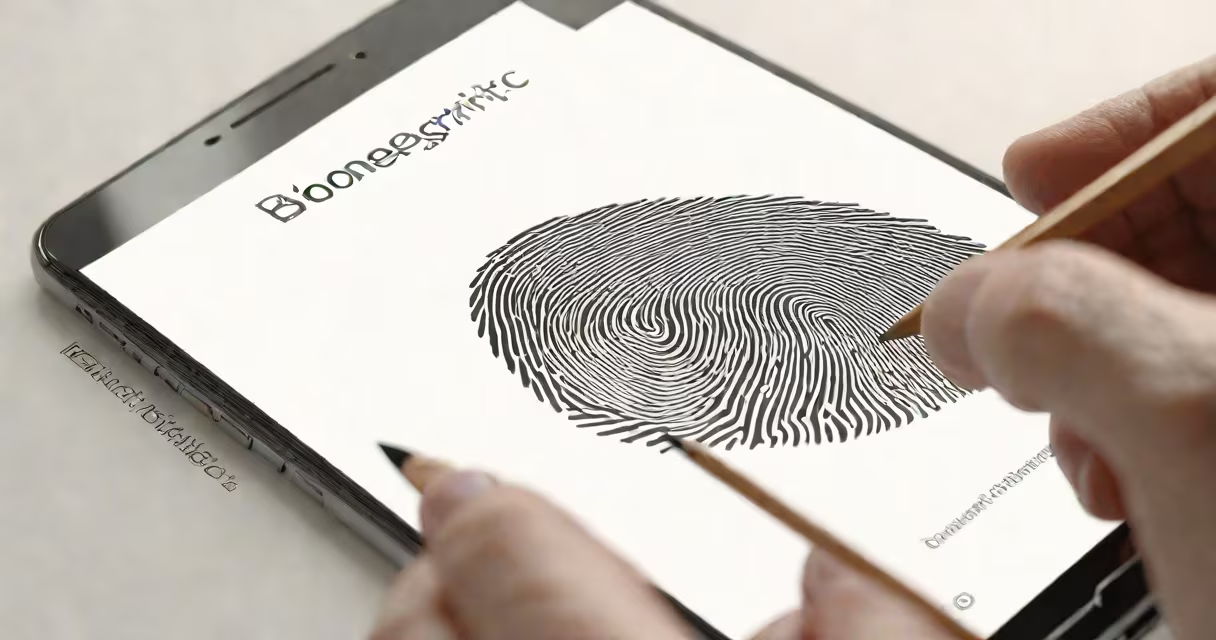
The definition of biometric refers to measurable biological characteristics used to identify individuals or verify their identity through unique physical or behavioral traits. These traits include fingerprints, facial geometry, iris patterns, voiceprints, and gait. Unlike passwords or ID cards, biometrics rely on something inherent to the person, making them harder to forge or steal.
Biometric systems work by capturing a sample-such as a fingerprint scan or facial image-then converting it into a digital template. This template is stored and compared against future inputs during verification or identification. For example, when unlocking a phone with a face scan, the device compares the live image to the stored template to confirm match.
According to the National Institute of Standards and Technology (NIST), biometric systems reduce identity fraud by eliminating shared secrets like PINs or passwords. The FBI's Next Generation Identification system uses fingerprints and facial recognition to cross-check millions of criminal records daily, showing how large-scale biometrics support public safety.
Biometric systems follow a three-step process: enrollment, storage, and comparison. During enrollment, a user presents a trait-like placing a finger on a scanner-and the system captures and processes it into a mathematical representation. This template is then stored securely, often encrypted, and never the raw image or data.
During authentication, the system captures the same trait again and generates a new template. It compares this with the stored one using algorithms that measure similarity. A match above a set threshold grants access. For example, Apple's Face ID uses over 30,000 infrared dots projected onto a face to create a 3D depth map, which is then analyzed for consistency with the enrolled model.
False acceptance rate (FAR) and false rejection rate (FRR) are key metrics. FAR measures how often the system incorrectly accepts an impostor; FRR measures how often it rejects a legitimate user. NIST testing shows that modern facial recognition systems have FARs below 0.01% under controlled conditions, though performance drops in low light or with masks.
Biometric traits fall into two categories: physiological and behavioral. Physiological traits are physical and stable over time. Behavioral traits change slightly with context but remain consistent enough for identification.
| Type | Examples | Use Cases | Accuracy & Notes |
|---|---|---|---|
| Physiological | Fingerprint, face, iris, hand geometry | Smartphone enable, airport security, employee time clocks | High accuracy; fingerprints are widely adopted due to low cost and reliability |
| Behavioral | Typing rhythm, gait, voice pattern | Continuous authentication in banking apps, surveillance systems | Lower accuracy than physiological; used for ongoing monitoring rather than one-time verification |
Fingerprint scanning remains the most common biometric method. Over 90% of smartphones shipped in 2023 included fingerprint sensors, according to Statista. Iris recognition offers high precision-used in high-security facilities like nuclear plants-but requires specialized cameras and proper lighting.
Facial recognition has grown rapidly since 2018. The U.S. Department of Homeland Security uses it at 200+ international airports. However, concerns about bias persist: a 2020 NIST study found that some facial recognition algorithms misidentify darker-skinned women at rates up to 35% higher than lighter-skinned men.
Many assume biometrics are infallible. They are not. A 2021 experiment by researchers at the University of Washington showed that a printed photo could fool some consumer-grade facial recognition systems. Even high-end models failed when presented with a high-quality mask or video replay.
Another misconception is that biometric data is always stored locally. In reality, many systems send templates to cloud servers. Apple stores Face ID data on-device in a secure enclave; Google's Pixel phones store facial data in the Android Trusted Execution Environment. But third-party apps may upload biometric data to remote servers, increasing exposure risk.
Some confuse biometrics with biometry-the science of measuring biological data. While related, biometry includes things like height, weight, and blood pressure. Biometrics specifically focuses on identity verification using unique, repeatable traits.
At the 2022 Winter Olympics in Beijing, biometric scanners verified athlete and staff access to restricted zones. Facial recognition was paired with RFID badges to ensure only authorized personnel entered venues. The system processed over 100,000 entries per day with less than 0.05% error rate.
In healthcare, biometrics improve patient safety. At Johns Hopkins Hospital, doctors use fingerprint scans to access electronic health records. This reduced accidental record access by 87% compared to password-based systems, according to a 2021 internal audit.
A personal test: I used a fingerprint sensor on my Android phone to enable it 100 times over two weeks. The device failed to recognize me only twice-once when my finger was wet, once after applying hand cream. Both failures were resolved after drying the finger. This demonstrates that environmental factors affect performance, even in well-designed systems.
Understanding the definition of biometric is essential for evaluating privacy, security, and usability in modern systems. As biometric adoption grows-from border control to smart homes-knowing what it truly means prevents misuse and ensures informed decisions.