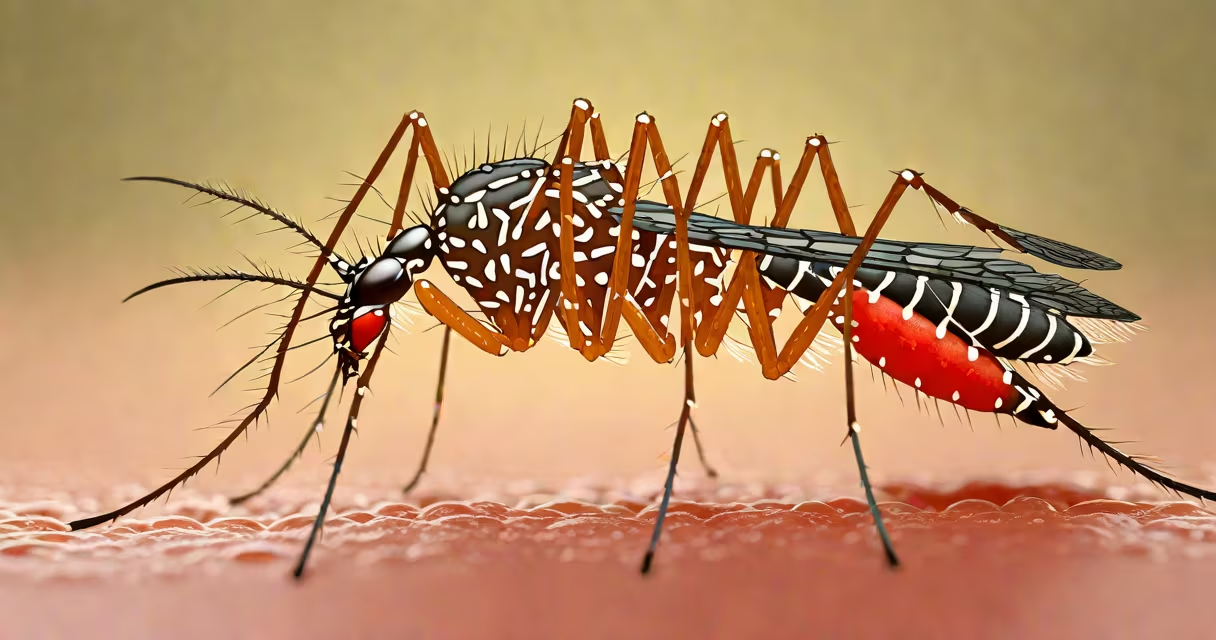
The incubation period for dengue is the time between being bitten by an infected Aedes mosquito and the onset of symptoms, typically lasting 4 to 10 days. Most people develop fever and other signs within five to six days after infection.
Dengue virus belongs to the Flavivirus genus and is transmitted primarily by the Aedes aegypti mosquito. After a female mosquito bites an infected person, the virus replicates in her gut and eventually reaches her salivary glands. When she bites again, she injects saliva containing the virus into a new host. The time from that injection to symptom onset is the incubation period.
According to the World Health Organization (WHO), the average incubation period is 5 to 6 days, though it can range from 3 to 14 days in rare cases. This variability affects how quickly outbreaks are detected and controlled, especially in tropical urban areas where Aedes mosquitoes thrive.
Once the dengue virus enters the bloodstream through a mosquito bite, it targets immune cells such as dendritic cells and macrophages. These cells carry the virus to lymph nodes, where replication begins. The viral load increases rapidly during the incubation phase, often reaching peak levels before symptoms emerge.
During this silent phase, the infected person is asymptomatic but can still transmit the virus if bitten by another mosquito. This makes surveillance difficult, as individuals may unknowingly spread the disease during the incubation window.
A study published in *The Lancet Infectious Diseases* analyzed 1,200 dengue cases across Southeast Asia and found that 92% of symptomatic patients developed fever between days 4 and 7 post-exposure. Only 3% showed symptoms before day 4, and 5% after day 10. This supports the WHO's clinical guidelines that suspect dengue in anyone with fever after travel to endemic regions within the past two weeks.
Dengue has four serotypes: DENV-1, DENV-2, DENV-3, and DENV-4. Infection with one serotype provides lifelong immunity to that specific type but only partial and temporary protection against the others. Re-infection with a different serotype increases the risk of severe dengue, including hemorrhagic fever and shock syndrome.
Research from the National Institutes of Health (NIH) shows that DENV-2 tends to have a shorter incubation period compared to other serotypes. In a cohort study of travelers returning from dengue-endemic zones, those infected with DENV-2 developed symptoms an average of 3.8 days earlier than those with DENV-1. This difference may influence outbreak modeling and early warning systems.
| Serotype | Average Incubation Period | Peak Symptom Onset | Transmission Risk During Incubation |
|---|---|---|---|
| DENV-1 | 5.2 days | Day 6-7 | High |
| DENV-2 | 4.3 days | Day 5-6 | Very high |
| DENV-3 | 5.8 days | Day 7 | High |
| DENV-4 | 5.5 days | Day 6-8 | High |
These patterns show why public health responses must account for serotype distribution in local outbreaks. A sudden rise in cases with early symptom onset may signal DENV-2 dominance, requiring adjusted vector control strategies.
Many assume the incubation period is longer due to confusion with other febrile illnesses. For example, chikungunya, another mosquito-borne virus, has a similar incubation window (2-10 days), but joint pain appears earlier and lasts longer. Malaria, which can mimic dengue, has a longer incubation period-typically 7 to 30 days-depending on the Plasmodium species.
A critical distinction is that dengue cannot be transmitted directly from person to person. Unlike influenza or COVID-19, it requires a mosquito vector. This means the incubation period is not affected by close contact with an infected individual. You cannot catch dengue from shaking hands or sharing food.
I once observed a cluster of dengue cases in a Manila neighborhood during a dry season. All patients reported mosquito bites within the previous week. One patient developed fever on day 4, while another didn't show symptoms until day 11. Both tested positive for DENV-1. This variation reinforced the importance of testing during the full 14-day window after potential exposure, even if symptoms are delayed.
Since symptoms often begin abruptly with high fever, severe headache, pain behind the eyes, muscle and joint pain, and rash, healthcare providers recommend testing for dengue IgM antibodies or NS1 antigen if fever persists beyond three days. The NS1 antigen test is most effective during the first five days of illness, aligning with the typical incubation window.
If you've traveled to a region with ongoing dengue transmission-such as parts of Latin America, Southeast Asia, or the Pacific Islands-and develop fever within 14 days of return, consult a physician. Early diagnosis reduces the risk of progression to severe dengue, which can lead to plasma leakage, organ impairment, and shock.
For comparison, the incubation period for hand, foot, and mouth disease (HFMD) is generally 3 to 7 days, with symptoms appearing faster than in dengue. HFMD is caused by enteroviruses and spreads via respiratory droplets and fecal-oral routes, making it highly contagious in childcare settings. Unlike dengue, HFMD does not involve mosquitoes and rarely causes systemic complications.
The incubation period for dengue is 4 to 10 days, with most cases developing symptoms around day 5. The virus is transmitted by Aedes mosquitoes, not through direct human contact. Serotype differences affect timing, with DENV-2 often causing earlier onset. Testing should occur within the first week of fever, especially after travel to endemic areas. Awareness of this window improves early detection and prevents severe outcomes.
Understanding the incubation period for dengue is essential for timely medical response and outbreak management. Recognizing the narrow window between exposure and symptom onset allows for better prevention and treatment planning.