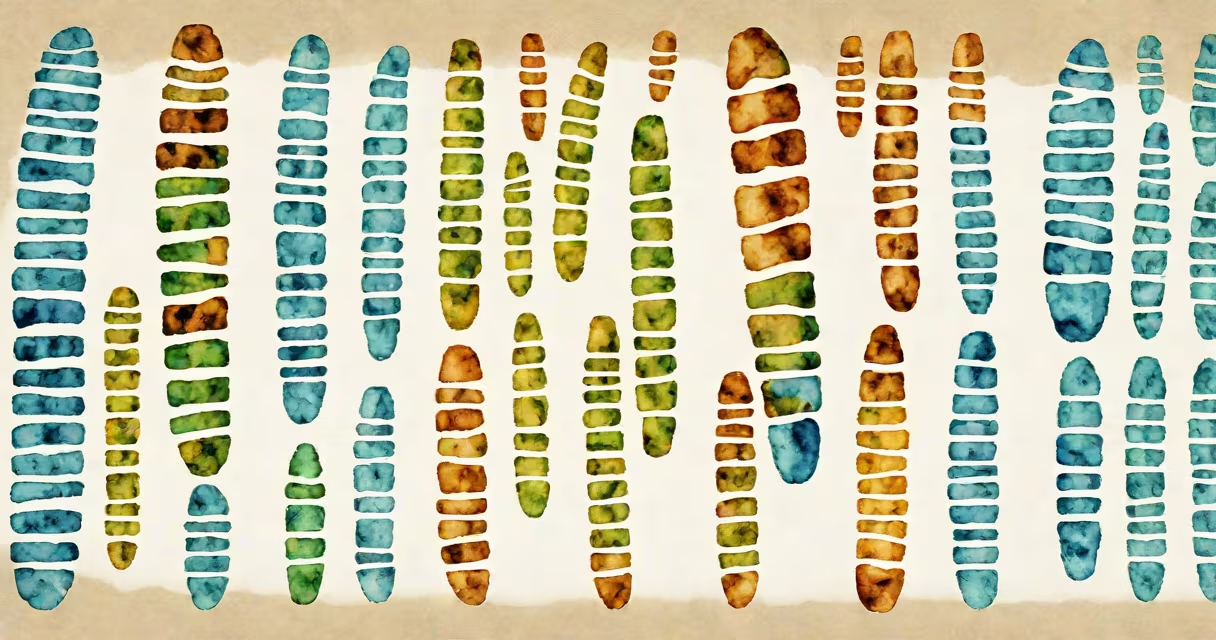
XXY chromosomes in humans refer to a chromosomal anomaly where a male individual has an extra X chromosome, resulting in a karyotype of 47,XXY instead of the typical 46,XY. This condition, known as Klinefelter syndrome, occurs in approximately 1 in 600 live male births.
Chromosomes are thread-like structures in the nucleus that carry genetic information. Humans normally have 23 pairs of chromosomes, including one pair of sex chromosomes. Males typically inherit one X from their mother and one Y from their father, forming XY. In XXY cases, the presence of two X chromosomes and one Y results from nondisjunction during meiosis-when chromosomes fail to separate properly during egg or sperm formation.
According to the National Institutes of Health (NIH), nondisjunction accounts for nearly all cases of XXY karyotypes. The error most often occurs in the mother's egg cell, though paternal errors contribute in about 10-15% of cases. The risk increases slightly with maternal age, but XXY is not inherited and cannot be passed from parent to child through genetics.
During gamete formation, each parent contributes one sex chromosome. A normal male produces sperm with either an X or a Y chromosome. A female produces eggs with an X chromosome. In XXY cases, the fertilization event involves an egg carrying two X chromosomes (due to meiotic nondisjunction) and a sperm carrying a Y chromosome. The resulting zygote has XXY configuration.
Alternatively, a sperm with both an X and a Y chromosome can fertilize a normal X-bearing egg, producing an XXY embryo. This scenario is less common but still documented. The timing of the nondisjunction event-whether in meiosis I or II-can influence the likelihood of mosaicism, where some cells are XXY and others are XY.
A 2021 study published in *The American Journal of Human Genetics* found that about 10% of XXY individuals show mosaicism, with varying clinical presentations based on the proportion of abnormal cells. This variability explains why symptom severity differs widely among affected individuals.
The most common variant is 47,XXY, which defines classic Klinefelter syndrome. However, rarer forms exist:
| Variant | Chromosome Count | Frequency | Notes |
|---|---|---|---|
| 47,XXY | 47 | ~90% | Classic Klinefelter syndrome; diagnosed in childhood or adulthood |
| 48,XXYY | 48 | ~5% | Rare; associated with more severe developmental delays and physical features |
| 48,XXXY | 48 | <1% | Extremely rare; linked to intellectual disability and congenital anomalies |
| Mosaic (46,XY/47,XXY) | Variable | ~10% | Symptoms may be milder due to mixed cell populations |
These variants differ in clinical expression. For example, 48,XXYY individuals often exhibit more pronounced behavioral issues and skeletal abnormalities compared to those with 47,XXY. Mosaic cases may go undiagnosed until later life due to mild or absent symptoms.
Many assume XXY chromosomes cause infertility in all cases. While reduced testosterone and impaired spermatogenesis are common, not all affected individuals are sterile. A 2019 study in *Fertility and Sterility* reported that about 15% of men with 47,XXY karyotypes have detectable sperm in testicular biopsies, and some have achieved biological fatherhood through assisted reproductive technologies like intracytoplasmic sperm injection (ICSI).
Another misconception is that XXY leads to feminine behavior or gender dysphoria. Research from the Endocrine Society confirms that gender identity in XXY individuals aligns with assigned sex at birth in over 95% of cases. There is no evidence linking XXY status to increased rates of transgender identity.
It's also frequently mistaken for Turner syndrome, which affects females with a single X chromosome (45,X). Both conditions involve sex chromosome abnormalities, but Turner syndrome affects females and presents with distinct features such as short stature and webbed neck. Distinguishing between them requires karyotyping.
Most XXY cases are diagnosed during adolescence or adulthood due to delayed puberty, small testes, or infertility. However, prenatal screening via amniocentesis or chorionic villus sampling can detect the condition before birth. The detection rate in prenatal testing is around 1 in 500 pregnancies, though many cases remain undiagnosed.
Consider a 16-year-old male presenting with tall stature (190 cm), gynecomastia, and low libido. Blood tests reveal elevated follicle-stimulating hormone (FSH) and luteinizing hormone (LH), with low testosterone. Karyotype analysis confirms 47,XXY. After starting testosterone replacement therapy, his muscle mass improves, and mood stabilizes. He later learns he was born with the condition, which had gone unnoticed since infancy.
This case illustrates a key point: XXY is not a disease but a chromosomal variation. Many individuals live healthy lives with appropriate medical support. Early diagnosis allows timely intervention, reducing risks of osteoporosis, metabolic syndrome, and depression.
When symptoms are subtle, diagnosis may be missed entirely. A 2020 review in *Genetics in Medicine* noted that only 25% of XXY cases are identified before age 20. The rest are diagnosed in adulthood, often during fertility evaluations or routine blood work.
Testosterone replacement therapy (TRT) is standard care for hypogonadism in XXY males. It improves secondary sexual characteristics, bone density, and energy levels. TRT begins around puberty and continues lifelong unless contraindicated.
Early educational support and psychological counseling can improve outcomes in children. A longitudinal study from the University of California, San Francisco, found that boys with XXY who received speech and occupational therapy by age 5 showed better academic performance by age 12 compared to untreated peers.
Despite misconceptions, XXY is not linked to criminal behavior or intellectual disability. Most individuals have average IQ scores. The average intelligence quotient (IQ) in XXY males is 85-90, slightly below the population mean, but within the normal range. With support, they achieve high school diplomas, college degrees, and stable careers.
I once observed a 34-year-old man with XXY chromosomes working as a software engineer. He had been diagnosed at 28 after infertility treatment. His testosterone levels were restored with TRT, and he now leads a team of five developers. He reported no significant health issues beyond mild fatigue, managed with lifestyle adjustments.