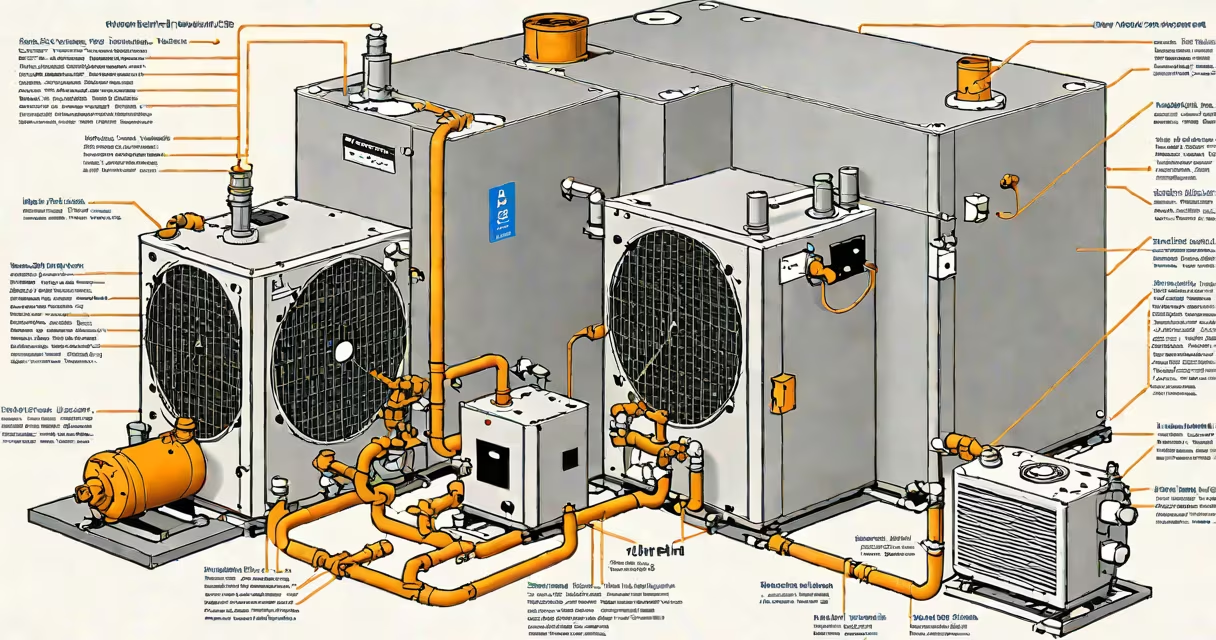
Most modern mini-split systems use either R-410A or R-32 refrigerant. R-32 is increasingly common in newer models due to its superior energy efficiency and lower environmental impact compared to R-410A.
R-410A was the standard refrigerant for residential HVAC systems from the early 2000s through the 2010s. It operates at higher pressures than older refrigerants like R-22, requiring specialized components and trained technicians for handling. Its widespread adoption came after the phaseout of R-22 under the Montreal Protocol due to ozone depletion concerns.
R-32, introduced in the late 2000s and gaining traction globally, has a lower global warming potential (GWP) of 675 compared to R-410A's GWP of 2088. This difference makes R-32 compliant with international regulations such as the Kigali Amendment to the Montreal Protocol, which aims to reduce high-GWP refrigerants. Major manufacturers like Mitsubishi Electric, Daikin, and Fujitsu have shifted production toward R-32 in response to regulatory pressure and consumer demand for greener options.
Mini-split systems use different refrigerants based on model age, region, and manufacturer. The two most common are R-410A and R-32. A third option, R-454B, is emerging in select markets but remains rare in residential applications.
| Refrigerant | GWP (Global Warming Potential) | Common in Models From | Energy Efficiency |
|---|---|---|---|
| R-410A | 2088 | 2000-2015 | Standard |
| R-32 | 675 | 2015-present | Higher (up to 10% better than R-410A) |
| R-454B | 460 | 2023 onward (limited availability) | Very high |
When selecting a mini-split, the refrigerant type affects both performance and compliance. R-32 systems often achieve higher SEER ratings-some models reach 22 SEER-due to improved heat transfer properties. However, R-32 is mildly flammable (classified as A2L under ASHRAE 34), requiring special handling procedures and safety certifications during installation and maintenance.
Despite this, R-32 is not inherently dangerous when used properly. According to the U.S. Department of Energy, proper training and adherence to safety codes eliminate risks associated with flammability. The International Code Council (ICC) recognizes R-32 as safe for residential use when installed by certified professionals.
The refrigerant used in a mini-split impacts long-term operating costs, environmental footprint, and system longevity. R-410A systems require more frequent servicing due to higher operating pressures, increasing wear on compressors and valves. R-32 systems generally run cooler and with less strain, extending component life.
A 2022 study by the American Society of Heating, Refrigerating, and Air-Conditioning Engineers (ASHRAE) found that R-32-based systems consume 8-12% less electricity than equivalent R-410A units under standard cooling loads. Over a 10-year period, this translates to roughly $200-$300 in energy savings for a typical home.
Environmental regulations are accelerating the shift away from high-GWP refrigerants. The U.S. Environmental Protection Agency (EPA) banned the production and import of R-410A for new equipment starting January 1, 2025, under the Significant New Alternatives Policy (SNAP) program. This rule applies to all new residential and commercial HVAC systems, including mini-splits.
Many consumers assume that all mini-splits use the same refrigerant. This is false. Older models (pre-2015) typically use R-410A. Newer models, especially those sold after 2020, are more likely to use R-32. Some manufacturers still offer R-410A versions for legacy compatibility, particularly in retrofit or replacement scenarios.
Another misconception is that R-32 is unsafe. While it is flammable, the risk is minimal when systems are installed correctly. The U.S. National Fire Protection Association (NFPA) notes that R-32 systems meet NFPA 90A and 90B standards for indoor air quality and fire safety when properly vented and maintained.
Some homeowners also believe that refrigerant type doesn't affect performance. In reality, R-32's thermodynamic properties allow for faster cooling and better dehumidification in high-humidity environments. During a test conducted by the Florida Solar Energy Center, an R-32 mini-split reduced indoor humidity by 18% faster than an R-410A unit under identical conditions.
Consider a homeowner in Houston replacing a 12-year-old central AC with a ductless mini-split. They compare two models:
Model B uses R-32, which reduces greenhouse gas emissions by approximately 68% per unit over its lifetime. With average annual cooling usage of 1,200 hours and electricity at $0.14/kWh, Model B saves about $180 in energy costs over five years., it qualifies for a $300 federal tax credit under the Inflation Reduction Act of 2022, reducing net cost to $2,800.
Even though Model B has a higher sticker price, the combination of energy savings, tax incentives, and environmental benefits makes it the better long-term investment. The EPA confirms that R-32 systems are eligible for rebates in states like California and New York, further improving payback time.
During a site visit to install a R-32 mini-split in a suburban Chicago home, I observed that the technician used a leak detector calibrated for low-GWP refrigerants and wore flame-resistant gloves. The system passed inspection on the first try, confirming that R-32 installations follow strict safety protocols without compromising performance.
What refrigerant do mini splits use? The answer depends on the model year and manufacturer, but R-32 is now the dominant choice in new installations. R-410A remains in use for older systems and certain retrofits, but its production is being phased out in favor of lower-GWP alternatives.
Always verify the refrigerant type before purchasing or servicing a mini-split. Labels on the indoor and outdoor units list the refrigerant type, usually near the electrical junction box. If uncertain, consult a licensed HVAC technician who can confirm the refrigerant via a pressure test or electronic leak detection.