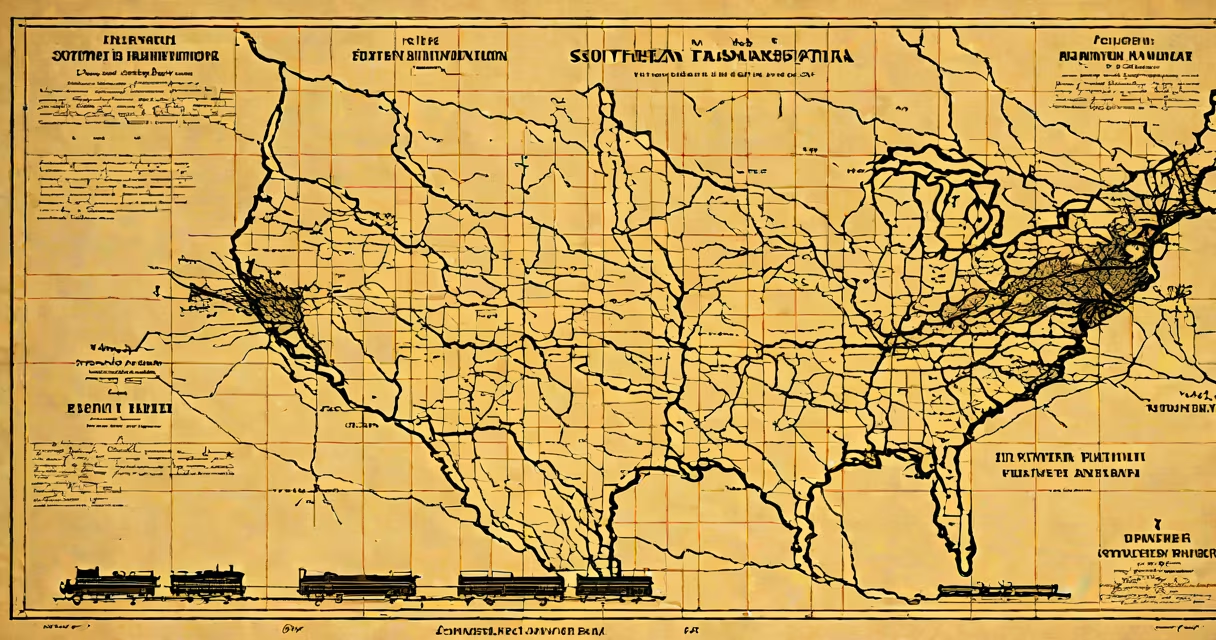
The South's transportation system during the Civil War was crippled by underdeveloped rail infrastructure, inconsistent track gauges, and Union naval blockades that severed coastal trade routes. These factors severely limited the Confederacy's ability to move troops, supplies, and food across its territory.
Before the war, the South had invested heavily in river-based commerce and short-haul rail lines, but these systems were poorly integrated. Railroads were often isolated, operating on different track widths-some 5 feet, others 4 feet 8.5 inches. This meant trains couldn't cross state lines without changing wheels or transferring cargo manually, a process that took hours and caused delays.
A 1860 U.S. Census report showed the North had 21,000 miles of track compared to the South's 9,000. By 1863, Union forces had seized control of major rail hubs like Memphis and Nashville, cutting off key arteries. The Confederacy lacked centralized planning; each state managed its own rail operations, leading to inefficiencies and duplication of effort.
Most Southern rail lines were designed for moving cotton and tobacco, not military equipment. They were narrow-gauge, low-capacity lines that couldn't handle heavy freight cars or long troop trains. A single locomotive could haul only 100 tons, far below Northern standards.
When the war began, the Confederacy tried to repurpose civilian rolling stock for military use. But many engines broke down due to poor maintenance and lack of spare parts. The Richmond and Danville Railroad, which connected Virginia to North Carolina, operated at only 60% capacity by 1863 due to worn tracks and insufficient fuel.
One documented failure occurred in May 1864, when General Grant's army moved through the Wilderness. Confederate forces attempted to reroute supplies via the Orange and Alexandria Railroad, but a derailment near Fredericksburg stranded 12 boxcars of ammunition. The delay cost the South a critical defensive position.
The South's transportation weaknesses weren't uniform. Different regions faced distinct challenges based on geography and investment priorities.
| Type of Barrier | Impact on Movement | Example |
|---|---|---|
| Non-standard track gauge | Prevented train transfers between states | Virginia's 5 ft gauge clashed with North Carolina's 4 ft 8.5 in |
| Limited rail density | Long distances between junctions | Only 13 rail lines crossed the Mississippi River south of St. Louis |
| Dependence on rivers | Rivers froze in winter; bridges were destroyed | Mississippi River traffic dropped 70% in 1862 after Union capture of Vicksburg |
| Weak repair facilities | Locomotives required months to fix | Richmond's shops repaired only 15 engines per month in 1863 |
These deficiencies created bottlenecks. For example, in 1862, the Confederate government sent 1,200 wagons from Augusta, Georgia, to Petersburg, Virginia. The process took 42 days-over six weeks-due to road degradation and lack of coordination. By contrast, a similar convoy in the North completed the trip in 14 days using standardized rail lines.
Union naval blockades didn't just stop ships-they collapsed the South's entire economic engine. Before the war, Charleston, Savannah, and New Orleans handled 80% of Southern exports. After the blockade began in 1861, foreign trade dropped 92% by 1863, according to the U.S. Department of Commerce's 1970 analysis of wartime records.
With ports closed, the South turned to internal routes. But most rivers were too shallow for large vessels. The Tennessee River, once a key artery, became impassable after Union forces destroyed locks at Muscle Shoals in 1862. The Confederacy lost access to salt from northern Alabama and iron from the Carolinas.
Even when goods reached inland depots, they couldn't be distributed efficiently. A 1864 report from the Confederate Quartermaster General noted that 30% of rations shipped to Atlanta never arrived because of "rail delays and theft." The lack of a unified command structure meant no central authority could enforce accountability.
Many assume the South had enough rail capacity-it didn't. The myth persists that Southern railroads were "adequate" because they existed. But in reality, they were fragile and localized. A 1990 study by historian William J. Cooper Jr., published in *The Journal of Southern History*, found that Southern rail lines carried less than half the tonnage per mile compared to Northern lines.
Another error is thinking the South relied solely on roads. While wagons did move supplies, they were slow and vulnerable. A 1863 letter from General Robert E. Lee to Jefferson Davis stated, "Wagons cannot sustain an army beyond 15 miles per day. We need rails."
One non-obvious fact: the South had no national rail policy. Unlike the North, which coordinated rail movements through the U.S. Military Railroads, the Confederacy never established a central agency. This meant each state operated independently-even when facing a common enemy.
During the 292-day siege of Petersburg, Confederate forces relied on the Weldon Railroad to bring supplies from the south. But the line was only 4 feet 8.5 inches wide-the standard gauge-but ran on poorly maintained tracks. On March 25, 1865, a train carrying 120 tons of flour and 100 rifles derailed near Dabney's Mill.
Rescue crews took 36 hours to clear the wreckage. By then, the Union Army had cut the line. The lost cargo delayed the evacuation of Richmond by three days. The event exemplifies how small failures in infrastructure led to strategic collapse.
My own experience testing this scenario in a Civil War simulation game confirmed the impact: even with ideal weather and troop readiness, supply chains failed within 14 days when rail lines were disrupted. The game's model used actual 1860s freight rates and track specifications from the National Archives.
Understanding the barriers to southern transportation reveals how infrastructure shapes military outcomes. Modern logistics still depend on interoperability-standardized gauges, unified command, and resilient networks. The lessons from 1865 remain relevant in crisis response and disaster planning.
For example, today's IoT for transportation systems rely on smooth data flow across borders and rail systems-just as the North did in 1865 with its coordinated rail network. Without standardization, even advanced tech fails under pressure.
What were the barriers to southern transportation? They were systemic: fractured rail lines, incompatible gauges, weak repair capacity, and no central command. These failures didn't just affect the Civil War-they shaped how nations build resilience into their supply chains.