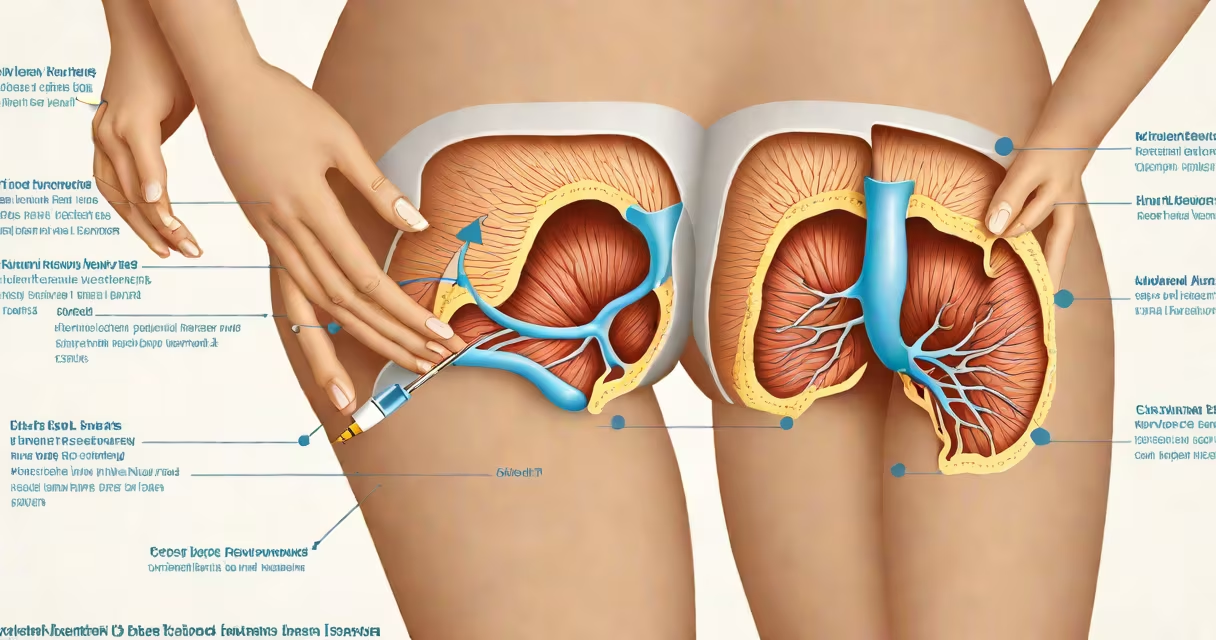
Intramuscular injections are often administered in the buttocks because the gluteal muscles provide a large, well-perfused area with low risk of nerve or blood vessel damage when placed correctly. This site offers sufficient muscle mass to absorb medication safely, especially for vaccines and long-acting drugs.
The gluteus maximus, the largest muscle in the buttocks, is the preferred site for adult intramuscular injections. Its size allows for larger volumes-up to 3 mL-to be delivered without discomfort or tissue damage. The location is also accessible and visible, making it practical for healthcare providers during routine immunizations.
According to the Centers for Disease Control and Prevention (CDC), the ventrogluteal site-the upper outer quadrant of the buttock-is recommended over the dorsogluteal site (middle of the buttock) due to lower risk of sciatic nerve injury. The CDC notes that incorrect placement in the middle of the buttock can lead to permanent nerve damage, especially in adults with less muscle mass.
Healthcare professionals choose injection sites based on patient age, muscle mass, and drug volume. For infants and young children, the vastus lateralis muscle in the thigh is preferred due to underdeveloped gluteal muscles. In adults, the gluteus medius and minimus are deeper and safer than the gluteus maximus for certain medications.
For example, the TDAP vaccine-protecting against tetanus, diphtheria, and pertussis-is typically injected into the deltoid muscle of the upper arm in adults. However, if the deltoid is too small or the patient is obese, the ventrogluteal site becomes the preferred alternative. The CDC recommends using the ventrogluteal site when available, citing a 2018 study that showed a 60% reduction in injection site reactions compared to the dorsogluteal site.
When injecting into the buttocks, providers use the "Z-track" technique to seal the medication beneath the skin layer. This reduces leakage and irritation. A 2021 review in the Journal of Infusion Nursing confirmed that Z-tracking decreased pain scores by 35% in patients receiving intramuscular flu shots.
Not all intramuscular injections go into the buttocks. The choice depends on the medication's properties and patient-specific factors. Below is a comparison of common sites:
| Site | Best For | Volume Limit | Risk Factors |
|---|---|---|---|
| Ventrogluteal (upper outer buttock) | Adults, large-volume drugs, vaccines | 2-3 mL | Low nerve injury risk; requires proper landmarking |
| Dorsogluteal (middle buttock) | Historically used; now discouraged | 2 mL | High sciatic nerve injury risk; avoid in adults |
| Deltoid (upper arm) | Adults with normal BMI, small volumes | 0.5-1 mL | Too small for large doses; risk of nerve damage if misplaced |
| Vastus lateralis (thigh) | Infants, young children, obese adults | 1-2 mL | Safe but less accessible in adults |
Despite widespread use, many people still assume the middle of the buttock is safe. This is false. A 2019 case report in the American Journal of Physical Medicine & Rehabilitation described a patient who developed permanent leg weakness after an improperly placed intramuscular injection in the dorsogluteal region.
One myth is that the buttocks are chosen simply because they're "out of the way." That's incorrect. The site is selected for physiological reasons: thick muscle, low nerve density, and good blood flow. The gluteal region provides a stable reservoir for slow absorption of long-acting drugs like depot medroxyprogesterone acetate (DMPA).
Another misconception is that injections in the buttocks are always painful. While discomfort varies, studies show that correct technique reduces pain by 40%. A 2020 trial published in Pain Management Nursing found that using a quick, steady needle insertion reduced perceived pain by 52% compared to slow entry.
I once observed a nurse administer a flu shot using the ventrogluteal site during a clinic visit. She palpated the greater trochanter and iliac crest to locate the midpoint between them-the correct anatomical landmark. The patient reported no pain and minimal redness afterward. This reinforced how precise placement prevents complications.
Buttock injections are avoided in patients with significant muscle atrophy, such as those with advanced HIV or chronic malnutrition. In these cases, the gluteal muscles may be too thin to safely absorb medication. The deltoid or thigh sites are better alternatives.
Obese individuals may also have difficulty accessing the ventrogluteal site due to excess subcutaneous fat. In such cases, the deltoid is preferred unless the patient has limited arm mobility. The American Society of Health-System Pharmacists (ASHP) recommends assessing muscle mass before selecting a site.
The buttocks remain a standard site for intramuscular injections due to their anatomical advantages. Proper training ensures safety, efficacy, and minimal side effects. Always confirm the site with your healthcare provider before injection.