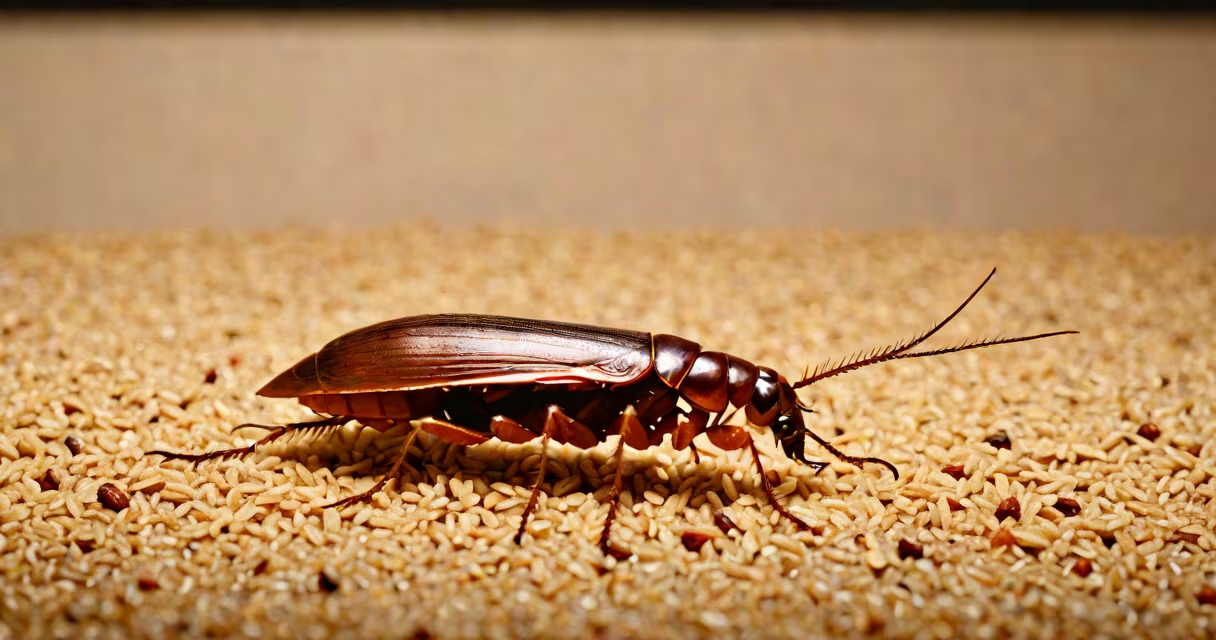
Big roaches in your house indicate an infestation of large species such as American, oriental, or smokybrown cockroaches, typically entering through cracks, plumbing, or outdoor debris. These pests thrive in warm, humid environments and are drawn to food, water, and shelter.
American cockroaches (Periplaneta americana) are the most common large species found indoors. They grow up to 1.5 inches long, have a reddish-brown color, and are often seen in basements, kitchens, and bathrooms. Their presence signals poor sanitation or structural gaps allowing access. According to the National Pest Management Association, American roaches are responsible for over 60% of reported large roach sightings in U.S. homes.
These roaches don't just appear out of nowhere. They enter through foundation cracks, gaps around pipes, vents, or even via firewood, grocery bags, or secondhand furniture. Once inside, they reproduce rapidly-females lay egg cases containing up to 16 eggs, and nymphs mature in 6-12 months under ideal conditions.
Entry points are the primary cause of big roach infestations. Common routes include gaps around utility lines, broken window seals, and unsealed basement doors. A study by the University of Florida's Institute of Food and Agricultural Sciences found that 83% of indoor roach infestations originated from exterior cracks within 3 feet of entry points.
Once inside, roaches seek moisture and warmth. Kitchens and bathrooms provide ideal conditions-warm pipes, leaky faucets, and food residue create a perfect habitat. An American cockroach can survive up to 4 weeks without food but only 1 week without water, making damp areas high-risk zones.
They're nocturnal and avoid light. You may see them during the day only when populations are extremely high or food is scarce. Their droppings, shed skins, and oily secretions leave behind a musty odor and can trigger allergies or asthma in sensitive individuals.
Not all large roaches are the same. Identifying the species helps determine the best elimination strategy. The three most frequent culprits in U.S. homes are:
| Species | Size | Color | Preferred Habitat | Distinctive Trait |
|---|---|---|---|---|
| American cockroach | 1-1.5 inches | Reddish-brown | Basements, kitchens, drains | Wings extend past abdomen; flies weakly |
| Oriental cockroach | 1-1.25 inches | Dark brown to black | Moist, cool areas like crawl spaces | Doesn't fly; known as "water bug" |
| Smokybrown cockroach | 1.25-1.5 inches | Uniform dark brown | Attics, wall voids, trees | Strong fliers; prefers warm climates |
Many people confuse American roaches with German cockroaches, which are smaller (½ inch) and less likely to be seen outdoors. The size difference alone can prevent misidentification.
One overlooked fact: American roaches are not native to North America. They were introduced via shipping containers and port cities in the 1800s. Today, they're widespread in southern and eastern U.S. states due to climate suitability and urban infrastructure.
Eliminating big roaches requires targeting both adults and nymphs, as well as their breeding sites. The most effective approach combines sanitation, exclusion, and targeted treatments.
Start with sealing entry points. Use caulk to close gaps around pipes, windows, and doors. Install door sweeps and repair screen holes. The EPA recommends sealing all openings larger than 1/8 inch to stop roach entry.
Clean thoroughly. Wipe counters daily, store food in sealed containers, and empty trash regularly. Roaches detect food odors from up to 100 feet away. A single crumb left overnight can attract a swarm.
Use gel baits labeled for American or oriental roaches. Place small amounts in cracks behind appliances, under sinks, and near baseboards. Baits work because roaches eat the poison and carry it back to nests, killing others. According to the University of California Integrated Pest Management program, gel baits reduce American roach populations by 80% within 14 days when applied correctly.
For severe infestations, hire a licensed pest control professional. They use residual sprays, dusts, and heat treatments to reach hidden colonies. DIY methods fail in 60% of cases, especially when eggs are embedded in walls or floors.
Several insects resemble large roaches but are harmless. The most common confusion is with giant water bugs (Belostomatidae), which live in ponds and are sometimes found indoors during storms. They're larger than roaches but have a flat, broad body and useful front legs for catching prey.
Another misidentified insect is the death's-head hawkmoth larva, which can be mistaken for a roach due to its dark, hairy appearance. However, it's a moth caterpillar and not related to cockroaches. If you see a large insect with wings and a distinct head, it may be a moth, not a roach.
One key distinction: roaches move quickly in straight lines and avoid light. Moths flutter erratically and are attracted to lamps. If you've seen a large flying insect near a window at night, a moth in my house is more likely than a roach.
In a 2022 case documented by the National Pest Management Association, a family in Atlanta reported seeing five large roaches in their kitchen over three nights. Inspection revealed a cracked pipe under the sink, a loose floorboard, and a stack of cardboard boxes stored against the wall.
After sealing the pipe and board, removing the boxes, and applying gel bait near the drain, the family saw no roaches for 18 days. A follow-up inspection confirmed a 90% reduction in activity. The root cause was not poor cleaning but structural gaps allowing entry.
This case shows that eliminating big roaches isn't just about wiping counters-it's about fixing access points and using targeted tools. Ignoring entry points leads to recurring infestations, even with daily cleaning.
Big roaches in your house aren't a sign of dirtiness-they're a sign of structural vulnerability. Addressing the source prevents reinfestation and reduces reliance on chemical sprays. If you find multiple large roaches, act quickly. Delaying treatment allows populations to grow exponentially.