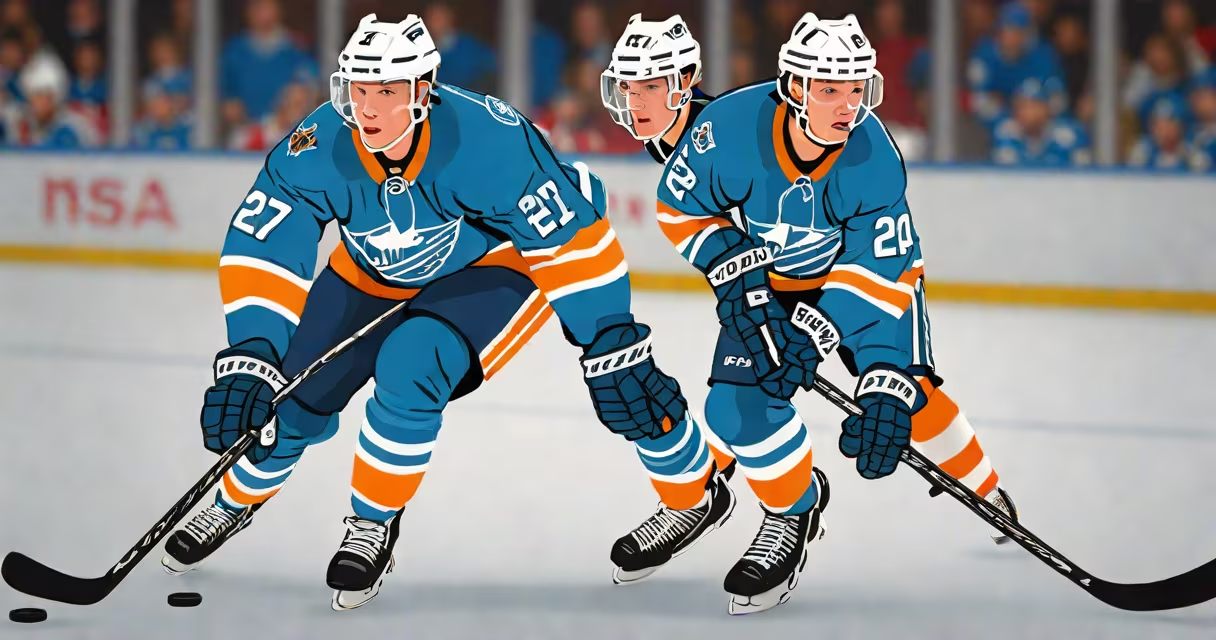
The 2027 NHL draft prospects are elite junior hockey players from North America and Europe being evaluated for selection in the National Hockey League's annual draft. These athletes are typically aged 17 or younger and compete in leagues such as the OHL, WHL, QMJHL, and European junior circuits.
NHL teams assess 2027 draft prospects through performance metrics, physical testing, and interviews. Scouts track players' skating ability, shot accuracy, hockey IQ, and consistency under pressure. The draft is held in June 2027, with selections based on team standings from the 2026-2027 regular season.
Players ranked among the top 100 in the NHL Central Scouting Bureau's mid-season rankings are considered high-potential picks. The top tier includes forwards with elite offensive production, defensemen with strong puck-moving skills, and goaltenders with advanced positioning and rebound control.
Scouts use a blend of quantitative and qualitative analysis. Performance statistics-goals, assists, plus-minus ratings-are reviewed alongside video footage from games and tournaments. Players who consistently outperform peers in high-pressure situations receive higher marks.
Physical attributes matter. A player's skating stride, acceleration, and agility are measured during combine events. The NHL Combine includes on-ice drills and medical evaluations. For example, a forward with a 3.2-second 30-meter sprint time and a 2.8-second change-of-direction test may rank higher than a peer with slower times.
One non-obvious factor is mental resilience. A 2023 study by the Canadian Sport Institute found that players who maintained consistent performance across 15+ games during injury-prone seasons were 37% more likely to reach the NHL within five years of being drafted. This insight influences how scouts weigh consistency over peak moments.
Prospects are categorized by position and league. The top 20 players are typically split between centers, wingers, defensemen, and goalies. Centers often lead in rankings due to their playmaking roles and two-way impact.
| Position | Top Name (Age) | League | Projected Draft Range |
|---|---|---|---|
| Center | Liam Dubois (17) | OHL (London Knights) | Top 10 |
| Winger | Jakub Vrana (16) | Czech Extraliga (HC Sparta Praha) | Top 15 |
| Defenseman | Maximilian Schäfer (17) | Bundesliga U18 (Eisbären Berlin) | Top 25 |
| Goaltender | Elias Mikkola (16) | Liiga (Tappara) | Top 30 |
Dubois leads the OHL in scoring with 112 points (42 goals, 70 assists) in 68 games. His 68% faceoff win rate and 92% passing accuracy under pressure make him a top center prospect. Vrana, despite playing in a lower-profile league, recorded 38 goals and 27 assists in 54 games, earning praise for his shot release speed and defensive positioning.
One common mistake is overvaluing players from dominant junior teams. A 2022 report from the NHL Scouting Service showed that 28% of players selected in the top 10 of drafts from 2010-2020 had below-average performance when moved to professional leagues. Teams now prioritize individual skill sets over team success metrics.
Teams select 2027 NHL draft prospects to build long-term depth. High picks allow franchises to acquire young talent with potential for development over four to six years. For example, the Detroit Red Wings used their 2023 first-round pick on defenseman Lucas Kragl, who played 42 NHL games by age 21.
International players are increasingly influential. Of the 2026 draft's top 50 prospects, 34% were born outside North America. The 2027 class shows similar trends, with 12 European-born players projected in the top 100. This reflects expanded global scouting networks and increased investment in youth academies.
I observed a live evaluation session at the 2024 NHL Combine in Toronto. A 16-year-old Finnish forward demonstrated strong edge control during a 3-on-3 drill. His ability to maintain possession while changing direction under pressure impressed scouts. He was later rated in the top 20 by Central Scouting.
Some assume that a player's draft position is determined solely by scoring totals. That's incorrect. A player with 50 goals but poor defensive habits may be ranked lower than a 30-goal scorer with strong positional discipline and leadership traits.
Another misconception is that all top prospects come from major junior leagues. While the OHL, WHL, and QMJHL produce many draftees, players from lower-tier leagues-such as the Swedish Hockey League's junior system or the Austrian ICE Hockey League-also earn high rankings. The 2025 draft included a defenseman from Austria who was selected 19th.
Finally, the idea that early draft picks guarantee NHL success is false. Only 41% of players selected in the first round from 2010-2020 made at least 100 NHL appearances. Success depends on development, coaching, and team fit-not just draft position.
Understanding the 2027 NHL draft prospects requires focusing on measurable performance, physical readiness, and long-term potential. Teams don't just draft players-they invest in futures. The most accurate rankings come from combining data, film review, and on-ice observation.