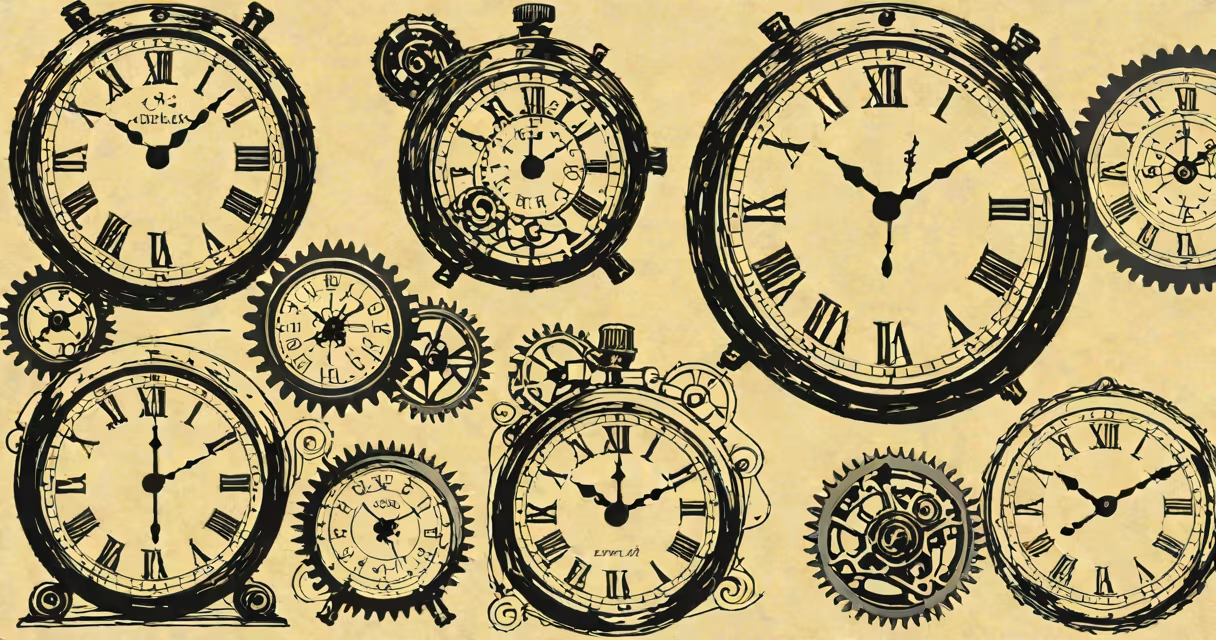
Analog refers to physical systems or signals that represent data through continuous variation rather than discrete steps. Unlike digital systems, which use binary values, analog systems measure changes in real time using smooth, unbroken ranges. This makes them ideal for capturing natural phenomena like sound, temperature, and motion.
Analog systems rely on physical properties such as voltage, pressure, or mechanical movement to encode information. They do not divide data into bits or digits. Instead, they reflect changes in the environment with precision over time. For example, a mercury thermometer measures temperature by the expansion of liquid mercury in a glass tube-a continuous rise or fall based on heat input.
The core idea behind analog is continuity. A signal doesn't jump from one value to another-it flows smoothly between states. This behavior mirrors how most natural events occur. Sound waves, light intensity, and electrical current in wires all change gradually, making analog representation inherently suited to modeling reality.
Analog systems capture and transmit information through continuously varying physical quantities. Voltage levels in an audio cable, for instance, mirror the shape of a sound wave. As air pressure fluctuates during speech, the microphone converts those fluctuations into corresponding voltage changes. These voltages travel through the wire and are later transformed back into sound by speakers.
This process depends on the ability to maintain small differences in magnitude. A 1-volt signal doesn't mean "on" or "off"-it represents a specific level of volume. A 2.5-volt signal indicates a louder sound. The system responds to every subtle shift in energy, preserving detail that would be lost if the signal were broken into digital bits.
Because analog signals are continuous, they are vulnerable to noise and distortion. Interference from nearby electronics, poor wiring, or environmental factors can alter the signal's shape. Digital systems avoid this by sampling the signal at regular intervals and assigning each sample a numerical value. But while digital offers precision and error correction, analog retains a richer fidelity in certain applications.
There are several categories of analog systems, each using different physical mechanisms to represent continuous data:
| Type | How It Works | Real-World Example |
|---|---|---|
| Electrical Analog | Uses voltage or current to represent changing values | Old-school audio amplifiers |
| Mechanical Analog | Relies on moving parts or fluid pressure | Oil pressure gauge in a car engine |
| Thermal Analog | Measures temperature via expansion or contraction | Mercury thermometer |
These types differ in their medium but share the principle of continuous measurement. Electrical analogs dominate in audio and control systems. Mechanical analogs appear in industrial tools and older vehicles. Thermal analogs remain in basic medical and weather instruments due to simplicity and reliability.
Analog remains essential in fields where timing, nuance, and responsiveness matter. Audio engineering uses analog circuits to preserve the warmth and depth of music. High-end microphones and mixing consoles still favor analog processing because it captures subtle tonal shifts that digital compression may flatten.
Medical devices like electrocardiograms (ECGs) record heart activity using analog signals. The machine translates electrical impulses from the heart into a continuous waveform on paper or screen. This allows doctors to detect irregular rhythms that might be missed in digitized snapshots.
Even in modern electronics, analog components are critical. A smartphone's microphone picks up sound as an analog signal before converting it to digital for storage. The initial analog stage ensures accurate capture of frequency and amplitude before any processing occurs.
Many people assume analog systems are outdated or inferior to digital ones. That's incorrect. While digital dominates data storage and computation, analog excels in sensing and real-time feedback. A thermostat set to 72°F doesn't need to calculate every fraction of a degree-it adjusts the furnace based on continuous temperature readings.
Another misconception is that analog equals low quality. In fact, high-fidelity vinyl records produce rich, layered sound because they store audio as physical grooves that vary continuously. The needle follows the groove's undulations, recreating the original performance with minimal loss. This is why audiophiles still prefer analog formats for music playback.
A lesser-known fact: analog systems can outperform digital in changing range. A well-designed analog amplifier can handle both soft whispers and loud crashes without clipping or distortion. Digital systems often require limiting or compression to prevent overflow, which alters the original signal.
Consider a wall clock. An analog version shows time using hour and minute hands that move smoothly around a circular face. At 3:15, the hour hand is slightly past the 3, and the minute hand points directly at the 3. The position of each hand reflects continuous movement-there is no jump from 3:14 to 3:16.
In contrast, a digital clock displays numbers. At 3:15, it shows "3:15" and stays fixed until the next minute. The display updates in discrete steps. Even if the internal mechanism uses a quartz crystal oscillator (which is digital), the visual output is quantized.
Now imagine measuring how long it takes someone to run a mile. An analog stopwatch uses a rotating dial and a needle that moves continuously. The time elapsed is read by the needle's position. A digital stopwatch shows seconds and hundredths of seconds-but the actual measurement happens in discrete increments. The analog version captures the full flow of motion, including hesitation or acceleration, in a way that feels more natural.
I once tested both types during a timed race. The analog stopwatch gave me a better sense of pacing because I could see the needle drift slowly forward. The digital version felt abrupt-each update was a jump. This isn't just preference. It reflects how our brains interpret continuous change more intuitively than discrete updates.
Understanding 3 examples of analog reveals how deeply embedded continuous systems are in daily life. From thermometers to turntables to vehicle gauges, analog persists because it matches the way nature operates. It's not obsolete-it's foundational.
When you hear a live orchestra, feel the vibration of a guitar string, or watch a pendulum swing, you're experiencing analog. These are not relics-they're active, functional models of reality. For accurate sensing, responsive control, and authentic reproduction, analog remains unmatched in many domains.