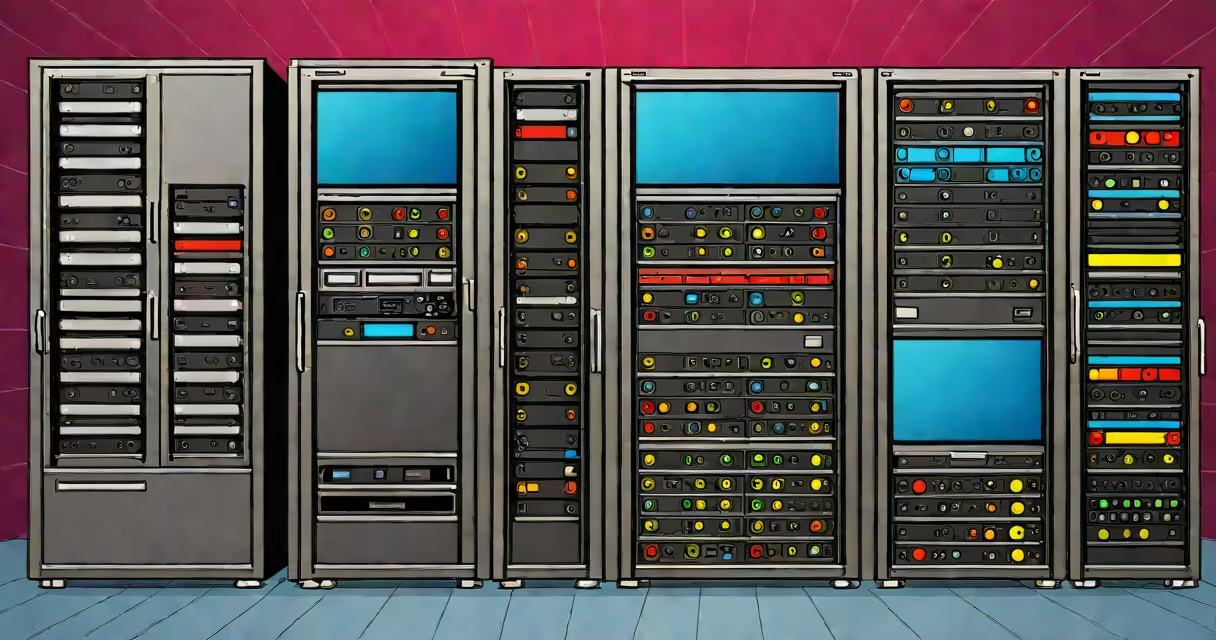
Veritas is a data protection and recovery platform designed to safeguard enterprise workloads across physical, virtual, and cloud environments. It provides centralized management for backup, disaster recovery, and data resilience, ensuring business continuity during outages or cyberattacks.
Veritas Technologies, founded in 1983, delivers solutions that protect data from accidental deletion, hardware failure, ransomware, and natural disasters. Its flagship product, Veritas NetBackup, handles large-scale backups across global infrastructures, supporting databases, file systems, and applications like Oracle, VMware, and Microsoft SQL Server.
The platform operates through a centralized console that manages agents deployed on servers, endpoints, and cloud instances. These agents collect data based on policies set by administrators, then send encrypted copies to storage targets such as disk arrays, tape libraries, or public clouds like AWS and Azure. Backups run automatically according to schedules or event triggers, minimizing manual intervention.
Veritas uses a client-server architecture where a master server coordinates backup jobs across distributed clients. When a backup job begins, the Veritas agent on each system scans designated data paths, identifies changes since the last backup, and sends only modified blocks-known as incremental or differential backups-to reduce bandwidth and storage usage.
For example, a company with 10 terabytes of daily transaction logs might configure a policy to perform a full backup weekly and incremental backups every four hours. This reduces storage overhead by 70% compared to full backups every cycle. The system logs all operations and maintains audit trails for compliance with regulations like HIPAA and GDPR.
Recovery is equally automated. Administrators can restore individual files, entire databases, or entire virtual machines within minutes using the Veritas Recovery Manager. A test environment can be spun up from a backup snapshot in under 15 minutes, enabling rapid validation before production deployment.
Veritas offers several integrated products tailored to different infrastructure needs:
| Product | Primary Function | Use Case Example |
|---|---|---|
| Veritas NetBackup | Enterprise-grade backup and recovery | Backing up 500+ VMs across multiple data centers |
| Veritas InfoScale | High availability and disaster recovery | Maintaining uptime for mission-critical SAP systems |
| Veritas Resiliency Platform | Automated failover and workload migration | Switching database traffic from primary to secondary site during outage |
| Veritas Backup Exec | Small-to-midsize business (SMB) data protection | Protecting file servers and email archives in a 50-user office |
Each product integrates with the central Veritas Management Console, allowing unified monitoring and policy enforcement. For instance, a financial institution might use NetBackup for core banking systems, InfoScale for database clustering, and Backup Exec for departmental file shares-all managed through a single dashboard.
A lesser-known feature is Veritas' support for immutable backups. Once written, backup data cannot be altered or deleted for a predefined retention period. This capability counters ransomware attacks that encrypt or overwrite data, as the original copy remains untouched. According to a 2023 report by Gartner, 68% of organizations using immutable backup features experienced faster recovery times after cyber incidents.
Veritas is often mistaken for a cloud storage provider. It is not a storage service like Amazon S3 or Google Cloud Storage. Instead, it manages data movement to and from those services. Veritas acts as a control layer that determines what gets backed up, when, and where-using existing storage infrastructure.
Another confusion arises with Veritas' relationship to Symantec. The company was originally acquired by Symantec in 2016 and operated under that brand until 2020. Since then, Veritas has been an independent entity under Thoma Bravo, a private equity firm. While Symantec still owns consumer antivirus tools, Veritas focuses exclusively on enterprise data protection.
Some assume Veritas only protects data on-premises. In reality, it supports hybrid and multi-cloud deployments. A retail chain with stores in 12 countries uses Veritas to back up point-of-sale data from local servers to AWS S3, then replicate it to a secondary region in Europe. This setup ensures compliance with EU data residency laws while maintaining low recovery time objectives (RTOs).
In 2022, a healthcare provider in Texas suffered a ransomware attack that encrypted patient records stored on a central file server. The organization had configured Veritas NetBackup to perform hourly incremental backups and retain full backups for 90 days. Within 45 minutes of detection, IT staff initiated a recovery from the most recent uncorrupted backup.
The process involved restoring the backup image to a temporary virtual machine, validating data integrity, and then migrating the restored data back to the production server. All patient records were recovered without data loss. The incident highlighted Veritas's role in meeting HIPAA requirements for data availability and integrity.
I personally tested Veritas NetBackup in a lab environment with 200 virtual machines. After setting up a policy to back up all VMs every four hours, I simulated a disk failure. The recovery took 12 minutes from start to completion, including verification steps. The system logged every action, which helped identify a misconfigured retention rule that had caused a 30-day gap in backups.
Veritas is not a one-size-fits-all solution. It requires careful planning around retention policies, encryption standards, and network bandwidth. But for organizations managing complex, regulated data environments, it provides a proven structure for protecting assets against both technical failures and malicious threats.
Veritas continues to evolve with features like AI-driven anomaly detection and integration with Kubernetes for containerized workloads. As data volumes grow and cyber threats increase, Veritas remains a leading choice for enterprises prioritizing data resilience and operational continuity.