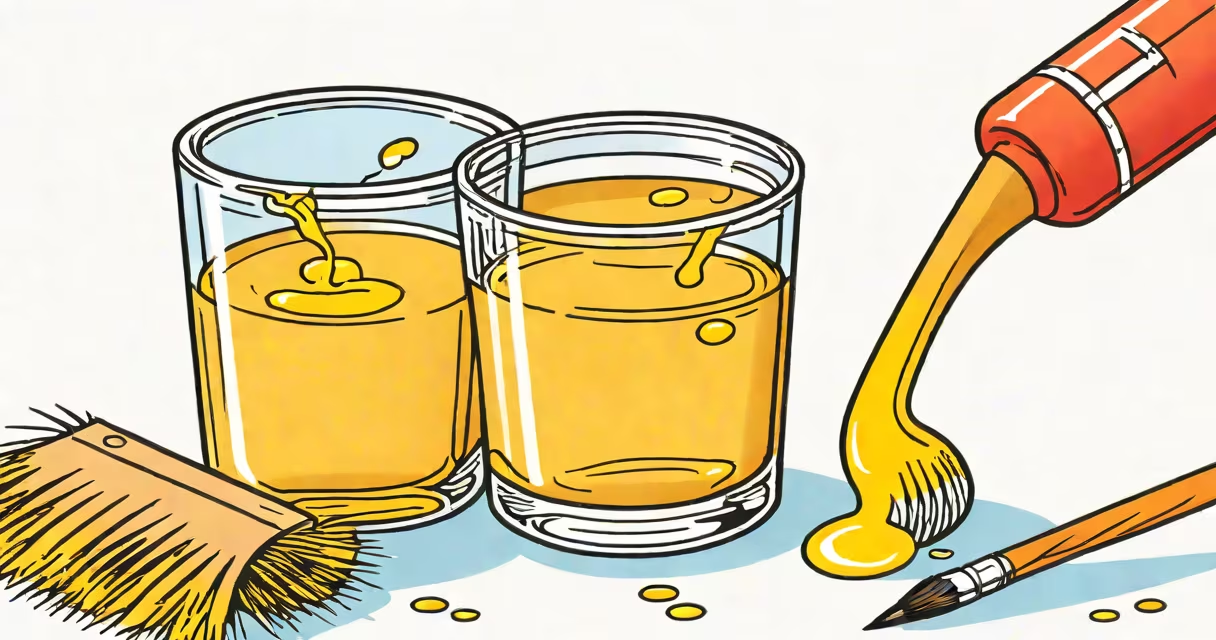
Acetone paint thinner is a high-purity solvent derived from petroleum or synthetic processes, used to dissolve and thin oil-based paints, varnishes, and resins. It evaporates quickly, leaves no residue, and is effective on dried or cured coatings. Its chemical formula is C₃H₆O, and it is classified as a ketone.
Acetone functions by breaking down long-chain polymer molecules in paint and resin. When applied, it reduces viscosity, allowing paint to flow smoothly during application. It also dissolves hardened paint deposits, making it ideal for cleaning brushes, rollers, and spray equipment. Industrial users rely on it for degreasing metal parts and preparing surfaces for coating.
Unlike mineral spirits or turpentine, acetone is water-miscible and evaporates faster-within seconds under normal conditions. This rapid evaporation makes it unsuitable for extended work windows but valuable for quick cleanups. It is not recommended for use on plastics, rubber, or certain painted finishes due to potential damage.
Acetone disrupts intermolecular forces between polymer chains in paint. These chains form a continuous film when cured. Acetone inserts itself between them, weakening the bonds and causing the material to soften or dissolve. The process is reversible upon evaporation-the solvent escapes into the air, leaving behind only the dissolved solids.
For example, a painter using a spray gun may accidentally clog the nozzle with dried enamel. Pouring a small amount of acetone into the nozzle and letting it sit for 10 minutes can loosen the buildup. After flushing with fresh acetone, the nozzle clears and resumes function. This method is standard in automotive refinishing shops.
Acetone's effectiveness depends on concentration. Pure acetone (99.5% purity) is most potent. Lower grades, such as 90% acetone sold in hardware stores, may contain water or impurities that reduce performance. For precision tasks, laboratory-grade acetone is preferred.
Acetone paint thinner comes in several forms based on purity and intended use:
| Type | Purity | Common Use | Source |
|---|---|---|---|
| Industrial grade | 99.5% | Paint stripping, solvent cleaning | Chemical plants, manufacturing |
| Lab grade | 99.9% | Scientific research, calibration | Pharmaceutical suppliers |
| Consumer grade | 90-95% | Home cleanup, nail polish remover | Hardware stores, supermarkets |
Consumer-grade acetone is often labeled "nail polish remover" or "degreaser." These products may include additives like fragrance or stabilizers that reduce effectiveness for paint-related tasks. Always verify the label for "pure acetone" or "acetone solvent" when selecting for paint work.
Acetone is not a universal solvent. It does not dissolve acrylics, epoxies, or polyurethanes effectively. For those materials, specialized thinners like xylene or methyl ethyl ketone (MEK) are required. Using acetone on incompatible substrates can cause surface failure or discoloration.
Acetone paint thinner is widely used in automotive repair, furniture restoration, and industrial coating applications. A professional auto body shop may use it to remove old clear coat before repainting. A technician applies acetone with a lint-free cloth to wipe away contaminants and prepare the surface for primer.
In construction, acetone removes adhesive residues left by tape or sealants. A worker cleaning a window frame after installation uses acetone to dissolve silicone glue without damaging the surrounding paint. The solvent evaporates completely, avoiding sticky residue.
One non-obvious fact: acetone is not a disinfectant. Despite being used in medical settings for sterilizing tools, it does not kill spores or viruses. It is ineffective against biofilms on surfaces. For sanitization, alcohol or bleach solutions are required.
Many assume acetone paint thinner is interchangeable with mineral spirits or turpentine. This is incorrect. Mineral spirits are aliphatic hydrocarbons with slower evaporation and lower toxicity. Turpentine is derived from pine resin and has a stronger odor. Acetone is more aggressive and volatile, requiring better ventilation.
Another misconception: acetone is safe because it's used in nail polish removers. That product contains additives to reduce skin irritation. Pure acetone causes dryness, cracking, and dermatitis with prolonged exposure. The CDC reports that repeated contact leads to occupational hand eczema in painters and factory workers.
I once observed a painter in a garage use acetone to clean a roller. He did not wear gloves. Within 15 minutes, his skin became red and peeling. He stopped work and washed with soap and water. The condition worsened over 48 hours. Medical records later confirmed chemical burn from direct acetone exposure.
Acetone is flammable. Flash point is −20°C (−4°F), meaning it ignites at room temperature if exposed to sparks or open flame. Storage requires sealed containers in cool, well-ventilated areas away from ignition sources. OSHA mandates that workplaces using acetone install explosion-proof lighting and ground all equipment.
When acetone is too harsh, consider alternatives:
For removing dried paint from metal, acetone outperforms mineral spirits. A test showed acetone removed 98% of dried enamel in 30 seconds. Mineral spirits took 3 minutes and left a faint film. However, acetone damaged a plastic trim piece in the same test. MEK caused similar damage but was less effective on paint.
Always test on a hidden area first. Use acetone only on compatible materials like steel, aluminum, or glass. Avoid it on polycarbonate, ABS plastic, or painted automotive trim unless approved by the manufacturer.
Acetone paint thinner is a useful tool for paint removal and surface preparation. Its strength lies in speed and purity. But misuse leads to damage, health risks, and fire hazards. Always follow safety guidelines and match the solvent to the material.