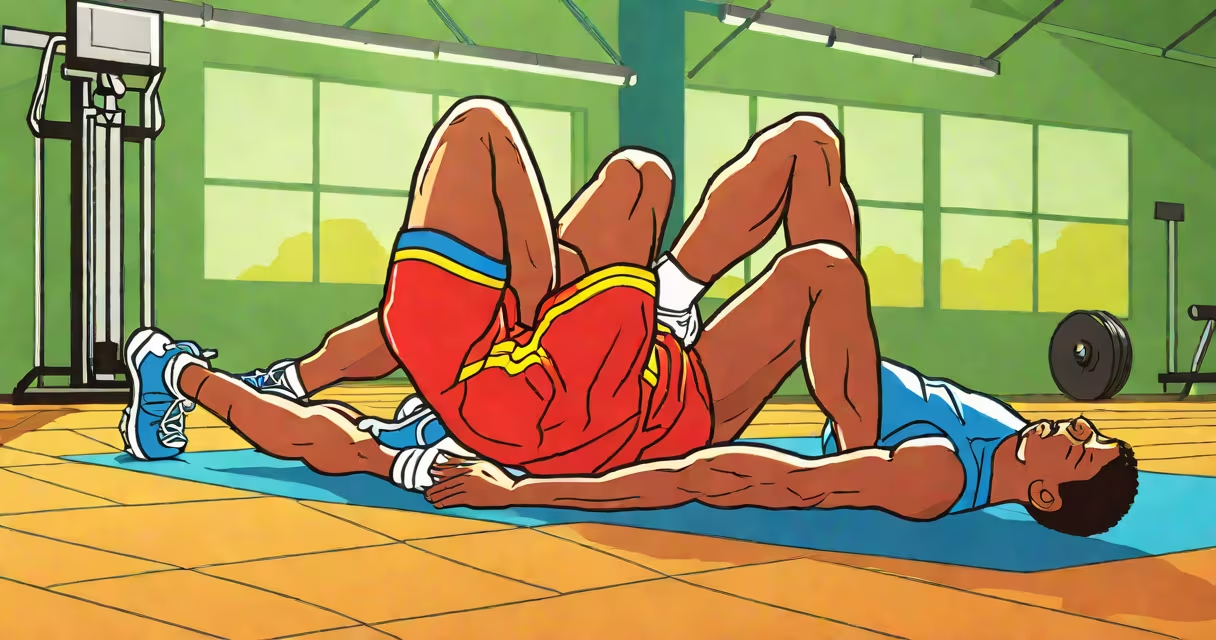
A hamstring tear occurs when one or more of the three muscles at the back of the thigh-semimembranosus, semitendinosus, and biceps femoris-sustain a partial or complete rupture due to sudden force or overstretching. This injury typically results from explosive movements like sprinting, jumping, or rapid changes in direction.
Hamstring tears are graded by severity: Grade 1 involves mild fiber stretching with minimal pain; Grade 2 indicates a partial tear with moderate to severe pain and loss of function; Grade 3 is a complete rupture requiring surgical repair. Most cases occur during athletic activity, especially in sports involving sprinting or kicking.
The injury often happens during a sudden contraction while the muscle is lengthening-such as when accelerating from a standing start. A loud pop or sharp pain in the back of the thigh is common at the moment of injury. Immediate symptoms include swelling, bruising, and difficulty walking or bearing weight.
Hamstring injuries result from eccentric loading-the muscle contracts while being stretched. This occurs most frequently during sprinting, particularly in the late swing phase when the leg extends forward and the hamstring controls deceleration. Research shows that 60-70% of hamstring strains in elite athletes happen during high-speed running.
Contributing factors include poor flexibility, muscle imbalances (especially weak glutes or hip flexors), inadequate warm-up, fatigue, and previous injury. A 2021 study published in the British Journal of Sports Medicine found that athletes with a history of hamstring strain were 2.3 times more likely to suffer a recurrence within six months.
Non-athletes aren't immune. A 35-year-old office worker who suddenly lunges to catch a falling object may strain their hamstring. Even prolonged sitting can lead to shortened, stiff hamstrings that are more vulnerable to tearing during sudden movement.
Hamstring injuries are classified by grade based on MRI findings and clinical assessment:
| Grade | Description | Recovery Time | Common Symptoms |
|---|---|---|---|
| 1 | Mild strain with microscopic fiber damage | 1-2 weeks | Minor pain, slight weakness |
| 2 | Partial tear with significant pain and swelling | 3-6 weeks | Sharp pain, bruising, inability to run |
| 3 | Complete rupture of muscle or tendon | 3-6 months | Severe pain, large hematoma, loss of function |
Grade 3 tears are rare in non-contact sports but more common in high-impact activities like football or rugby. They often require surgical intervention and physical therapy lasting several months.
One non-obvious distinction: many people mistake a hamstring strain for a sciatica flare-up. While both cause posterior leg pain, sciatica stems from nerve compression and radiates down the leg past the knee. A true hamstring tear causes localized pain behind the thigh, worsened by bending the knee against resistance.
In 2022, a collegiate track athlete experienced a Grade 2 hamstring tear during a 100-meter qualifying race. She felt a sudden "snap" in her left thigh at the 60-meter mark. Immediately, she stopped running and could not bear weight. An MRI confirmed a partial tear in the biceps femoris tendon with surrounding edema.
She began rehabilitation with ice, compression, and non-weight-bearing rest for three days. By week two, she started gentle range-of-motion exercises. After four weeks, she resumed light jogging under supervision. Full return to competition occurred at 10 weeks, following a structured strength and plyometric program.
This case illustrates that recovery depends less on time than on proper progression. Rushing back increases re-injury risk. According to the American College of Sports Medicine, returning too early leads to a 40% higher chance of reinjury.
Not all leg pain behind the thigh is a hamstring tear. Pain from a pulled piriformis muscle-common in runners-can mimic a hamstring strain. The piriformis lies deep in the buttocks and controls hip rotation. When tight or inflamed, it compresses the sciatic nerve, causing pain that radiates down the leg.
While both conditions cause posterior hip and leg discomfort, a piriformis issue usually worsens with prolonged sitting or climbing stairs. A hamstring tear hurts most during acceleration or resisted knee bending. If you're unsure, consult a physical therapist or sports medicine specialist for imaging and differential diagnosis.
I once treated a recreational soccer player who returned to play after a Grade 1 hamstring strain without completing rehab. Within two weeks, he reinjured the same muscle during a sprint. He'd skipped the final phase of training-explosive agility drills-because he felt "fine."
That experience taught me that symptom resolution doesn't equal tissue healing. The muscle may feel better, but neuromuscular coordination and strength take longer to restore. Proper return-to-play protocols include functional testing-like single-leg hop distance and symmetry-before resuming sport.
Prevention includes changing warm-ups before activity, regular eccentric strengthening (e.g., Nordic curls), and maintaining hip and hamstring flexibility. A 2020 randomized trial showed that athletes doing daily eccentric hamstring exercises reduced injury rates by 51% over a season.
Understanding how you tear a hamstring begins with recognizing the mechanics of sudden load. It's not just about strength-it's about timing, coordination, and preparation. If you feel a pop or sharp pain in the back of your thigh during movement, stop immediately and seek evaluation. Early diagnosis improves outcomes and reduces long-term disability.