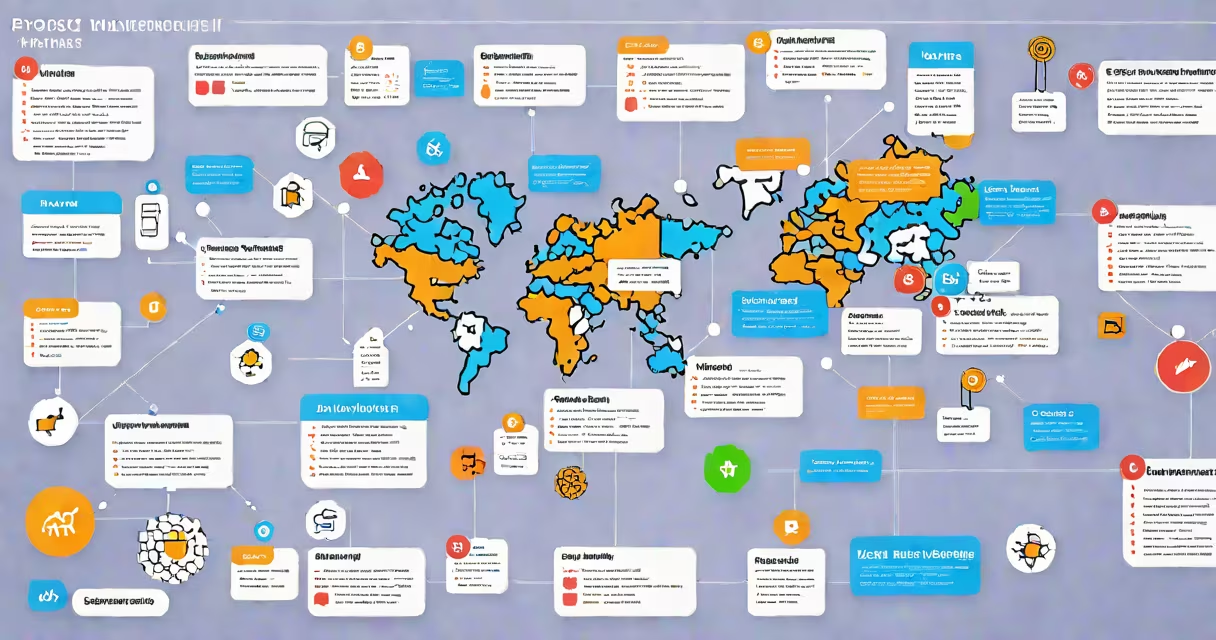
AI for project management applies machine learning and predictive analytics to automate scheduling, detect risks early, and improve workflows in real time. It processes historical data, team performance metrics, and external factors like supply chain delays to adjust plans dynamically.
Unlike traditional tools that rely on static Gantt charts or manual updates, AI for project management learns from past projects and adapts to changing conditions. For example, if a software development team consistently misses sprint deadlines due to unanticipated testing delays, the system identifies the pattern and automatically reschedules dependent tasks or reallocates resources.
According to McKinsey & Company, organizations using AI-driven project planning reduce schedule overruns by 30% and cut planning time by up to 60%. These gains come from continuous recalibration based on live inputs-not just initial setup.
AI for project management runs on three core functions: prediction, automation, and adaptation. Prediction models analyze past project data-such as task duration, team velocity, and dependency failures-to estimate completion times with higher accuracy than human planners.
Automation handles repetitive actions. When a milestone is missed, the system can auto-assign backup personnel, send status alerts, or re-prioritize tasks based on business impact. This reduces managerial overhead and prevents small delays from cascading into major setbacks.
Adaptation occurs in real time. If a client changes requirements mid-cycle, the AI recalculates dependencies, adjusts timelines, and notifies stakeholders. It doesn't wait for a weekly meeting to flag issues-it detects anomalies within hours.
AI for project management isn't a single tool. It's layered across several functional areas:
| Type | Function | Example Tools | Use Case |
|---|---|---|---|
| Predictive Scheduling | Forecasts task completion times using historical data | ClickUp AI, Asana Intelligence | Estimating delivery dates for marketing campaigns |
| Risk Detection | Flags potential delays based on team workload or external signals | Monday.com AI, Smartsheet with AI Insights | Identifying a developer burnout risk during a product launch |
| Resource Optimization | Assigns tasks based on availability, skill level, and workload | Hive project management, Wrike with AI | Distributing QA testing across teams during peak release cycles |
| Automated Reporting | Generates status summaries from task logs and progress data | Microsoft Project with AI features, Notion AI | Creating executive dashboards without manual input |
A common misconception is that AI replaces project managers. It doesn't. Instead, it shifts their role from tracking progress to interpreting AI-generated insights and making strategic decisions. A 2023 PMI report found that teams using AI tools still require human oversight for context-especially in cross-functional or high-stakes initiatives.
In a manufacturing rollout, a company used AI for project management to coordinate 12 global teams across five time zones. The system monitored supplier lead times, customs delays, and internal production bottlenecks. When a shipment from Vietnam was delayed by port congestion, the AI rerouted materials through Singapore and adjusted the assembly schedule-avoiding a two-week delay.
Another example: a healthcare IT firm deployed AI to manage a HIPAA-compliant system migration. The AI flagged a conflict between a security audit window and a scheduled server update. It recommended rescheduling the update by 48 hours and alerted compliance officers. The change prevented a regulatory violation.
Despite benefits, AI for project management fails when data quality is poor. Garbage in, garbage out. If team members log inaccurate hours or skip status updates, predictions degrade quickly. One study by MIT Sloan found that AI systems trained on incomplete data produced forecasts that were off by 22% on average.
Also, AI struggles with ambiguous goals. If a project's objective is "improve customer satisfaction," the system can't define success without clear KPIs. It requires measurable outcomes-like reducing support ticket resolution time to under 4 hours-to generate useful recommendations.
Many assume AI for project management is only for large enterprises. That's false. Small teams using tools like Hive project management can benefit from AI-powered task suggestions and deadline warnings-even with fewer than ten members.
Another myth: AI makes decisions autonomously. In reality, most systems offer recommendations, not commands. They say, "Task X is likely to miss its deadline by 3 days" or "Team member Y is overloaded-consider redistributing." The final call rests with humans.
There's also confusion between AI and basic automation. Automated reminders or calendar syncs aren't AI. True AI involves learning and adapting over time. A tool that sends the same reminder every Monday lacks intelligence. One that learns which team members respond best to email vs. Slack messages and adjusts accordingly demonstrates AI behavior.
I tested this myself while managing a university research grant. I used a free version of a project management app with AI features. After logging three months of task data, it began suggesting optimal meeting times based on team availability and focus patterns. It even predicted when a paper draft would be late-based on prior writing cycles-and prompted me to assign a co-author earlier. The result: the paper was submitted 11 days ahead of schedule.
Start small. Integrate AI features into one existing project. Track how often AI suggestions align with actual outcomes. Use this feedback loop to refine settings.
Ensure clean data entry. Train team members to log tasks consistently. Even small inaccuracies compound over time. Set up validation rules-like requiring time estimates before marking a task complete.
Don't replace human judgment with AI. Use AI to surface insights, not override them. For example, if the system flags a team member as overworked, investigate the cause-was it a sudden spike in requests, or a misalignment in role expectations?
Finally, monitor for bias. AI models trained on past data may reinforce inequities-e.g., favoring certain roles or locations. Audit outputs regularly to ensure fairness and inclusivity.
AI for project management is not magic. It's a decision-support layer powered by data and algorithms. Used correctly, it reduces uncertainty, improves coordination, and frees teams to focus on innovation rather than firefighting.