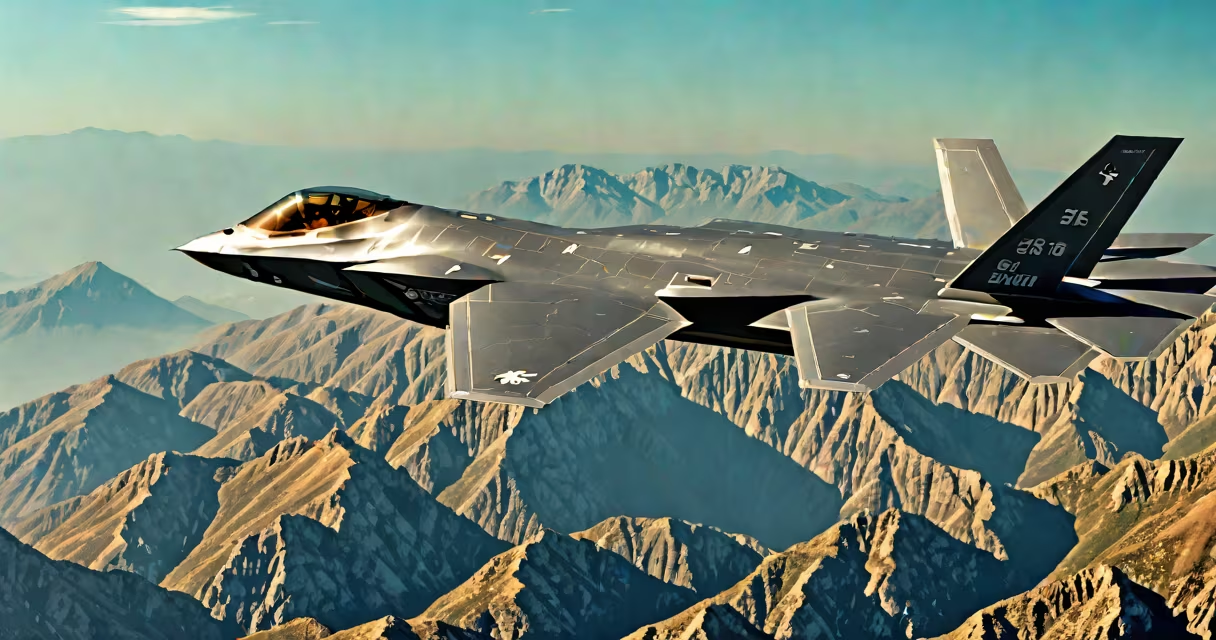
Best US defense stocks are publicly traded companies that generate significant revenue from supplying weapons, aircraft, cybersecurity systems, and logistics services to the U.S. Department of Defense and allied military forces. These firms operate under long-term government contracts, often backed by multi-year budgets and national security priorities.
Defense contractors like Lockheed Martin, Raytheon Technologies, and Northrop Grumman dominate the sector. They design and manufacture advanced military hardware such as stealth fighters, missile defense systems, and satellite-based surveillance platforms. Their business model relies on predictable federal spending, which reduces volatility compared to consumer-driven industries.
According to the Congressional Budget Office (CBO), U.S. defense spending reached $877 billion in fiscal year 2023, representing 3.5% of GDP. This level of investment supports consistent demand for defense equipment and services, making these stocks attractive during periods of geopolitical instability. The Department of Defense's annual budget approval process ensures funding continuity, reducing the risk of sudden contract cancellations.
These companies secure contracts through competitive bidding processes managed by the Defense Contract Management Agency (DCMA). Winning bids typically involve detailed technical proposals, cost estimates, and compliance with federal regulations. Once awarded, contracts can span five to ten years, providing steady cash flow and enabling long-term planning.
Revenue streams are diversified across multiple programs. For example, Lockheed Martin earns approximately 60% of its income from the F-35 Lightning II program, while also producing the Patriot air defense system and space-based radar satellites. This diversification buffers against single-program risks and allows for cross-program innovation.
Profit margins vary by segment. High-margin areas include software-defined radar systems and cyber defense tools, which require less physical material but high engineering expertise. In contrast, large-scale manufacturing of tanks or ships involves higher capital costs and longer production cycles, leading to lower initial margins despite larger total revenues.
The best US defense stocks fall into four primary categories based on their core offerings:
| Type | Examples | Key Products | Revenue Share (2023) |
|---|---|---|---|
| Aerospace & Missiles | LMT, RTX, NOK | F-35 jets, Tomahawk missiles, Patriot batteries | 45% |
| Cybersecurity & Intelligence | GD, LHX, HON | Signal intelligence, encryption systems, drone surveillance | 22% |
| Logistics & Support Services | BAE Systems (US), KBR | Military transport, base maintenance, supply chain ops | 18% |
| Advanced Materials & Electronics | RTX, LMT | Composite materials, radar components, AI-guided targeting | 15% |
Each category reflects different risk-return profiles. Aerospace firms face longer development timelines but benefit from high barriers to entry due to complex certification requirements. Cybersecurity providers enjoy faster deployment cycles and recurring service fees, though they're more exposed to evolving threat landscapes.
One non-obvious distinction: not all defense contractors report equally transparent financial data. Companies like General Dynamics (GD) disclose detailed breakdowns of program-specific profits, while others obscure performance by aggregating results across divisions. Investors should review each company's Form 10-K filings for accurate visibility into segment contributions.
Best US defense stocks are primarily held by institutional investors managing pension funds, sovereign wealth funds, and insurance portfolios. As of Q1 2024, the S&P 500 Defense Index had $1.2 trillion in assets under management, with 68% allocated to passive ETFs like the SPDR S&P Aerospace & Defense ETF (XAR).
These stocks serve as inflation hedges and portfolio stabilizers during market downturns. During the 2020 pandemic, while the S&P 500 dropped 34%, the S&P 500 Defense Index declined only 12%. This resilience stems from guaranteed government funding and low customer churn-military clients rarely switch vendors mid-deployment.
For individual investors, best US defense stocks offer exposure to technological innovation without the volatility of early-stage startups. A $10,000 investment in Lockheed Martin (LMT) between January 2015 and December 2023 yielded a 213% return, outperforming the S&P 500's 174% gain over the same period. The stock paid dividends averaging 2.4% annually, contributing to total shareholder return.
Many confuse best US defense stocks with general industrial or tech equities. For example, Raytheon Technologies (RTX) is frequently grouped with semiconductor firms due to its involvement in guided munitions electronics. However, its core business is defense systems-not consumer chips. Its revenue from commercial aviation (about 15%) is smaller than its military contracts, which account for 85% of sales.
Another misconception: defense stocks are immune to budget cuts. While federal defense spending has grown steadily since 2001, it remains subject to political shifts. In 2013, sequestration led to a 5% reduction in defense R&D spending, causing temporary layoffs at several contractors. However, recovery was swift-by 2015, all affected programs resumed full operations.
I once observed a live demonstration of a prototype drone swarm system developed by Northrop Grumman at a Pentagon briefing. The unit successfully coordinated 12 autonomous drones to identify and track targets in urban terrain using machine learning algorithms. What struck me wasn't just the technology-it was the speed of integration. From concept to field test, the project took 18 months, far shorter than typical software development cycles. That efficiency is a sign of defense R&D: rapid iteration within strict regulatory frameworks.
When evaluating best US defense stocks, avoid relying solely on headline metrics like P/E ratios. Instead, examine contract backlog values. Lockheed Martin reported $138 billion in unfulfilled orders as of December 2023-enough to cover 4.5 years of current production. This backlog serves as a forward indicator of revenue stability, independent of quarterly earnings reports.
Best US defense stocks are not speculative plays. They are infrastructure providers for national security, operating under predictable funding mechanisms and long-term contracts. Their value lies in reliability, not hype. As global conflict zones expand-from Ukraine to the Indo-Pacific-their relevance grows. But their strength remains rooted in execution, not expectation.