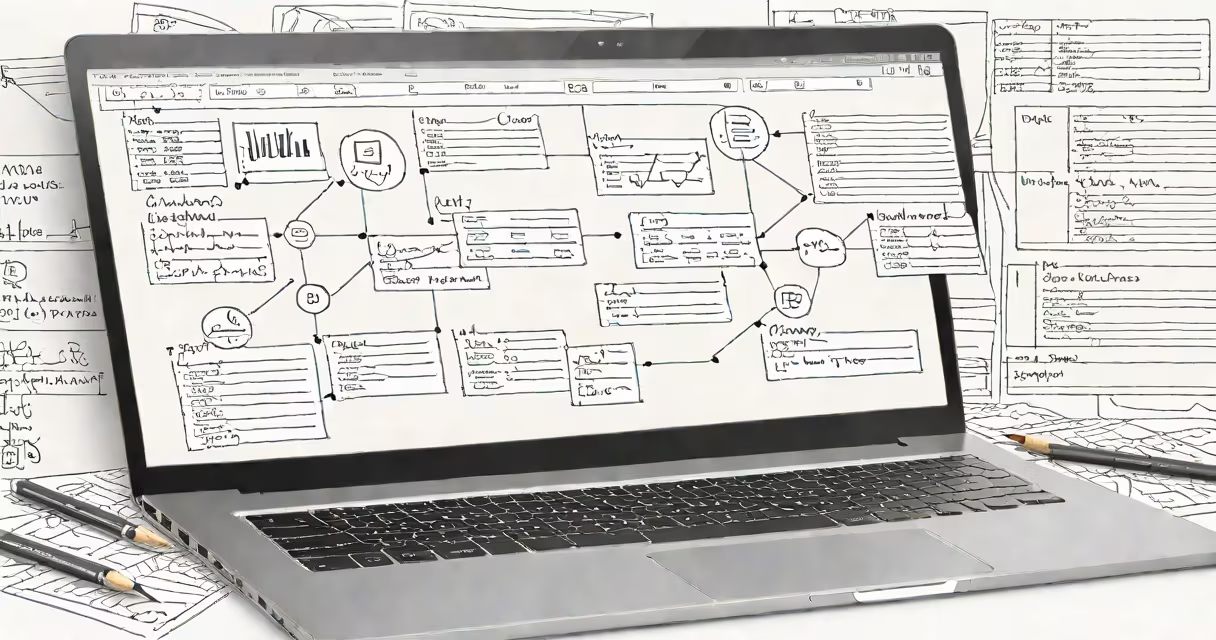
Business software programs are digital tools designed to manage core operations such as accounting, customer relations, inventory, payroll, and project tracking. They run on desktops, servers, or cloud platforms and are used by organizations of all sizes to increase efficiency and reduce manual errors.
These programs automate repetitive tasks, centralize data, and provide real-time insights. For example, QuickBooks automates invoicing and tax reporting for small businesses, while SAP ERP manages supply chains across multinational corporations. They are not limited to large enterprises-many tools offer free or low-cost tiers suitable for startups and freelancers.
According to Gartner, 80% of medium to large businesses rely on integrated business software stacks to coordinate departments and report performance metrics. The most effective systems connect across functions-finance, HR, sales, and operations-reducing silos and improving response times during market shifts.
At their core, business software programs process structured data through predefined workflows. A sales team enters a customer's order into a CRM system, which then triggers an automated invoice via accounting software. This integration eliminates duplicate data entry and reduces processing time from hours to minutes.
Modern programs use APIs (Application Programming Interfaces) to exchange data with other tools. Salesforce integrates with Slack to send deal updates to team channels, while Microsoft Dynamics connects with Outlook to schedule follow-ups based on contact history. These connections allow users to work within familiar environments without switching apps constantly.
Cloud-based programs store data on remote servers accessible via web browsers or mobile apps. This enables teams to collaborate in real time from different locations. Dropbox Business allows document sharing with version control, ensuring everyone works from the latest file. Data encryption and role-based access prevent unauthorized changes or leaks.
Business software programs fall into distinct categories based on purpose. The most widely used include:
| Type | Primary Function | Examples | Typical Users |
|---|---|---|---|
| Accounting & Finance | Track income, expenses, taxes, and financial statements | QuickBooks, Xero, NetSuite | Small businesses, accountants, CFOs |
| Customer Relationship Management (CRM) | Manage leads, sales pipelines, and customer interactions | Salesforce, HubSpot, Zoho CRM | Sales teams, marketing departments |
| Project & Task Management | Assign tasks, track progress, set deadlines | Asana, Trello, Monday.com | Marketing, engineering, operations teams |
| Human Resources (HR) Systems | Handle hiring, payroll, benefits, employee records | BambooHR, Workday, Gusto | HR staff, finance teams |
| Enterprise Resource Planning (ERP) | Integrate finance, procurement, manufacturing, and logistics | SAP, Oracle NetSuite, Microsoft Dynamics 365 | Larger organizations with complex operations |
Each category serves a specific operational need. Accounting software ensures compliance with IRS regulations, while CRM tools improve conversion rates by tracking customer behavior. Project management systems reduce missed deadlines by visualizing task dependencies and resource allocation.
A lesser-known fact: many business software programs now include AI-driven features. Tools like HubSpot's Sales Hub use predictive analytics to suggest the best time to contact a lead based on historical engagement patterns. This level of automation was rare in legacy systems but is standard in modern SaaS offerings.
Business software programs are deployed across industries-from retail and healthcare to education and government. A local bakery might use Square for payments and inventory tracking, while a hospital uses Epic EHR for patient records and scheduling.
Use cases vary by scale. A solo freelancer may rely on Notion for task lists and Google Sheets for billing. A global manufacturer uses SAP to synchronize production lines across five countries, adjusting output based on real-time demand forecasts. The software adapts to the size and complexity of the organization.
One key reason for adoption is scalability. As a company grows, manual processes fail under volume. A startup using spreadsheets for payroll may face errors during tax season. Switching to Gusto automates tax filings and direct deposits, reducing administrative burden by 70%, according to a 2023 study by the National Small Business Association.
Many assume business software programs are only for large companies. That's incorrect. Cloud-based tools like FreshBooks and Wave offer free versions tailored for solopreneurs and micro-businesses. These tools handle invoicing, expense tracking, and basic reporting with minimal setup.
Another misconception is that all business software is expensive. While enterprise solutions like SAP can cost $500,000+ annually, affordable alternatives exist. For example, Zoho One bundles 40+ tools-including CRM, accounting, and HR-into a single subscription priced at $14 per user per month.
Business software programs are often confused with general-purpose software. Word processors and email clients are productivity tools, but they aren't designed for business operations. A spreadsheet can track sales, but it lacks audit trails, user permissions, and automated reporting found in dedicated accounting software.
I once helped a nonprofit transition from Excel to QuickBooks Online. Their monthly reconciliation took 12 hours manually. After setting up automated bank feeds and categorization rules, the process dropped to under 90 minutes. The difference wasn't just speed-it was accuracy. They caught $4,200 in duplicate payments that had gone unnoticed for months.
Consider a small clothing boutique with 15 employees and 300 SKUs. Before adopting business software, the owner used paper ledgers, Excel sheets, and handwritten receipts. Inventory shrinkage averaged 18% per quarter due to miscounts and unrecorded returns.
They implemented Shopify for e-commerce, Square for in-store POS, and TradeGecko (now Netsuite Commerce) for inventory and order fulfillment. Within six weeks:
The system auto-generated purchase orders when stock levels hit thresholds. Customer data from online and in-store sales merged into a single profile, enabling personalized email campaigns that increased repeat purchases by 27%.
This outcome reflects a broader trend: integration matters more than individual tool quality. A standalone CRM won't boost sales if it doesn't sync with the accounting system. The real value lies in interconnected workflows that eliminate friction between departments.
When selecting business software programs, prioritize interoperability. Look for tools that support API access, export data in standard formats (CSV, JSON), and integrate with common platforms like Microsoft 365. Microsoft software programs remain a popular choice due to their deep integration with Windows, Teams, and Azure services.
Business software programs are not optional-they are foundational. They replace guesswork with data, reduce risk, and free teams to focus on growth rather than maintenance. The right tools don't just support operations; they define how efficiently and responsively a business can respond to change.