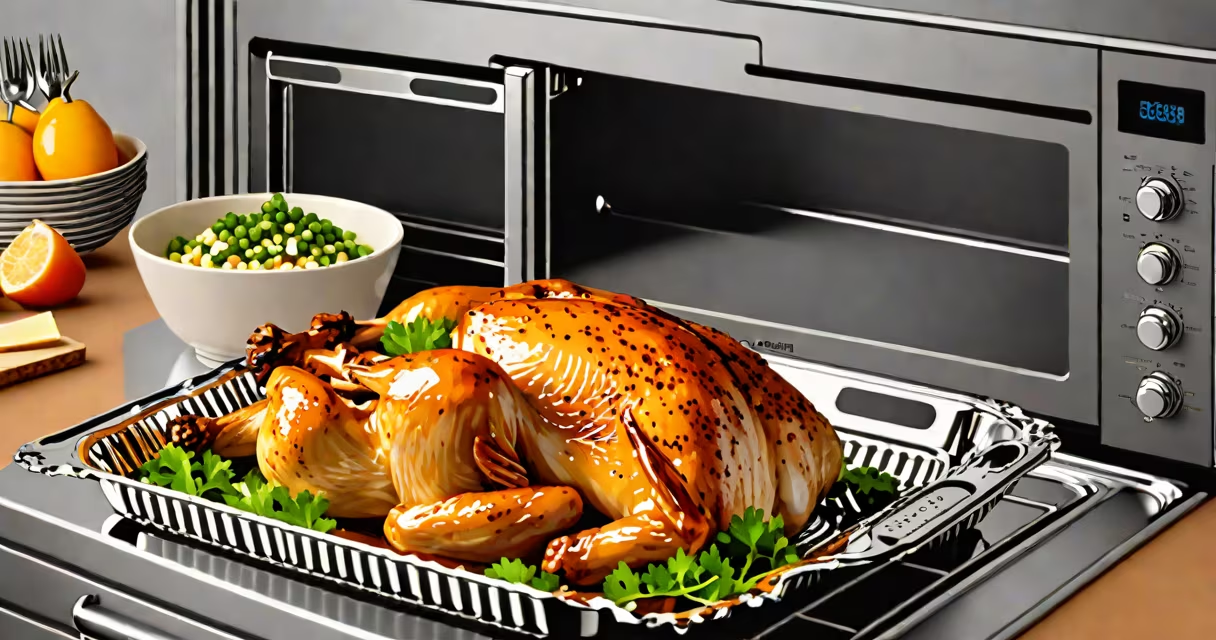
Convection microwave cookware is oven-safe, heat-resistant cookware designed to withstand the combined high temperatures and circulating air of a convection microwave. It ensures even cooking, browning, and crisping without warping or releasing harmful chemicals.
These containers differ from standard microwave-safe dishes because they must endure both microwave radiation and dry, hot air circulation. Not all microwave-safe materials handle convection's higher heat-typically above 350°F (177°C)-making material selection critical.
Using improper cookware risks melting, cracking, or leaching toxins into food. For example, plastic containers labeled "microwave-safe" may warp or melt under convection heat. Only materials rated for both microwave and convection use-such as glass, ceramic, and certain metals-are safe.
Convection microwaves combine microwave energy with a fan-driven heating element. The fan circulates hot air around food, mimicking a conventional oven. This creates crisp exteriors and evenly cooked interiors-ideal for roasting, baking, and grilling.
For this system to function safely, cookware must allow even heat distribution. Materials like tempered glass and stoneware absorb and retain heat uniformly. Metal cookware must be specifically designed for convection microwaves-usually with rounded edges and no sharp corners-to prevent arcing (sparks).
When placed in a convection microwave, cookware acts as a thermal conductor. A ceramic dish heats slowly but holds temperature well, reducing hot spots. Glass allows microwave penetration while resisting thermal shock. Aluminum trays reflect microwaves efficiently but require non-stick coatings to avoid food sticking during convection cycles.
Not all cookware performs equally in convection microwaves. The table below outlines common materials, their performance, and safety limits.
| Material | Heat Resistance | Microwave Safety | Convection Suitability | Best For |
|---|---|---|---|---|
| Tempered glass | Up to 450°F (232°C) | Yes | Yes | Baking, roasting, reheating |
| Ceramic (glazed) | Up to 400°F (204°C) | Yes | Yes | Slow-cooked meals, casseroles |
| Aluminum (non-stick coated) | Up to 425°F (218°C) | Yes (if non-stick coating is microwave-safe) | Yes (if flat and rounded) | Roasting, grilling, baking |
| Plastic (microwave-safe) | Up to 350°F (177°C) | Yes | No | Reheating only |
| Stainless steel (flat-bottom) | Up to 500°F (260°C) | Yes | Yes (if designed for convection) | Grilling, broiling, baking |
Some materials fail under convection despite being microwave-safe. Plastic containers often degrade above 350°F. Even microwave-safe plastics can release microplastics when heated to convection levels. The FDA warns against using plastic in high-heat environments due to potential chemical leaching.
A non-obvious fact: Many convection microwaves have a "convection-only" mode. Using standard microwave-safe dishes in this mode can cause uneven heating or damage. Always verify that cookware supports both modes.
Many users assume any "microwave-safe" container works in a convection microwave. This is incorrect. Microwave-safe labeling only covers exposure to electromagnetic waves-not prolonged dry heat. A container may survive 2 minutes in a microwave but crack after 10 minutes in convection mode.
Another error is using metal cookware with sharp edges or crimped rims. These shapes concentrate electrical fields, causing arcing. Arcing damages the oven's magnetron and can start fires. The National Fire Protection Association (NFPA) reports that improper cookware causes 12% of microwave-related fires annually.
Users also confuse "convection microwave" with "air fryer." While both use hot air, air fryers rely solely on convection and lack microwave functionality. Convection microwaves offer dual-mode cooking. A single appliance can defrost, reheat, bake, and crisp-making convection microwave cookware versatile across multiple functions.
Suppose you're preparing bone-in chicken thighs in a convection microwave. You choose a 9x13-inch ceramic baking dish with a glazed finish. The dish is labeled "oven-safe up to 450°F" and "microwave-safe."
You season the chicken, place it in the dish, cover loosely with parchment paper, and set the oven to 375°F convection mode for 25 minutes. The ceramic dish distributes heat evenly, preventing burning. The lid traps moisture initially, then allows steam to escape, creating a crispy skin.
After 25 minutes, internal temperature reaches 165°F. The dish remains intact, shows no discoloration, and cools evenly. Had you used a plastic container, it would have warped or melted. A metal pan with a jagged edge would have sparked.
This example shows why matching cookware to both temperature and function is essential. Always check manufacturer guidelines for both microwave and convection use.
Some models require specific cookware. Bosch convection microwaves, for example, recommend using only oven-safe glass or ceramic dishes. Their manual states: "Do not use aluminum foil or metal pans unless explicitly approved."
Contoure convection microwaves feature a "Smart Bake" sensor that adjusts time and temperature based on food density. For best results, use the included stainless steel baking tray. It's designed with rounded edges and a non-stick coating that resists chipping during convection cycles.
Before placing any cookware in a convection microwave:
Convection microwave cookware is not interchangeable across models. What works in a Samsung over-the-range unit may fail in a GE countertop model. Match cookware to your device's specifications.
When used correctly, convection microwave cookware delivers results comparable to a full oven-without the space, energy, or wait time. Prioritize safety, material integrity, and compatibility to get consistent, delicious results.