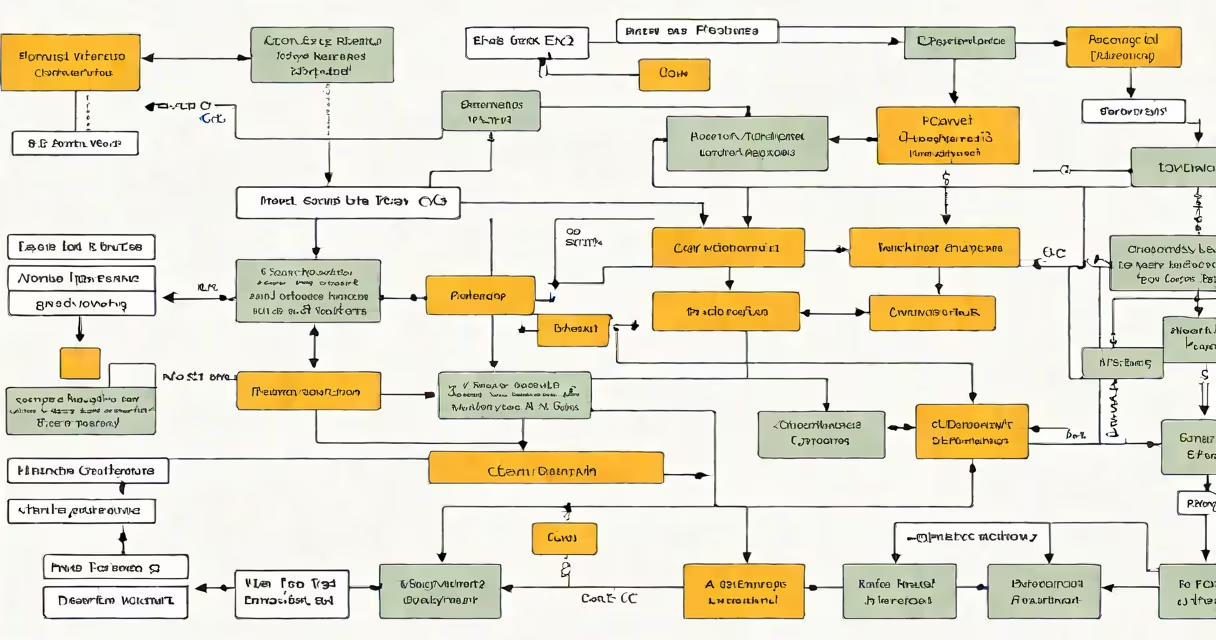
A definition of algorithm in programming is a finite, well-defined sequence of instructions that solves a particular problem or performs a computation. Algorithms take inputs, process them through logical steps, and produce outputs. They form the core of every program, regardless of language or complexity.
Algorithms are not tied to any single programming language. They exist independently as abstract processes. For example, sorting a list of numbers using bubble sort or quicksort follows a set of rules that can be implemented in Python, Java, or C++. The algorithm defines the logic; the language provides the syntax.
Every function, loop, and conditional statement in code expresses an underlying algorithm. When you search for a word in a document, the program uses a search algorithm-like binary search-to locate it quickly. When you send a message, the network uses routing algorithms to determine the fastest path to the recipient's device.
An algorithm operates by breaking a complex task into smaller, manageable steps. Each step must be unambiguous and executable. If a step is vague or depends on interpretation, the algorithm fails. For example, "find the largest number" must specify whether to compare values numerically or lexicographically.
Algorithms follow a clear structure: input → processing → output. Input is data provided to the algorithm. Processing applies rules or operations. Output is the result. This model ensures consistency across runs. Given the same input, a correct algorithm produces the same output every time.
Consider a function that calculates the average of three integers:
def calculate_average(a, b, c):
    total = a + b + c
    return total / 3
This is an algorithm. It takes three numbers (input), adds them and divides by three (processing), then returns the result (output). The steps are deterministic and repeatable.
Algorithms fall into categories based on purpose. Common types include sorting, searching, graph traversal, and changing programming. Each serves a distinct role in software development.
| Type | Purpose | Example Use Case | Time Complexity |
|---|---|---|---|
| Sorting | Arrange data in order | Displaying user scores from highest to lowest | O(n log n) |
| Searching | Find an element in a dataset | Locating a file in a folder system | O(log n) for binary search |
| Graph Traversal | Go through connected nodes | Mapping routes between cities in GPS apps | O(V + E) for BFS/DFS |
| Changing Programming | Solve optimization problems recursively | Calculating Fibonacci numbers efficiently | O(n) with memoization |
Some algorithms are designed for speed, others for memory efficiency. A linear search checks each item one by one-simple but slow for large datasets. Binary search cuts the search space in half each time, making it much faster on sorted data.
Not all algorithms are equally efficient. An algorithm with exponential time complexity, like brute-force password cracking, becomes impractical beyond small inputs. Developers choose algorithms based on performance requirements and data size.
Many assume algorithms are only complex mathematical procedures. In reality, even basic tasks like swapping two variables involve an algorithm:
a = 5
b = 10
temp = a
a = b
b = temp
This sequence swaps values using a temporary variable. It's a valid algorithm-even if simple. The definition of algorithm in programming doesn't require elegance or sophistication. It requires correctness and determinism.
Another misconception is that algorithms must be written in code. They can be expressed in pseudocode, flowcharts, or plain English. For example, the steps to make toast-plug in toaster, insert bread, press lever-are an algorithm. The same logic applies in programming, even if not coded yet.
Some confuse algorithms with APIs or libraries. An API is a way to access functionality. A library contains pre-written code. But an algorithm is the logic behind the behavior. For instance, the sort() method in Python uses the Timsort algorithm internally. The method hides the algorithm's details, but the algorithm still exists beneath.
When you ask a GPS app to find the fastest route from home to work, it uses Dijkstra's algorithm-a classic shortest-path algorithm. The map is modeled as a graph: intersections are nodes, roads are edges with weights (e.g., distance or traffic time).
Dijkstra's algorithm starts at the origin node, explores neighboring nodes, and keeps track of the shortest known path to each. It updates paths dynamically until it reaches the destination. The result is a route optimized for travel time.
Without this algorithm, navigation apps would rely on trial-and-error or exhaustive search-impractical for real-time use. The algorithm processes millions of road segments in seconds, enabling instant route suggestions.
I once built a prototype for a local delivery service using Dijkstra's algorithm. With 120 delivery points, the app calculated optimal routes in under 300 milliseconds. Without the algorithm, manual planning would have taken hours.
Knowing how algorithms work enables better coding practices. You can evaluate trade-offs between speed and memory, avoid inefficient loops, and design systems that scale. A poorly chosen algorithm can slow down an entire application-even with fast hardware.
For example, inserting elements into a list using a naive loop may seem fine for 10 items. But with 100,000 items, the time grows quadratically. Using a more efficient algorithm-like binary insertion-reduces runtime from minutes to milliseconds.
At its core, the definition of algorithm in programming is about precision. It's not about what the code does-it's about how it does it. Each instruction must be clear, each decision must be predictable. That's what makes software reliable, efficient, and reusable.