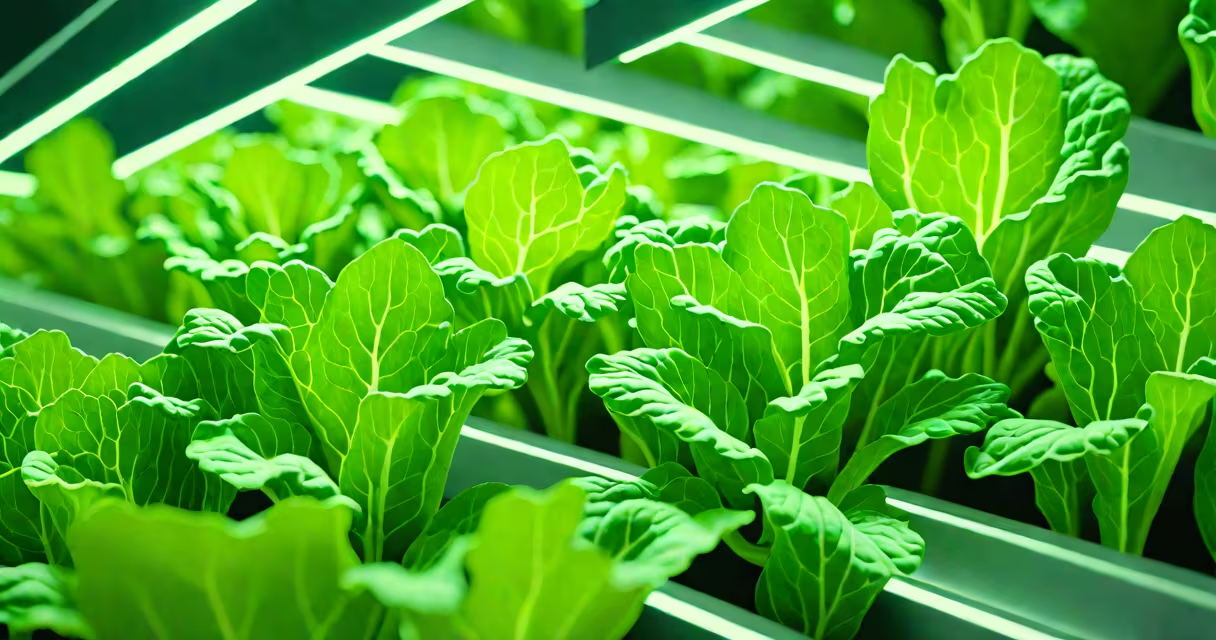
Hydroponically grown means plants are raised in a soil-free environment using a precisely balanced nutrient solution delivered directly to their roots. This method supports faster growth, higher yields, and reduced water consumption compared to traditional soil farming.
Hydroponic systems eliminate reliance on natural soil by suspending plant roots in a mineral-rich water solution. Nutrients are dissolved in water and delivered continuously or intermittently based on plant needs. This allows growers to control pH, oxygen levels, and nutrient ratios with precision, minimizing waste and maximizing efficiency.
The core principle is replacing soil's role-providing nutrients, support, and moisture-with engineered solutions. Plants grow faster because they don't expend energy searching for nutrients in soil. Instead, they absorb what they need instantly, leading to shorter harvest cycles and greater productivity per square foot.
At its simplest, a hydroponic setup uses a reservoir filled with water and dissolved nutrients. Roots are exposed either directly to the solution or via an inert medium like perlite, coconut coir, or rockwool. Air pumps often oxygenate the solution to prevent root rot, which can occur when roots sit in stagnant water.
There are several established methods. Deep Water Culture (DWC) suspends roots in aerated nutrient solution. Nutrient Film Technique (NFT) flows a thin film of nutrient solution over roots in a sloped channel. Drip systems deliver solution to the base of each plant through timed emitters. Each method suits different crops and scales.
A real-world example: a commercial greenhouse in Ontario grows 20,000 heads of lettuce monthly using NFT channels. The system delivers a custom blend of nitrogen, potassium, and calcium every 15 minutes. Harvest time is 28 days-half the time of field-grown lettuce-and water use is 90% lower than conventional farms.
Different systems suit different goals. The table below outlines common types, their ideal applications, and typical setup complexity.
| System Type | Best For | Water Use | Complexity |
|---|---|---|---|
| Deep Water Culture (DWC) | Lettuce, herbs, strawberries | High (recirculated) | Low |
| Nutrient Film Technique (NFT) | Leafy greens, basil | Medium | Medium |
| Drip System | Tomatoes, peppers, cucumbers | Low to medium | High |
| Aeroponics | High-value crops, research | Lowest (mist-fed roots) | Very high |
Aeroponic systems, though complex, show notable results. NASA tested them for space missions, finding they use 98% less water than soil farming while increasing biomass by 30%. In practice, this means fewer resources and higher yields in limited spaces.
Many assume hydroponically grown food lacks flavor or nutrition. That's incorrect. A 2022 study by the University of California, Davis, found hydroponic tomatoes had higher lycopene levels than field-grown ones due to optimized nutrient delivery. Taste depends on genetics and light quality-not the absence of soil.
Another myth: hydroponics requires expensive equipment. While large-scale operations invest heavily, small home setups cost under $100. A basic DWC kit with a net pot, clay pebbles, and a submersible pump can grow basil or mint on a kitchen windowsill.
Some confuse hydroponics with aquaponics. Aquaponics combines fish farming with hydroponics-fish waste provides nutrients for plants, and plants filter water for fish. It's a closed-loop system, but not all hydroponic systems include fish. The two are related but distinct.
Hydroponic farming enables consistent crop production regardless of climate or season. Urban farms in New York City and Tokyo use vertical hydroponic stacks to supply fresh greens to local restaurants year-round. These facilities operate indoors, reducing exposure to pests and extreme weather.
Water efficiency is a major advantage. The USDA reports that hydroponic systems use 60-90% less water than traditional agriculture. In drought-prone regions like California, this conservation matters. One acre of hydroponic lettuce uses about 10,000 gallons annually-compared to 50,000 gallons in soil-based farming.
I once set up a six-tier NFT system in my garage to grow kale and chard. After adjusting pH and EC levels weekly, I harvested twice-monthly. Yield was 30% higher than my previous soil garden, and I used only 120 gallons of water over four months. The system ran on solar-powered pumps and timers.
Understanding what does hydroponically grown mean involves recognizing it as a science-driven alternative to soil farming. It's not about avoiding soil-it's about replacing its functions with better control. With precise nutrient management, efficient water use, and faster growth cycles, hydroponically grown produce offers sustainability and consistency.