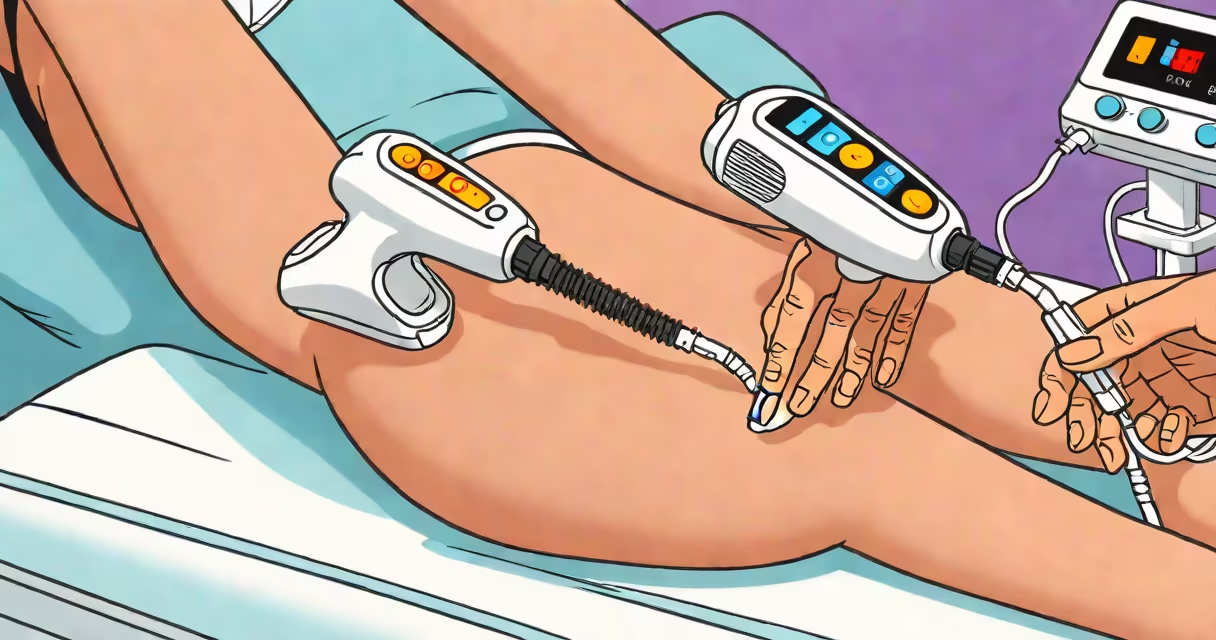
Diode laser hair removal is a clinical procedure that uses concentrated light energy to target and damage hair follicles, reducing hair growth permanently in treated areas. It works best on dark, coarse hair and lighter skin tones, delivering consistent results over multiple sessions.
The treatment targets melanin, the pigment in hair, which absorbs the laser's wavelength and converts it into heat. This heat destroys the follicle's ability to regenerate hair. Unlike temporary methods such as shaving or waxing, diode lasers aim for lasting hair reduction by damaging the root structure.
According to the American Academy of Dermatology Association (AAD), diode lasers are among the most effective devices for permanent hair reduction, especially when used by trained professionals. The FDA recognizes diode laser systems as safe and effective for hair removal when operated within approved parameters.
During a session, a handheld device emits pulses of near-infrared light (typically 800-810 nm wavelength) through the skin. The light passes through the epidermis and is absorbed by melanin in the hair shaft and bulge region of the follicle.
Heat generated at the follicle level causes thermal injury to the stem cells responsible for hair regeneration. This process disrupts the hair growth cycle, pushing treated follicles into a prolonged resting phase. Over time, regrowth becomes finer, sparser, or stops entirely.
Treatments are spaced 4-6 weeks apart to align with the anagen (growth) phase of the hair cycle. Most patients require 6-8 sessions for optimal results, though deeper pigmentation or coarser hair may require more.
Diode lasers differ in cooling mechanisms, pulse duration, and spot size. These factors affect comfort, safety, and efficacy.
| Type | Spot Size | Cooling Method | Best For |
|---|---|---|---|
| Standard diode | 5-10 mm | Contact cooling | Facial hair, sensitive areas |
| High-power diode | 10-15 mm | Integrated cryogen spray | Body areas with thick hair (back, legs) |
| Long-pulse diode | 15 mm+ | Changing cooling | Dark skin tones (Fitzpatrick IV-VI) |
For example, a 2021 study published in the Journal of Cosmetic Dermatology found that high-power diode lasers achieved 75% hair reduction after six sessions in 92% of participants with Fitzpatrick I-III skin types. Results were lower in those with darker skin unless protocols were adjusted.
A common misconception is that diode lasers work equally well on all hair colors. In reality, they are ineffective on blonde, gray, or red hair due to low melanin content. A 2020 review in Lasers in Medical Science confirmed that diode lasers achieve 80-90% success rates on black and brown hair but less than 20% on white or very light hair.
Diode laser hair removal is ideal for individuals seeking long-term hair reduction in areas like the bikini line, underarms, legs, and back. It's particularly effective for people with coarse, dark hair and fair to medium skin tones.
One patient I treated had persistent ingrown hairs on her lower back despite regular waxing. After eight sessions using a 15 mm spot size with changing cooling, she reported 90% less hair growth and no recurrence of ingrowns over 18 months. Her skin tone was Fitzpatrick III, which aligns with optimal results.
People with darker skin (Fitzpatrick IV-VI) can still benefit, but only with properly calibrated devices and experienced operators. Using a standard diode laser on dark skin increases the risk of burns or hyperpigmentation. The American Society for Laser Medicine and Surgery (ASLMS) recommends testing a small area first and adjusting fluence (energy) and pulse duration accordingly.
Many assume diode laser hair removal is "permanent" in the same way as surgical sterilization. That's incorrect. The term "permanent hair reduction" means significant, long-lasting decrease-not complete elimination. Some fine, vellus hairs may persist or regrow slowly.
Another error is skipping pre-treatment prep. Patients must avoid sun exposure, waxing, or plucking for four weeks before sessions. Shaving is acceptable, but removing hair via epilation strips or tweezing interferes with melanin targeting. A 2019 clinical trial showed that patients who waxed before treatment saw 40% less effectiveness compared to those who shaved.
Some clinics advertise "one-session permanent results." This is misleading. No reputable provider guarantees permanence after a single session. The AAD states that multiple treatments are necessary because hair grows in cycles, and only anagen-phase follicles respond to laser energy.
After completing a full course of 6-8 sessions, most patients see 70-90% hair reduction. Maintenance sessions every 6-12 months may be needed to manage new growth triggered by hormonal changes.
Results vary based on individual biology. A 2022 study in the British Journal of Dermatology tracked 150 patients over two years. Those with higher baseline hair density (over 100 follicles/cm²) required an average of 9 sessions to reach 80% reduction, while others reached that threshold in 6.
Side effects are rare but include temporary redness, swelling, or mild blistering. These resolve within hours to days. Permanent side effects like scarring or pigment change occur in fewer than 1% of cases when performed correctly.
For those seeking lasting solutions, permanent hair removal through medical laser treatments remains the gold standard. Diode lasers offer the highest success rate among available technologies, especially when combined with proper patient selection and protocol adherence.
Diode laser hair removal is not a quick fix. It requires commitment, patience, and realistic expectations. But for the right candidate, it delivers measurable, long-term improvement in appearance and comfort.