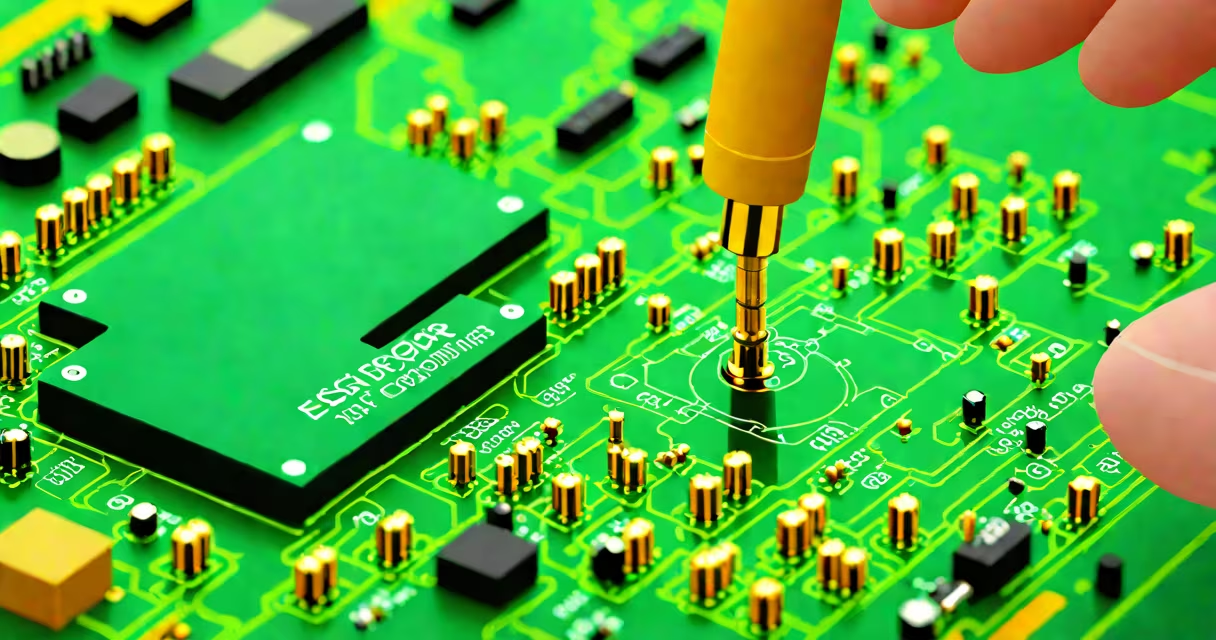
EN 61000-4-2 is a European standard specifying the immunity requirements for electrical and electronic equipment exposed to electrostatic discharge (ESD). It defines test methods, severity levels, and acceptance criteria to ensure devices function correctly under real-world ESD events.
The standard applies to equipment used in industrial, commercial, and residential environments. It helps devices do not malfunction when touched by a person carrying static charge-common in dry climates or synthetic clothing environments. Devices must withstand ESD events up to 8 kV contact discharge and 15 kV air discharge, depending on the application category.
Manufacturers use EN 61000-4-2 to validate product resilience before market release. Compliance is mandatory for CE marking in the EU and widely adopted in North America and Asia. Failure to meet the standard can result in product recalls or liability claims due to unexpected failures.
Test setups simulate human body model (HBM) discharges using calibrated ESD simulators. A charged electrode is brought into contact with the device's surface or held near it. The discharge energy is measured in kilovolts and applied at specified intervals across multiple points.
Testing follows a sequence: pre-test functional checks, exposure at each level, and post-test verification. Equipment must maintain normal operation throughout and after all tests. Any deviation-such as reset, lockup, or data corruption-is considered a failure.
For example, a medical infusion pump must continue delivering accurate dosages during and after ESD exposure. If the pump alters flow rate or resets its settings, it fails the test. This prevents life-critical devices from failing due to accidental touch.
EN 61000-4-2 defines four immunity levels based on environmental risk. Level 1 applies to protected locations such as climate-controlled server rooms. Level 4 covers harsh industrial environments with high static potential.
| Level | Contact Discharge (kV) | Air Discharge (kV) | Typical Environment |
|---|---|---|---|
| 1 | 2 | 2 | Controlled environment (e.g., server room) |
| 2 | 4 | 4 | General office or home |
| 3 | 6 | 8 | Industrial zones with anti-static flooring |
| 4 | 8 | 15 | High-risk industrial sites |
Equipment is assigned a level based on installation location and operational criticality. A factory PLC (programmable logic controller) in a metal fabrication plant requires Level 4. A desktop computer in a home office may only need Level 2.
Non-compliance is not just about passing a threshold-it's about consistency. A device must survive repeated discharges at the same level. One failure out of ten test cycles triggers rejection.
EN 61000-4-2 is often confused with EMI (electromagnetic interference) standards like EN 61000-4-3. While both assess electromagnetic resilience, EMI focuses on radiated fields from radio transmitters, cell towers, or nearby motors. EN 61000-4-2 specifically addresses direct contact or proximity discharge.
Another misconception is that shielding alone ensures compliance. Faraday cages reduce radiated emissions but offer little protection against direct ESD. A well-shielded enclosure still needs internal grounding paths and component-level filtering to pass EN 61000-4-2.
One non-obvious fact: the standard assumes a 150 pF coupling capacitor between the human body and the device. This models typical finger-to-device capacitance. If a manufacturer uses a different capacitor value in design validation, results may not reflect real-world performance.
In 2022, a smart thermostat manufacturer faced field failures after deployment. Users reported sudden resets when touching the device's touchscreen. Internal logs showed transient voltage spikes consistent with ESD events.
Testing revealed the unit failed at Level 2 contact discharge (4 kV). The root cause was a lack of TVS (transient voltage suppressor) diodes on the microcontroller's power rail. Adding a 5.6 V bidirectional TVS diode reduced the voltage spike from 12 V to less than 1 V during discharge.
After redesign, the device passed Level 2 and Level 3 testing. Field reports dropped to zero within six months. This case shows that compliance isn't optional-it's essential for reliability.
I once observed a lab test where a technician accidentally discharged 10 kV onto a prototype industrial switchgear interface. The device rebooted and lost configuration. The team had to revise the PCB layout, add ferrite beads, and rework the power supply filtering. The fix took three weeks and delayed product launch.
EN 61000-4-2 aligns with international standards like IEC 61000-4-2. Both define identical test procedures, ensuring global consistency. Manufacturers in the U.S. often reference IEC versions, while EU-based firms use EN versions-both are equivalent.
Designers should integrate ESD protection early. Place filters close to entry points. Use grounded metal enclosures. Avoid long signal traces near edges. These steps reduce susceptibility without increasing cost.
EN 61000-4-2 remains a benchmark for electronic durability. It doesn't just test hardware-it validates trust in everyday devices. From hospital monitors to traffic lights, compliance ensures safety, continuity, and user confidence.