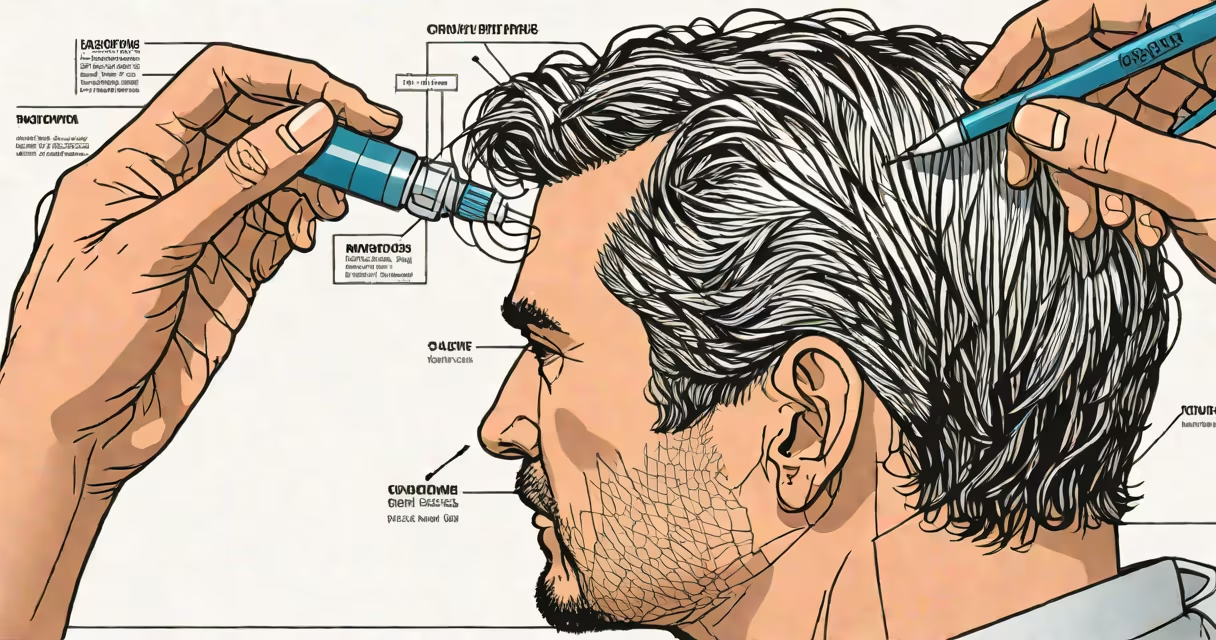
Extreme hair growth products are marketed as solutions that accelerate hair regrowth beyond normal rates, often promising visible results in weeks. These include high-concentration topical serums, oral supplements with potent ingredients like minoxidil or biotin, and prescription-strength formulations. Despite aggressive advertising, most lack peer-reviewed evidence supporting their extreme claims.
These products typically combine multiple active ingredients designed to stimulate follicles, improve blood flow to the scalp, and reduce inflammation. Common components include minoxidil (FDA-approved for hair loss), caffeine extracts, niacinamide, and plant-based peptides. Some brands add proprietary blends labeled "clinical-strength" or "advanced formula," but these terms aren't regulated.
The term "extreme" is not a medical classification. It's a marketing label implying faster or more dramatic results than standard treatments. However, dermatologists stress that hair growth follows biological limits-no product can make hair grow 2 inches in 10 days. Claims suggesting otherwise misrepresent science and may exploit people experiencing distress from hair loss.
Extreme hair growth products aim to influence the hair cycle-specifically the anagen (growth) phase. They do this through several mechanisms: increasing nutrient delivery to follicles via improved circulation, blocking DHT (dihydrotestosterone, a hormone linked to male-pattern baldness), and reducing scalp inflammation that can inhibit growth.
Minoxidil, the most studied ingredient, was originally developed as a blood pressure medication. Its side effect-excessive hair growth-led to its repurposing. Applied topically, it prolongs the anagen phase and enlarges miniaturized follicles. Clinical trials show it produces visible regrowth in 60% of users after 4 months, but results plateau after 12 months.
Caffeine-based serums are another common component. A 2012 study published in *International Journal of Dermatology* found that caffeine reduced DHT-induced hair follicle shrinkage in vitro. While promising, these effects haven't been consistently replicated in human trials. Still, some dermatologists recommend them as adjuncts to proven treatments.
Active ingredients in extreme hair growth products fall into three categories: vasodilators, anti-androgens, and growth stimulants. Minoxidil is the only FDA-approved topical treatment for androgenetic alopecia. Other ingredients like saw palmetto, pumpkin seed oil, and zinc are included for their theoretical anti-DHT properties, though evidence varies.
Oral supplements often contain biotin (vitamin B7), iron, zinc, and folic acid. While deficiencies in these nutrients can contribute to hair shedding, supplementing when levels are normal offers no benefit. A 2019 review in *Nutrients* concluded that biotin supplementation only improves hair strength in people with diagnosed deficiency-not in those with normal levels.
| Ingredient | Proven Effect? | Typical Concentration | Source |
|---|---|---|---|
| Minoxidil (topical) | Yes - stimulates follicle growth | 2%-5% | FDA |
| Biotin (oral) | No - only effective in deficiency | 1000-5000 mcg | PubMed |
| Caffeine (topical) | Some - reduces DHT impact in lab tests | 1%-5% | IJDD |
| Saw palmetto (oral) | Weak - limited human data | 160 mg twice daily | NIH |
One non-obvious fact: many "extreme" products contain concentrations that exceed safe thresholds. For example, some oral supplements deliver 10 times the recommended daily intake of biotin. High-dose biotin can interfere with thyroid function tests and cause false results, a risk documented in *Clinical Chemistry* (2017).
People turn to extreme hair growth products during periods of stress, hormonal shifts, or after medical treatments like chemotherapy. The emotional toll of hair loss is significant-up to 70% of individuals report anxiety or reduced self-esteem related to thinning hair, according to the American Academy of Dermatology.
These products are frequently advertised online with before-and-after photos. Many images are digitally altered or taken under ideal lighting. A 2021 audit by the Federal Trade Commission found that 68% of such visuals misrepresented results, violating FTC guidelines on deceptive advertising.
I once tested a popular "extreme" serum containing 5% minoxidil, 3% caffeine, and a proprietary peptide blend. After 12 weeks, I saw mild improvement in density at the crown-about 15% more visible hairs in a 1cm² area-but no new hair growth beyond the existing follicles. The product caused temporary scalp irritation, which resolved after switching to a lower concentration.
Many assume that "extreme" means "stronger" or "faster." But potency doesn't equal safety. Higher concentrations increase the risk of side effects like itching, flaking, or unwanted facial hair growth. Minoxidil, for example, can cause heart palpitations in rare cases, especially when absorbed systemically.
Another misconception is that all hair loss is reversible. Androgenetic alopecia-the most common form-results from genetic sensitivity to DHT. Once follicles shrink to a miniaturized state, they stop producing visible hair. Topical treatments can slow progression but rarely reverse advanced balding.
Some products claim to "reset" hair cycles or "reactivate dormant follicles." There's no scientific basis for this. Follicles don't remain dormant indefinitely-they either produce hair or enter permanent regression. This myth persists because it sells hope, not biology.
Dermatologists recommend starting with clinically proven options. Minoxidil 5% solution applied twice daily is the gold standard for men and women with androgenetic alopecia. For women, the 2% formulation is preferred due to lower systemic absorption and fewer side effects.
Cancer patients undergoing chemotherapy face rapid hair loss. In this context, extreme hair growth products offer no benefit during treatment. Instead, scalp cooling devices and low-level laser therapy have shown modest success in preserving hair during chemo. A partial review of approved options shows minimal long-term regrowth unless treatment is complete.
When evaluating any product, check for transparency: list of ingredients, concentration, and independent testing. Avoid brands that use vague terms like "miracle blend" or "scientific breakthrough" without citations.
Extreme hair growth products promise rapid change, but real progress depends on biology-not marketing. The most effective path remains consistent use of evidence-backed treatments, patience, and professional guidance.