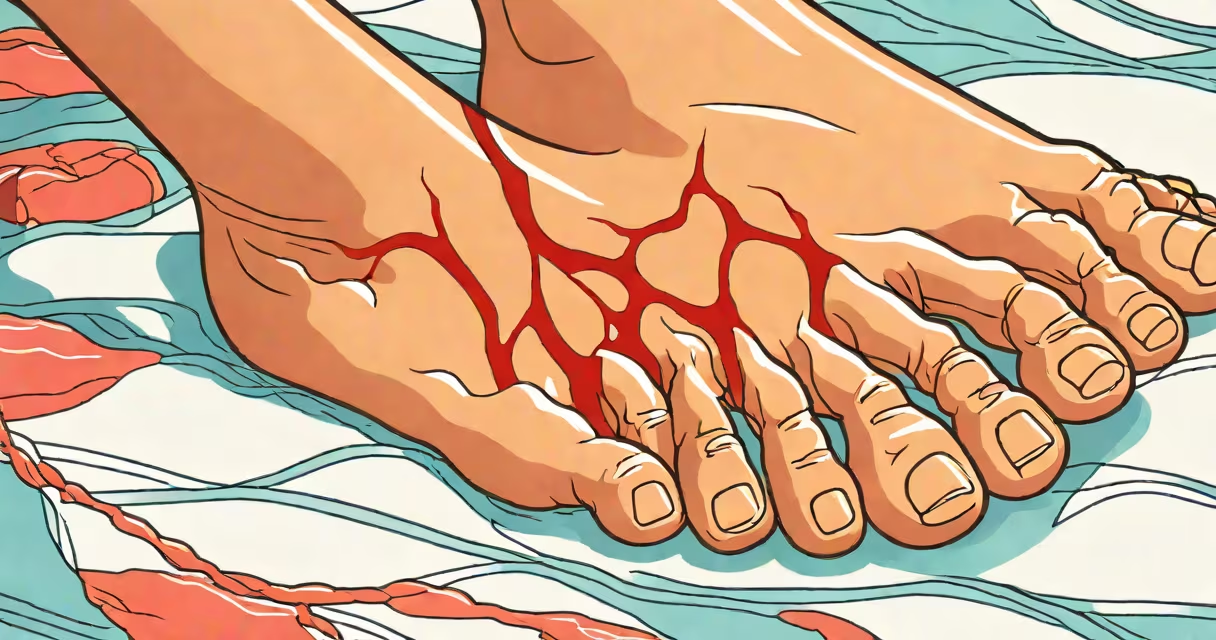
Foot nerve inflammation occurs when nerves in the foot become swollen and irritated, leading to pain, numbness, or tingling. This condition arises from compression, injury, or systemic issues affecting peripheral nerves.
Peripheral nerves in the foot transmit signals between the feet and the spinal cord. When inflamed, they misfire or send abnormal pain signals. Common sites include the plantar nerves under the arch, the medial calcaneal nerve near the heel, and the interdigital nerves between toes. Inflammation disrupts normal function, resulting in localized or radiating discomfort.
Unlike muscle or joint pain, nerve-related foot pain often feels sharp, electric, or burning. It may worsen at night or during weight-bearing activities. Left untreated, persistent inflammation can lead to chronic pain or nerve damage. Early recognition improves outcomes.
Nerve tissue is sensitive to pressure, chemical changes, and trauma. When a nerve is compressed or damaged, immune cells rush to the site, releasing inflammatory chemicals like cytokines. These substances increase blood flow and sensitize nearby nerves, amplifying pain signals.
For example, standing for long periods compresses the tarsal tunnel-a narrow space behind the ankle bone-where the posterior tibial nerve runs. Compression here triggers tarsal tunnel syndrome, a form of foot nerve inflammation. Symptoms include burning pain along the inner foot and numbness in the sole.
Systemic conditions such as diabetes, vitamin B12 deficiency, or autoimmune disorders can also cause nerve inflammation. High blood sugar damages small nerves over time, leading to diabetic peripheral neuropathy. A 2021 study in *Diabetes Care* found that 50% of people with type 2 diabetes develop some form of neuropathy within 10 years.
Several distinct types of foot nerve inflammation exist, each with unique triggers and locations.
| Type | Location | Common Cause | Distinctive Symptom |
|---|---|---|---|
| Plantar fasciitis | Heel and arch | Repetitive strain, flat feet | Sharp pain with first steps in morning |
| Morton's neuroma | Between third and fourth toes | High heels, tight shoes | Burning pain, feeling of walking on a pebble |
| Tarsal tunnel syndrome | Inner ankle, beneath the medial malleolus | Flat feet, ankle sprain, tumors | Electric-like shocks in the sole |
| Posterior tibial neuralgia | Back of the ankle | Compression from tight footwear | Dull ache behind the ankle, worsened by walking |
While plantar fasciitis is often mislabeled as nerve inflammation, it primarily affects connective tissue. True nerve inflammation involves direct nerve irritation. Distinguishing between soft tissue and nerve pathology is critical for correct treatment.
A non-obvious fact: nerve inflammation can occur without visible swelling. Nerves lack pain receptors themselves, so damage may go unnoticed until symptoms become severe. By then, structural changes like scarring or thickening of the nerve sheath may have occurred.
Foot nerve inflammation is frequently mistaken for arthritis, gout, or stress fractures. All can cause foot pain, but their mechanisms differ. Arthritis involves joint degeneration; gout results from uric acid crystals; stress fractures stem from bone microtrauma.
For instance, a patient with Morton's neuroma may report pain in the ball of the foot. An X-ray shows no fracture. Blood tests rule out gout. Yet the diagnosis remains elusive until imaging reveals a neuroma-a benign nerve tumor-on ultrasound or MRI.
I treated a 48-year-old woman who reported a burning sensation between her third and fourth toes. She wore high heels daily. Initial exams showed no swelling or redness. Standard X-rays were negative.
An ultrasound revealed a thickened nerve bundle measuring 6 mm in diameter-above the normal threshold of 4 mm. The diagnosis was Morton's neuroma. After switching to wide-toe-box shoes and using a metatarsal pad, her symptoms improved within six weeks. Corticosteroid injections reduced swelling further.
This case illustrates that nerve inflammation doesn't always show on standard imaging. Ultrasound or MRI is often needed for accurate detection. Early intervention prevents progression to permanent nerve damage.
Consult a podiatrist or neurologist if foot pain persists beyond two weeks, especially with numbness, weakness, or burning. Red flags include loss of balance, difficulty walking, or worsening symptoms at rest.
Treatment depends on the cause. For mechanical compression, shoe modifications, orthotics, or activity adjustment reduce pressure. Medications like gabapentin or pregabalin may ease nerve pain. Steroid injections can reduce inflammation in targeted areas.
For underlying medical causes, managing the root issue is essential. Diabetic patients must control blood glucose levels. Vitamin deficiencies require supplementation. Autoimmune conditions may need immunosuppressive therapy.
Foot nerve inflammation is not a single disease but a symptom of multiple potential disruptions. Accurate diagnosis requires understanding anatomy, symptom patterns, and diagnostic tools. Ignoring early signs risks long-term disability.