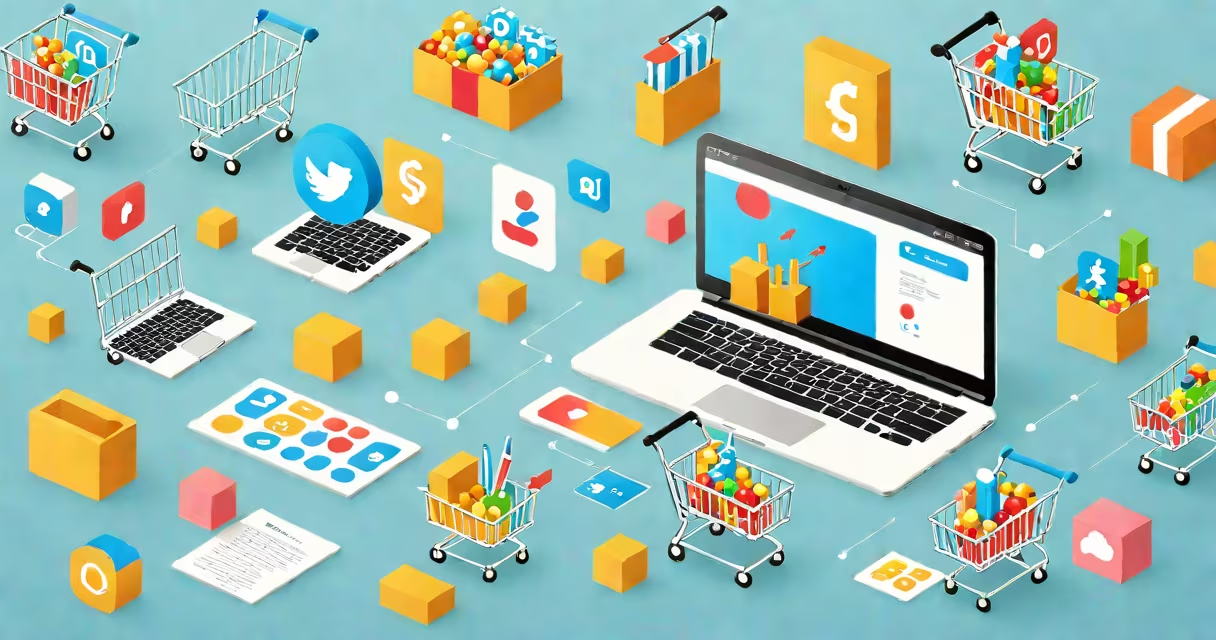
The foundation of digital marketing and e-commerce is the integration of data-driven customer targeting, automated sales funnels, and real-time transaction systems that enable businesses to reach global audiences, convert leads, and fulfill orders online. This structure relies on measurable outcomes, personalized experiences, and continuous optimization across digital touchpoints.
At its core, this foundation operates through three interconnected layers: audience understanding, conversion pathways, and fulfillment infrastructure. Businesses start by identifying who their customers are using behavioral data, demographics, and intent signals. They then design digital campaigns-via email, social media, search engines, and websites-that deliver tailored messages. Finally, they deploy secure checkout systems, inventory tracking, and delivery networks to complete transactions smoothly.
For example, an online clothing retailer uses Google Ads to target users searching for "men's winter coats under $150." When a user clicks the ad, they land on a product page with changing pricing based on location and past purchase history. After adding the item to their cart, the site offers a 10% discount via a pop-up email capture. Once the purchase completes, the system automatically triggers shipping, sends a confirmation email, and adds the customer to a retention campaign. This entire flow happens within seconds and depends on integrated tools, not isolated efforts.
Every interaction in digital marketing and e-commerce begins with data collection. Devices track user behavior-clicks, time on page, device type, referral source-and store this in databases. Platforms like Google Analytics 4 and Adobe Experience Manager process this data to identify patterns such as high bounce rates on mobile devices or low conversion during certain hours.
Based on insights, marketers adjust campaigns in real time. A brand might pause a Facebook ad set that generates high click-through but low purchases, then reallocate budget to a higher-performing Instagram Story campaign. These adjustments rely on attribution models that assign credit to different channels-last-click, first-touch, or multi-touch-depending on business goals.
Transaction systems integrate with marketing tools through APIs. When a user completes a purchase, the e-commerce platform updates inventory, logs the sale in a CRM, and triggers follow-up emails. For instance, Shopify's API allows developers to connect third-party apps like Klaviyo for email automation or ShipBob for fulfillment. Without these integrations, scaling operations becomes manually intensive and error-prone.
The foundation rests on five essential elements: audience segmentation, channel selection, conversion optimization, payment processing, and post-purchase engagement. Each plays a distinct role in driving performance.
| Component | Description | Real-World Example |
|---|---|---|
| Audience Segmentation | Grouping users by behavior, demographics, or lifecycle stage to tailor messaging. | Netflix recommends shows based on viewing history and genre preferences. |
| Channel Selection | Picking platforms where target customers spend time-e.g., TikTok for Gen Z, LinkedIn for B2B. | An accounting software company runs LinkedIn ads targeting finance managers at mid-sized firms. |
| Conversion Optimization | Improving website design, load speed, and form fields to reduce drop-offs. | A travel site reduced booking abandonment by 22% after simplifying its checkout form. |
| Payment Processing | Using gateways like Stripe or PayPal to securely handle transactions. | Stripe processes over $100 billion in payments annually across 150+ countries. |
| Post-Purchase Engagement | Automated emails for feedback, upsells, or loyalty rewards. | Amazon sends a follow-up email with related products within 12 hours of delivery. |
Many brands mistakenly assume that running ads equals success. But without proper segmentation and tracking, campaigns waste budget. According to HubSpot's 2023 State of Marketing Report, 62% of companies fail to align their digital marketing efforts with customer process stages. The most effective teams map each funnel stage-from awareness to advocacy-and assign KPIs accordingly.
One widespread error is equating digital marketing with social media. While platforms like Instagram and YouTube are useful tools, they're only part of the foundation. A successful strategy includes SEO, email automation, retargeting, and content marketing-all working together to build trust and drive conversions.
Another misconception is that e-commerce requires a large inventory. Dropshipping models allow businesses to sell products without holding stock. A seller lists a handcrafted bracelet on Etsy, receives an order, and forwards it to a supplier who ships directly to the buyer. The business earns a margin while avoiding warehousing costs. This model underpins over 40% of new e-commerce startups, according to Statista (2023).
Some believe that automation eliminates the need for human oversight. In reality, AI-driven tools still require calibration. A chatbot trained on outdated support scripts may misinterpret customer requests. A 2022 study by McKinsey found that 70% of AI failures in customer service stemmed from poor training data-not flawed algorithms.
When I launched my first online store in 2019, I focused solely on creating a visually appealing website. I ran Facebook ads with no tracking. Within six weeks, I'd spent $1,800 with no sales. I realized I was missing the foundation: data, structure, and measurement. I rebuilt the site using Google Tag Manager, added UTM parameters to all links, and segmented traffic by source. Conversion rate improved from 0.8% to 4.3% in three months.
Businesses that master the foundation see measurable results. A 2023 report from Salesforce showed that companies using integrated digital marketing and e-commerce systems achieved 3.7x higher customer lifetime value than those relying on disconnected tools. The difference lies in consistency-every touchpoint reinforces the brand, builds trust, and drives action.