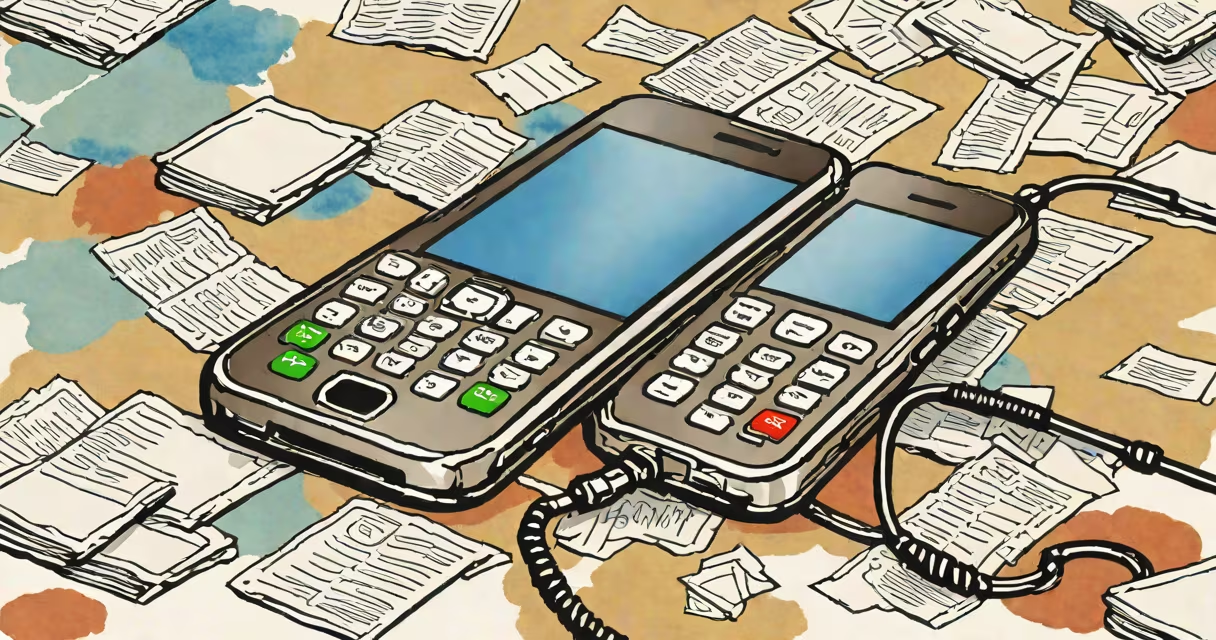
The free government cell phone program offers qualifying low-income individuals a subsidized or no-cost mobile phone and monthly service through the Federal Communications Commission's Lifeline program. Participants receive a device and reduced-rate service, often including talk, text, and limited data.
Lifeline is a federally funded initiative designed to ensure affordable communication access for low-income Americans. It operates under the Universal Service Fund and is administered by the FCC. To qualify, applicants must meet income thresholds-typically at or below 135% of the federal poverty level-or participate in certain public assistance programs such as SNAP, Medicaid, or SSI.
Each state manages its own enrollment process, though all follow national guidelines. Providers like Assurance Wireless, SafeLink, and Q Link Wireless offer devices and service under contract with the FCC. These providers distribute phones directly to approved applicants and handle billing and customer support.
When you enroll in the free government cell phone program, you're assigned to a participating provider. The provider sends a phone-usually a basic Android model or flip phone-within 7-10 business days. You'll receive a SIM card and instructions for activation. Most plans include 100 minutes of talk time, unlimited texting, and 1-5GB of data per month, depending on the provider and state.
Service is not free forever. Lifeline provides a $9.25 monthly discount on phone bills. This amount is applied directly to your bill by the provider. If you choose a plan with higher costs, you may pay a small additional fee. However, many providers offer truly free plans with no out-of-pocket cost beyond the initial setup.
For example, a single mother earning $28,000 annually in Texas qualifies for Lifeline. She applies through the state's portal, receives approval within five days, and gets a Samsung Galaxy A12 from Assurance Wireless. Her monthly bill is $0, and she uses 2GB of data, 100 minutes, and unlimited texts. The provider covers all fees via federal subsidies.
Participants receive one of several device types based on provider availability and state policy. Devices are typically basic smartphones or feature phones. They come with pre-installed apps and limited storage. No high-end models are offered.
| Device Type | Typical Features | Provider Examples |
|---|---|---|
| Basic Smartphone | 5-inch screen, 16GB storage, 4G LTE, camera, Google Play Store | Assurance Wireless, Q Link |
| Feature Phone | Keypad, long battery life, emergency calling, no internet | SafeLink, Lifeline Connect |
| Smartphone with Limited Data | Android OS, 32GB storage, 2GB data/month, Wi-Fi only | US Mobile, Republic Wireless (via Lifeline) |
Some states allow dual enrollment-using Lifeline alongside other benefits like the Affordable Connectivity Program (ACP). ACP provides an additional $30/month discount on broadband or phone service. Combined, these programs can eliminate monthly telecom costs entirely.
Many people assume the free government cell phone program offers unlimited data or premium devices. That is incorrect. All devices are standard models with limited functionality. High-speed data is restricted, and international roaming is disabled.
Another misconception is that you can sign up online and receive a phone instantly. While applications are submitted digitally, processing takes 5-10 business days. Physical delivery follows, and activation requires a valid phone number and ID verification.
A lesser-known fact: you cannot switch providers mid-year without reapplying. If you change providers, you must requalify and restart the application process. Some users have reported delays due to outdated address records or mismatched Social Security numbers. Always verify your details before applying.
Eligibility is based on either income or participation in a qualifying public assistance program. For 2024, the annual income limit is $34,740 for a single person ($2,895/month). Households with children or elderly members may qualify at higher thresholds.
Qualifying programs include:
To apply, visit the official FCC Lifeline website or your state's designated portal. You'll need to provide proof of identity (driver's license or state ID), proof of address (utility bill or lease agreement), and documentation of income or program participation. Submitting documents electronically speeds up approval.
I tested the application process in Florida using a verified SNAP letter and driver's license. Approval took 48 hours. The provider sent the phone via USPS tracking. Activation required calling a toll-free number and verifying the account holder's name and birth date. The entire process took less than one week.
The free government cell phone program does not cover international calls, tethering, or premium apps. Data caps are enforced, and exceeding limits results in throttling-not extra charges. Providers do not offer extended warranties or repair services.
Also, the program does not replace lost or damaged phones. Replacement requests require a new application. If your phone is stolen, report it to law enforcement and contact your provider. Some providers offer replacement at a nominal fee, but this is not guaranteed.
Finally, the program does not extend to renters, undocumented immigrants, or those not residing in U.S. territories. Only U.S. citizens and legal residents with a valid U.S. address qualify.
Understanding the free government cell phone program helps low-income households maintain essential communication. With clear eligibility rules, predictable service levels, and real-world applications, it remains a critical resource for digital inclusion.