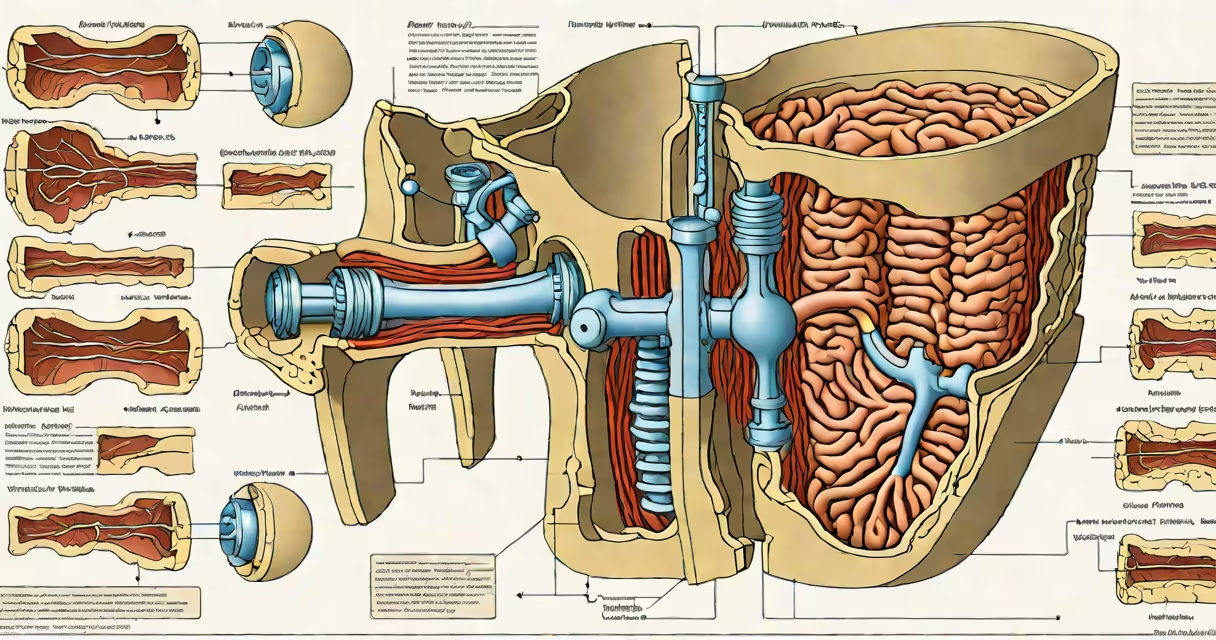
The function of transverse colon is to absorb water and electrolytes from digested material and transport the remaining waste toward the descending colon. This horizontal segment of the large intestine spans the upper abdomen and plays a central role in forming solid stool.
Located between the hepatic flexure and splenic flexure, the transverse colon is suspended by the transverse mesocolon-a fold of peritoneum that anchors it to the posterior abdominal wall. As chyme moves through this section, water absorption reduces the volume of intestinal contents, transforming liquid waste into semi-solid feces. This process occurs primarily in the epithelial lining of the colonic mucosa, which contains specialized cells called enterocytes and goblet cells.
According to the National Institute of Diabetes and Digestive and Kidney Diseases (NIDDK), the large intestine absorbs approximately 1.5 liters of fluid daily, with the transverse colon responsible for about 60% of that absorption. Without proper function, dehydration and diarrhea can result. The colon also hosts a complex microbiome that ferments undigested fiber, producing short-chain fatty acids that nourish colon cells and regulate immune responses.
The transverse colon uses coordinated contractions known as haustral churning and mass movements to mix and propel contents. Haustra-pouch-like segments formed by circular muscle folds-create a segmented motion that enhances contact between the intestinal wall and luminal contents, maximizing absorption efficiency.
Electrolyte balance is maintained through active sodium reabsorption and passive chloride secretion. The Na+/K+ ATPase pump on the basolateral membrane of colonic epithelial cells drives sodium uptake into the bloodstream, creating an osmotic gradient that pulls water from the lumen. This mechanism accounts for ~90% of water absorption in the large intestine.
A clinical example: A patient with chronic constipation may have slowed transit through the transverse colon due to reduced motility. Imaging shows retained stool in the transverse region, confirming delayed propulsion. Treatment often includes dietary fiber increases and medications that stimulate colonic contractions, such as lubiprostone.
The transverse colon consists of three layers: the mucosa, submucosa, and muscularis externa. The mucosa contains crypts of Lieberkühn, where stem cells continuously renew the epithelium every 3-5 days. Goblet cells secrete mucus that lubricates the passage of fecal matter and protects against bacterial invasion.
Unlike the small intestine, the transverse colon lacks villi. Instead, it features numerous folds called plicae circulares, which increase surface area for absorption. These folds are less prominent than in the jejunum but still contribute to nutrient and fluid uptake.
One lesser-known fact: The transverse colon is the most mobile segment of the large intestine. Its position varies among individuals based on body habitus and abdominal pressure. In some people, it extends below the umbilicus, making it palpable during physical exams. This mobility also increases the risk of volvulus-a twisting that can obstruct flow and lead to ischemia.
Many assume the transverse colon is involved in nutrient digestion. It is not. While the small intestine handles most nutrient absorption, the transverse colon focuses solely on water and electrolyte recovery. Any attempt to extract calories from this segment would fail due to the absence of brush border enzymes like lactase or sucrase.
Another confusion arises between the transverse colon and the duodenum. The duodenum is the first part of the small intestine, responsible for breaking down fats and proteins with pancreatic enzymes. The transverse colon lies far downstream, processing waste. They differ in length (duodenum: ~25 cm; transverse colon: ~40-50 cm), location (duodenum near the pancreas; transverse colon across the upper abdomen), and function.
Table: Key differences between transverse colon and adjacent structures
| Feature | Transverse Colon | Duodenum | Descending Colon |
|---|---|---|---|
| Length | 40-50 cm | 25 cm | 20-30 cm |
| Primary Function | Water absorption, stool formation | Protein/fat digestion, nutrient absorption | Continued water absorption, storage |
| Location | Upper abdomen, crosses midline | Right upper quadrant, loops around pancreas | Left upper and lower quadrants |
| Peristalsis Type | Mass movements, haustral churning | Segmentation, peristalsis | Slow, rhythmic contractions |
Disorders affecting the function of transverse colon include diverticulosis, inflammatory bowel disease (IBD), and colorectal cancer. Diverticula-small pouches that form in weak spots of the colon wall-are common in older adults. A study published in *Gastroenterology* found that 50% of people over age 60 have at least one diverticulum, with the transverse colon being the most frequent site.
When a diverticulum becomes inflamed, it leads to diverticulitis. Symptoms include left-sided abdominal pain, fever, and changes in bowel habits. Diagnosis typically involves CT scan, which shows thickened walls and surrounding fat stranding. Treatment ranges from oral antibiotics to surgical resection in severe cases.
I experienced this firsthand while assisting in a GI clinic: a 67-year-old man presented with persistent bloating and alternating diarrhea and constipation. A CT scan revealed multiple diverticula in the transverse colon. After a course of broad-spectrum antibiotics and a high-fiber diet, his symptoms improved. This case illustrates how the function of transverse colon impacts digestive health.
The function of transverse colon is essential to maintaining hydration and preparing waste for elimination. It performs no metabolic digestion but is important for water conservation and stool consistency. Understanding its role clarifies how disruptions in this segment affect gastrointestinal health.