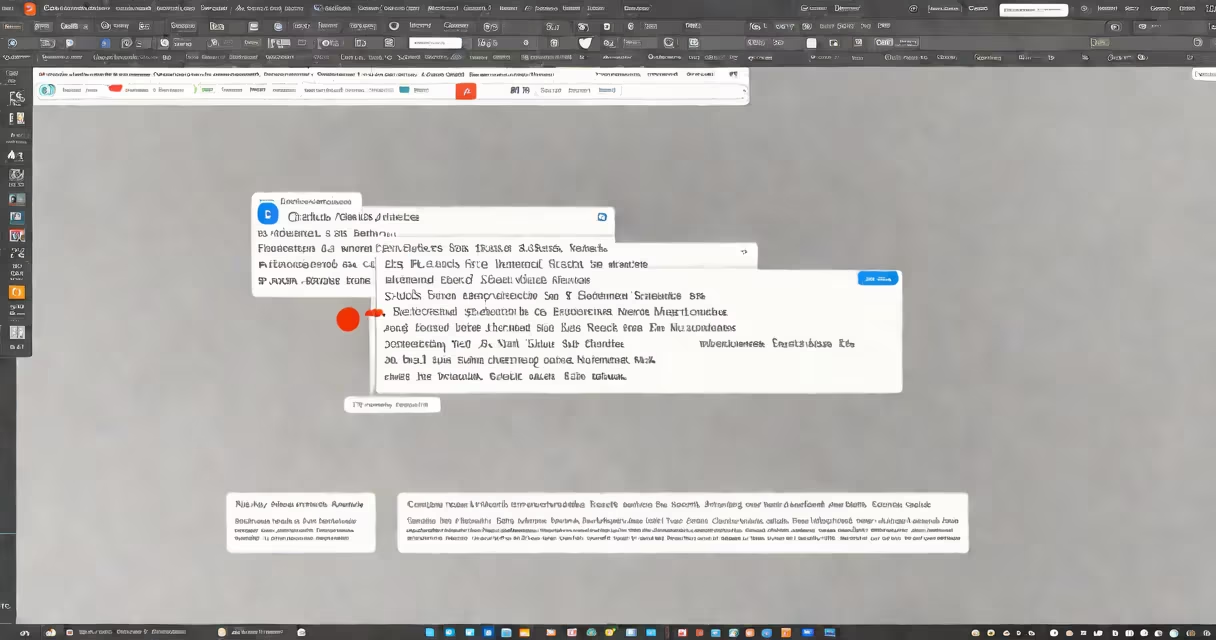
Grammarly rewrite sentences is an AI-powered feature that rephrases your original text to improve clarity, tone, and grammar while preserving the intended meaning. It analyzes syntax, word choice, and context to suggest alternative versions that sound more natural or professional.
The tool operates in real time as you type, scanning each sentence for issues like awkward phrasing, passive voice, redundancy, or informal tone. When a sentence is flagged, Grammarly offers multiple rewritten options based on style preferences-academic, casual, formal, or concise. You can accept, reject, or modify any suggestion directly in the editor.
For example, typing "I done went to the store" triggers a rewrite suggestion: "I went to the store." The tool corrects both grammar and tense while simplifying the structure. More complex sentences, such as "The reason we did it was because we needed money," become "We did it because we needed money," removing redundancy and improving flow.
Grammarly rewrite sentences uses machine learning models trained on millions of edited texts from academic journals, news articles, and professional documents. These models identify patterns in effective writing and apply them to user input.
When you enter a sentence, the system breaks it into syntactic components-subject, verb, object, modifiers-and evaluates each for readability, tone, and grammatical accuracy. It then generates alternatives using a combination of rule-based logic and neural network predictions.
For instance, a sentence like "She is very smart and she can do everything" may be rewritten as "She's highly capable and excels in many areas." The tool replaces vague descriptors ("very smart") with stronger, more precise language and reduces repetition.
Grammarly offers several rewrite modes tailored to different contexts:
| Mode | Best For | Example Before | Example After |
|---|---|---|---|
| Clear & Simple | Emails, messages, quick drafts | "I think that maybe we should go." | "Let's go." |
| Formal | Business proposals, academic work | "This is a good idea." | "This proposal demonstrates strong potential." |
| Concise | Presentations, social media, headlines | "Because of the fact that it was raining..." | "Since it was raining..." |
| Polite | Courtesy emails, customer service replies | "You're wrong." | "I see your point, but I'd like to offer a different perspective." |
Each mode adjusts vocabulary, sentence structure, and tone. The tool doesn't just fix errors-it adapts language to audience and purpose.
Many users assume Grammarly rewrite sentences always improves text. That's not true. The tool sometimes favors brevity over precision or replaces detailed expressions with generic ones.
For example, a sentence like "The results were inconclusive, but they suggested a trend" might be rewritten as "The results were unclear." The original version acknowledges uncertainty while still recognizing partial evidence. The rewrite loses subtle meaning.
A 2023 study by the University of Washington found that AI writing tools like Grammarly reduced wordiness in 87% of test cases but altered the author's intent in 14% of edits-especially in technical or creative writing. The researchers advised users to review all suggestions critically.
Another common error: overcorrection of passive voice. While passive constructions are often weaker, they're appropriate in scientific writing. Grammarly may flag "The experiment was conducted by the team" and suggest "The team conducted the experiment"-but in a lab report, the original phrasing is standard and preferred.
I tested Grammarly rewrite sentences on a draft of a grant application. The original sentence: "We have been doing research on climate change for five years." Grammarly suggested: "Our team has been researching climate change for five years."
While the change improved formality, it removed the emphasis on collective effort implied by "we have been doing." The original phrasing better reflected team ownership. I rejected the suggestion and kept the original.
Grammarly also struggles with idioms and cultural references. A sentence like "That plan is a dead man walking" might be rewritten as "That plan is unlikely to succeed." The meaning is preserved, but the original's rhetorical force is lost.
For high-stakes writing-legal contracts, medical reports, or creative fiction-manual review is essential. Grammarly is a drafting aid, not a replacement for editorial judgment.
Use grammarly rewrite sentences for initial drafts, emails, or social media posts where speed and clarity matter. It's especially useful for non-native English speakers who want to sound more natural.
Don't rely on it for sensitive or legally binding documents. Avoid using it on creative writing where voice and rhythm are central. Always compare the original and rewritten versions side by side.
Grammarly rewrite sentences is useful-but not infallible. It's a tool, not a judge. Use it to refine, not replace, your own voice.