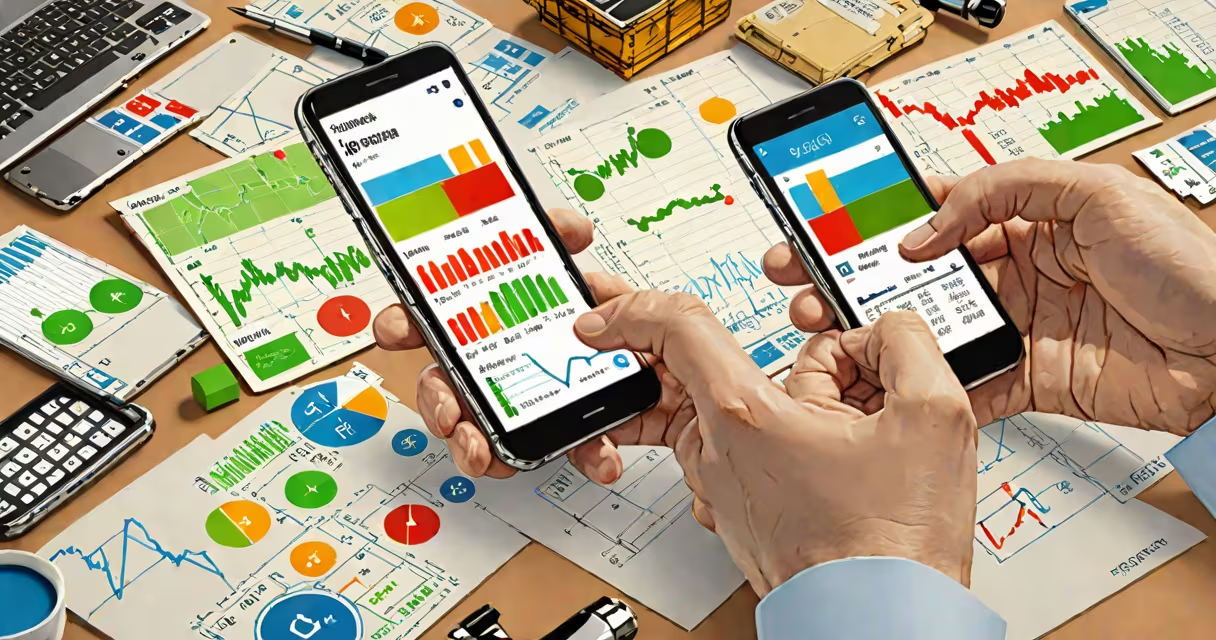
Starting in the stock market means opening a brokerage account, depositing funds, and purchasing shares of publicly traded companies through a regulated platform. You don't need large capital to begin-many platforms allow trades with as little as $1.
The process begins with selecting a licensed online broker. These firms act as intermediaries between investors and exchanges like the New York Stock Exchange (NYSE) or Nasdaq. Brokers provide access to real-time pricing, order execution, and account management tools. Most offer mobile apps and web interfaces compatible with smartphones and desktops.
Once you choose a broker, complete the application. This includes providing government-issued ID, Social Security Number (SSN), and address verification. After approval, fund your account via bank transfer, wire, or debit card. Minimum deposits vary-some brokers require $0, others $100. Once funded, you can search for stocks by ticker symbol, name, or sector.
After opening your brokerage account, you'll receive login credentials and access to a dashboard. The interface displays your balance, recent trades, watchlists, and portfolio performance. You can place different types of orders: market orders (execute at current price), limit orders (buy/sell at a set price), and stop-loss orders (automatically sell if price drops).
For example, if you want to buy Apple Inc. (AAPL), enter "AAPL" into the search bar. The system shows the current bid and ask prices. A market order executes immediately at the best available price-say, $178.25 per share. If you place a limit order at $175, the trade only happens if the price reaches or drops below that level.
Orders are routed to exchanges or alternative trading systems. Execution typically takes seconds. After purchase, the shares appear in your portfolio under "Holdings." You can monitor their value daily, receive dividend notifications, and sell later at a profit or loss.
There are two primary account types: individual taxable accounts and retirement accounts like IRAs. Taxable accounts allow unrestricted withdrawals but incur capital gains taxes on profits. IRAs offer tax advantages-contributions may be tax-deductible, and earnings grow tax-deferred until withdrawal.
| Account Type | Best For | Minimum Deposit | Tax Treatment |
|---|---|---|---|
| Standard Brokerage (Taxable) | Short-term investing, flexible access | $0 | Capital gains taxed annually |
| Traditional IRA | Long-term retirement savings | $0 | Contributions tax-deductible; withdrawals taxed |
| Roth IRA | Future tax-free growth | $0 | Contributions not deductible; qualified withdrawals tax-free |
Brokerage platforms differ in fees, research tools, and educational resources. Firms like Fidelity, Charles Schwab, and Interactive Brokers offer advanced charting, news feeds, and analyst reports. Others, such as Robinhood and Webull, focus on simplicity and low-cost trades-Robinhood charges $0 for commission on most U.S. stocks and ETFs.
A common mistake is assuming all brokers are equal. Some charge hidden fees for margin trading, inactivity, or account closure. Always review the fee schedule before opening an account. According to the SEC, nearly 40% of retail investors have experienced unexpected charges due to unclear fee structures.
Many beginners think they need hundreds of thousands to start investing. That's false. You can begin with $10. The key is consistency-not size. Dollar-cost averaging (DCA)-investing a fixed amount regularly-reduces risk from market volatility. For example, investing $50 monthly in SPY (an S&P 500 ETF) over 10 years averages out price swings and builds position gradually.
Another myth is that stock picking guarantees returns. In reality, 70% of actively managed mutual funds underperform the S&P 500 over 10-year periods, according to SPIVA's 2023 report. Index funds and ETFs often outperform individual stock picks due to diversification and lower fees.
I once watched a friend invest $5,000 in a single tech stock during a hype cycle. He bought at peak momentum, then panicked when the price dropped 30%. He sold at a loss. His mistake wasn't the stock-it was emotional timing. The market corrects. Patience beats prediction.
She funds her account with $200 via direct deposit from her checking account. Within 24 hours, the money clears. She searches for "TSLA" and sees the stock is trading at $198. She places a market order for 1 share. The trade executes instantly. Her account now shows 1 share of Tesla, valued at $198.
She sets a recurring $25 auto-investment every month. Over time, she builds exposure without timing the market. She tracks performance using the broker's built-in portfolio tracker. After six months, her holdings grow to $2,100 in value, including dividends and reinvested gains.
This model works because it removes emotion, enforces discipline, and leverages compounding. Even small amounts grow over decades. A $100 monthly investment at 7% annual return compounds to $150,000 in 30 years.
Track real-world performance with tools like Yahoo Finance or Google Finance. Monitor fundamentals-P/E ratios, revenue growth, debt levels-before investing. For example, ASML Holding NV (ASML) rose 120% in 2023 due to strong demand for semiconductor manufacturing equipment. Its P/E ratio of 35 reflects investor confidence in long-term growth.
Begin with low-risk assets: index funds, ETFs, or blue-chip stocks. Avoid leveraged products, options, or penny stocks unless you've studied them thoroughly. The goal isn't to win quickly-it's to build wealth steadily.
Understanding how to start stock market isn't about predicting the future. It's about consistent action, disciplined learning, and staying informed. With the right foundation, anyone can begin investing-even with just $10.