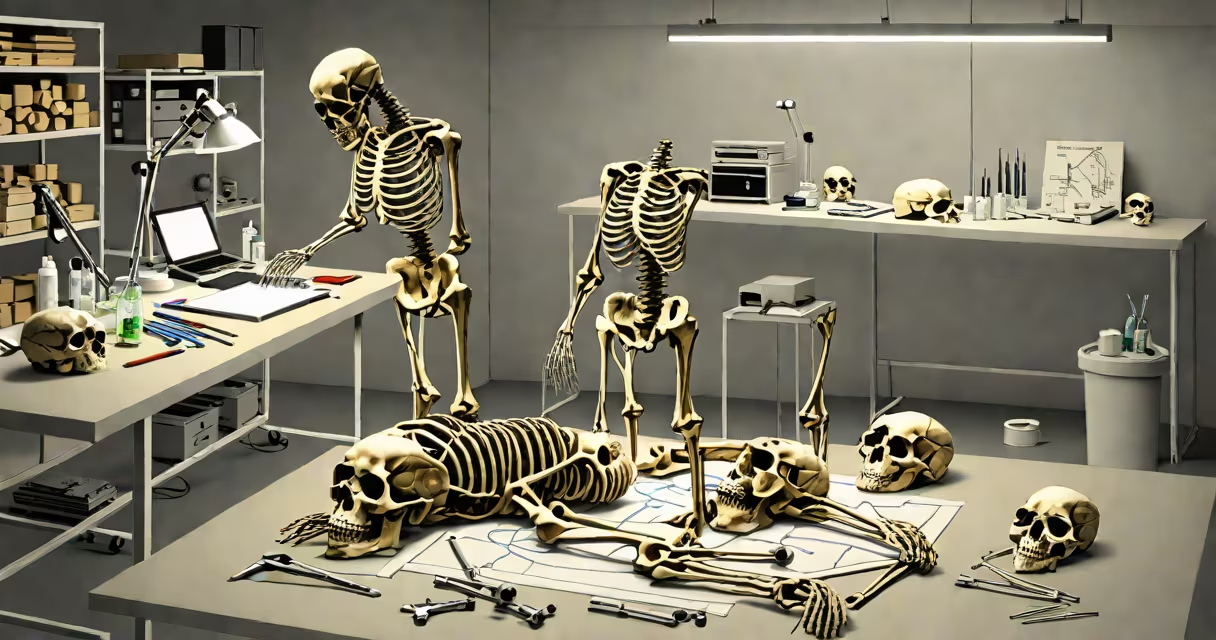
To become a forensic anthropologist, you must earn a doctoral degree in physical anthropology, complete specialized training in human osteology and forensic analysis, and gain hands-on experience through internships or fieldwork. This role focuses on analyzing human skeletal remains to assist in criminal investigations, disaster victim identification, and historical research.
Forensic anthropology is a branch of applied physical anthropology that uses scientific methods to analyze bones. It plays a critical role in identifying individuals when soft tissue is absent or decomposed. Forensic anthropologists work with law enforcement, medical examiners, and legal teams to determine age, sex, ancestry, stature, and trauma patterns from skeletal evidence. Their findings help establish identity and cause of death in cases involving missing persons, mass disasters, or violent crime.
The field requires advanced academic training and practical experience. A bachelor's degree in anthropology or a related science is the first step. Students then pursue a master's and a PhD in physical anthropology with a focus on forensic applications. Research and laboratory work during graduate school build expertise in bone morphology, decomposition processes, and statistical analysis of skeletal data.
Most forensic anthropologists hold a PhD in physical anthropology from an accredited university. Programs typically require coursework in human biology, genetics, anatomy, and statistics. Students must also complete original research, often involving the analysis of human skeletal collections or simulated crime scenes.
Key courses include:
Students often participate in field schools hosted by universities or government agencies. These programs simulate real-world conditions, such as recovering remains from a clandestine grave or a natural disaster site. For example, the University of Tennessee's Anthropology Research Facility (popularly known as the "Body Farm") offers training in decomposition and recovery under controlled conditions.
Forensic anthropologists use both traditional and digital tools. They examine bones using calipers, rulers, and reference charts to measure dimensions and identify traits. Digital imaging software allows for 3D reconstruction of skulls and facial features based on cranial morphology.
A common task is estimating postmortem interval (PMI) using insect activity, soil composition, and bone weathering. For instance, in a 2019 case in Texas, a forensic anthropologist determined a body had been buried for approximately 18 months by analyzing root penetration and soil displacement around the skeleton.
Another essential skill is distinguishing between human and non-human bone. Misidentification can lead to false conclusions. A 2020 study published in *Journal of Forensic Sciences* found that 12% of initial identifications in rural cases were incorrect due to misclassification of animal remains as human.
Forensic anthropologists do not perform autopsies. That responsibility lies with medical examiners and pathologists. Anthropologists analyze bones after death, while pathologists examine soft tissues and internal organs. Confusing the two roles leads to misunderstandings about jurisdiction and workflow in death investigations.
Also, forensic anthropology is not synonymous with forensic science. While both fields support criminal investigations, forensic science includes disciplines like DNA analysis, toxicology, and fingerprinting. A forensic anthropologist may collaborate with a forensic biologist, but their expertise lies in skeletal remains, not fluid samples or trace evidence.
There is no single certification for forensic anthropologists. Instead, professional credibility comes from peer-reviewed publications, conference presentations, and membership in organizations like the American Academy of Forensic Sciences (AAFS). The AAFS requires members to meet strict standards in education, experience, and ethics.
After completing a PhD, candidates often seek postdoctoral fellowships or temporary positions with federal agencies. The U.S. Armed Forces Medical Examiner System and the FBI's Human Remains Identification Unit hire forensic anthropologists to assist in identifying victims of war, terrorism, or natural disasters.
For example, following the 2004 Indian Ocean tsunami, forensic anthropologists from the International Commission on Missing Persons helped identify over 12,000 victims using dental records, DNA, and skeletal analysis. Their work was instrumental in returning remains to families and supporting legal proceedings.
I once observed a team of forensic anthropologists working with local police in rural Kentucky to recover skeletal remains from a collapsed mine shaft. The team used ground-penetrating radar to locate disturbances in the earth, then carefully excavated the site using trowels and brushes. After documenting the position and orientation of each bone, they reconstructed the individual's posture and estimated time since death based on soil moisture and microbial activity.
Understanding the differences between related careers helps clarify the unique role of a forensic anthropologist.
| Path | Education Required | Primary Focus | Work Environment |
|---|---|---|---|
| Forensic anthropologist | PhD in physical anthropology | Skeletal remains, trauma, identification | Laboratory, field sites, courtrooms |
| Forensic scientist | Bachelor's in chemistry, biology, or forensic science | DNA, fingerprints, drug analysis | Crime labs, police departments |
| Medical examiner | MD or DO with pathology residency | Autopsy, internal injuries, cause of death | Hospital morgues, coroner offices |
While all three roles contribute to solving deaths, their methods and scopes differ. A forensic anthropologist cannot interpret a blood alcohol level, nor can a medical examiner reconstruct a skull from fragments without specialized training.
One non-obvious fact: many forensic anthropologists begin their careers in academia. They teach at universities while consulting on active cases. This dual role allows them to publish research, train students, and maintain access to museum-quality skeletal collections for comparison.
If you are considering this path, start with a bachelor's degree in anthropology or biology. Take courses in anatomy, statistics, and research methods. Seek out volunteer opportunities at archaeological digs or university labs. Applying to graduate programs requires strong letters of recommendation, a clear statement of purpose, and a record of independent research.
Completing a doctorate in physical anthropology is the standard route to becoming a forensic anthropologist. The work demands precision, ethical rigor, and emotional resilience. Success depends not just on academic achievement but on consistent field experience and collaboration with multidisciplinary teams.