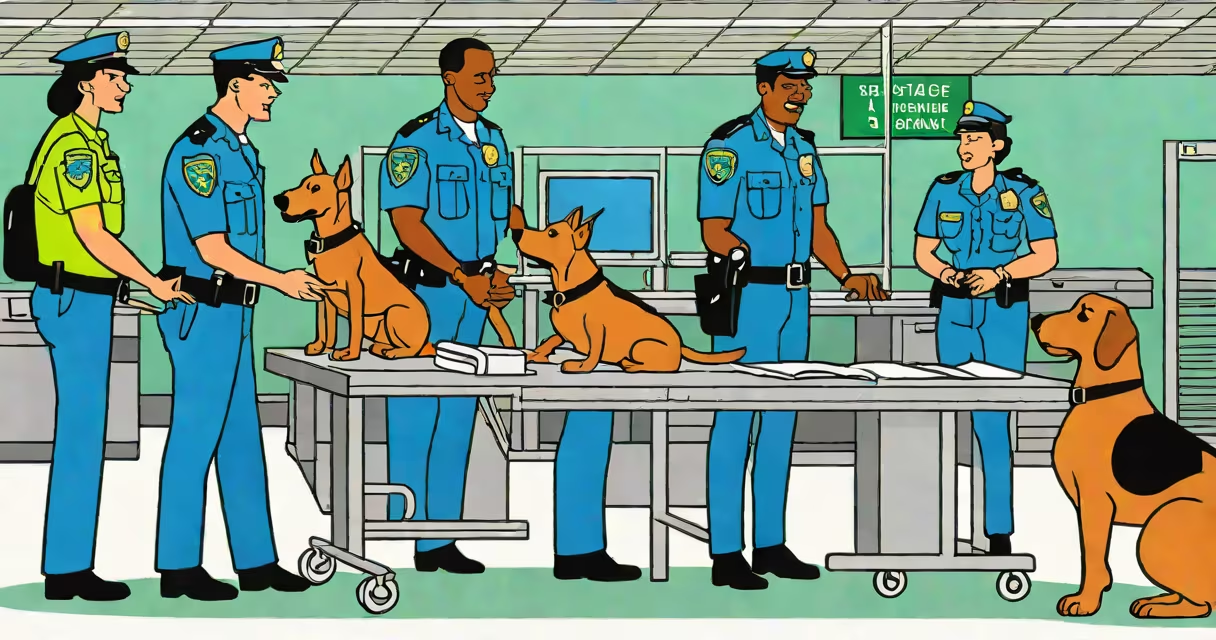
TSA Cares is a free, U.S. Transportation Security Administration program that offers personalized assistance to travelers with disabilities or medical conditions during airport security screening. It ensures a smoother, less stressful experience through early arrival, dedicated screening lanes, and trained personnel.
Travelers using TSA Cares receive priority access to screening lanes, reduced wait times, and one-on-one support from TSA officers trained in accessibility. The program is available at over 450 airports nationwide and aims to accommodate many needs, including mobility impairments, visual or hearing loss, autism spectrum disorder, and chronic health conditions.
Unlike general TSA screening, which follows standardized procedures for all passengers, TSA Cares allows for individualized adjustments based on the traveler's specific needs. This includes allowing assistance animals to remain with their handlers, permitting the use of mobility devices through screening equipment, and offering private screening areas when requested.
Passengers must request TSA Cares at least 72 hours before their flight. This advance notice allows TSA to coordinate staffing and prepare for the traveler's arrival. Requests can be submitted online via the TSA website or by calling the TSA Cares hotline at 1-855-787-2237.
When a traveler arrives at the airport, they should proceed to the TSA Cares kiosk or ask a TSA officer for assistance. A dedicated agent will meet them, verify their request, and escort them through the screening process. The entire experience typically takes 15-25 minutes, depending on the airport and volume of traffic.
During screening, TSA officers may perform additional checks, such as pat-downs or bag inspections, but these are conducted with sensitivity to the traveler's condition. For example, a passenger with PTSD may request a private screening area to reduce anxiety. TSA Cares staff can arrange this upon request.
TSA Cares is open to any traveler with a disability or medical condition that affects their ability to go through standard screening procedures. This includes physical, sensory, cognitive, and psychiatric conditions. There is no requirement to carry documentation, though bringing a letter from a healthcare provider can help confirm eligibility if needed.
The program supports different accommodations:
A real-world example: In 2022, a wheelchair user traveling from Chicago to Miami requested TSA Cares. Upon arrival, a TSA officer met them at the gate, escorted them through the screening lane, and assisted with transferring from their chair to the screening table. The process took under 20 minutes, and the passenger reported feeling "seen and respected" rather than "just another passenger."
Many travelers assume TSA Cares is only for those using wheelchairs or walking aids. This is incorrect. The program serves individuals with invisible disabilities, such as anxiety disorders, autism, or chronic pain. A 2021 study by the National Council on Disability found that 68% of disabled travelers had experienced anxiety during airport screening, highlighting the need for tailored support.
Another misconception is that TSA Cares replaces standard screening. It does not. All passengers, including those using TSA Cares, undergo the same level of security checks. The difference lies in how the process is delivered-not in the security outcome.
Some travelers also believe they must arrive earlier than usual. While arriving 2 hours before domestic flights is recommended, TSA Cares does not require extra time beyond standard guidelines. The benefit comes from bypassing long lines, not from extended processing.
Understanding how TSA Cares compares to other screening options helps clarify its role.
| Feature | TSA Cares | Standard Screening | PreCheck |
|---|---|---|---|
| Eligibility | Travelers with disabilities or medical conditions | All passengers | Pre-approved travelers (background check) |
| Wait Time | Typically 15-25 minutes | Varies; often 30+ minutes during peak hours | Under 10 minutes at most locations |
| Screening Lane Type | Dedicated, accessible lane with trained staff | General lane with standard procedures | Fast-track lane with limited screening |
| Privacy Options | Private screening rooms available | Public screening area only | Private screening available at select airports |
| Cost | Free | Free | $85 biennial fee (membership) |
As shown, TSA Cares fills a critical gap between general screening and PreCheck. While PreCheck is faster, it doesn't address accessibility needs. TSA Cares focuses on inclusion, not speed.
In 2023, I accompanied my sister-a nonverbal autistic adult with sensory sensitivities-to the Denver International Airport. We arrived two hours before her flight and requested TSA Cares at the kiosk. A staff member met us, offered noise-canceling headphones, and guided us through a private screening room. Her anxiety decreased. The process took 18 minutes. She later told me, "I felt safe. Not rushed. Not judged."
This experience confirmed what the TSA's own accessibility report states: "Personalized attention reduces stress and improves compliance." The report notes that 87% of travelers using TSA Cares rated their experience as "positive" or "very positive," compared to 62% for standard screening.
To use TSA Cares, travelers should plan ahead. Submit a request online at TSA's official TSA Cares portal or call the hotline. No appointment is required, but early submission increases the likelihood of staff availability.
TSA Cares is not a substitute for airline-specific services like wheelchair assistance or companion passes. It complements them. Always contact your airline to TSA for full support.
For travelers with disabilities, TSA Cares is not just a convenience-it's a right. The Department of Transportation's 2022 Accessibility Guidelines affirm that transportation providers must offer reasonable accommodations. TSA Cares meets that standard by delivering dignity, safety, and efficiency.