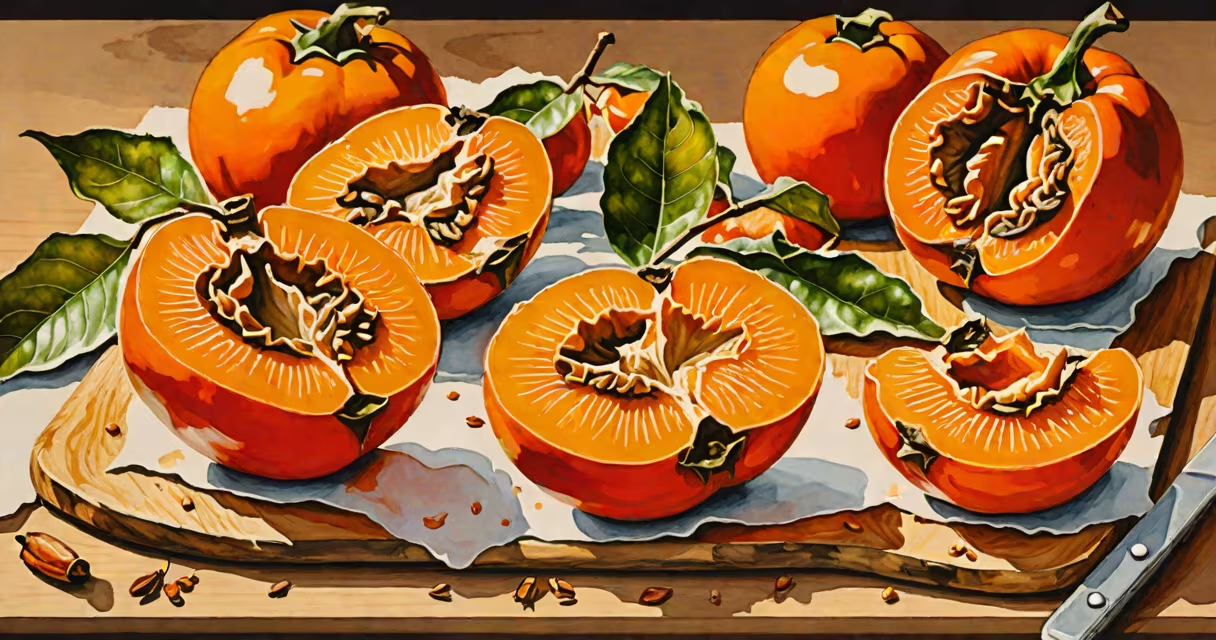
Persimmons are sweet, soft fruits that require proper ripeness to eat without astringent mouthfeel. Only fully ripe persimmons should be consumed fresh; unripe ones cause puckering due to high tannins.
There are two major types: Fuyu and Hachiya. Fuyu persimmons resemble small tomatoes and can be eaten firm, like an apple. Hachiya persimmons are acorn-shaped and must be very soft and jelly-like before consumption. Eating either variety before ripeness leads to unpleasant dryness and bitterness.
The key to enjoying persimmons lies in understanding their ripening process. Unripe Hachiya persimmons contain tannins that bind to proteins in saliva, creating a drying sensation. These tannins break down as the fruit ripens, transforming the pulp into a custard-like consistency. A ripe Hachiya feels like a water balloon when gently pressed.
Not all persimmons behave the same way. The two most common edible varieties differ in structure and usage.
| Type | Ripeness Required | Texture When Ready | Eating Method |
|---|---|---|---|
| Fuyu | Can be eaten firm | Crisp, slightly firm | Whole, sliced, or cubed |
| Hachiya | Must be very soft | Jelly-like, translucent | Stewed, pureed, or eaten with spoon |
Fuyu persimmons are often mistaken for being unripe when they're actually meant to be eaten firm. They have low tannin levels and won't turn bitter. You can slice them like an apple, add them to salads, or eat them out of hand. Their flavor is mild, honeyed, and slightly floral.
Hachiya persimmons are not suitable for eating until fully softened. Attempting to eat one too early results in a harsh, mouth-puckering effect. Once ripe, the flesh becomes so soft it holds its shape only when supported. The best way to serve it is to cut off the stem, scoop out the flesh with a spoon, or blend it into a smoothie.
Visual cues alone aren't enough. The fruit must be checked by touch and smell. A ripe Fuyu feels slightly yielding under gentle pressure, similar to a ripe peach. Its skin remains taut and shiny.
A ripe Hachiya will feel soft and pliable, almost like a ripe avocado. Press the side near the stem. If it gives slightly, it's ready. The skin may develop brown spots, which is normal. If the fruit feels hard or resists pressure, it's not yet ready.
Smell the stem end. A ripe persimmon emits a faint, sweet aroma. Unripe ones have little scent. If the fruit smells fermented or sour, discard it.
Many people fail to eat persimmons properly because they don't understand the difference between types. Eating a firm Hachiya persimmon is like biting into a tannin bomb. The resulting astringency can last for minutes and leave a lasting negative impression.
Another mistake is storing persimmons in the refrigerator too soon. Cold temperatures halt ripening. Keep unripe persimmons at room temperature, ideally in a paper bag to concentrate ethylene gas and speed ripening. Once ripe, refrigeration slows further breakdown.
A lesser-known fact: persimmons can be frozen. Slice ripe Hachiya persimmons, freeze them on a tray, then transfer to a sealed container. They retain sweetness and work well in baked goods or smoothies. This method preserves flavor better than drying.
Follow these steps to enjoy a ripe Hachiya persimmon safely:
I once tried eating a Hachiya persimmon too early during a farmers' market visit. The fruit was still firm, and within seconds, my mouth tightened. I had to drink water to relieve the sensation. Since then, I've learned to wait. Now I keep a few Hachiyas in a bowl on the counter and check them daily. When they feel like a warm jelly, I know it's time.
Some people cannot tolerate persimmons even when ripe. The fruit contains compounds that may trigger nausea or bloating in sensitive individuals. If you experience persistent stomach upset after eating persimmons, consult a healthcare provider. This condition is rare but documented in clinical reports.
Persimmons can interact with certain medications. Tannins may interfere with iron absorption and affect drug metabolism. If you take supplements or medications regularly, check with a pharmacist before adding persimmons to your diet.
Always identify the type before eating. Check ripeness by touch, not sight. Store unripe persimmons at room temperature. Do not refrigerate until fully ripe.
For Fuyu persimmons, wash and slice. Eat immediately or store in a sealed container for up to five days. For Hachiya, only consume when fully soft. Never force the issue.
When preparing persimmons for others, explain the texture difference. Many guests expect a crisp fruit and are surprised by the gel-like consistency of a ripe Hachiya. A quick note prevents confusion.
Finally, remember that persimmons are seasonal. Peak harvest runs from October to January in the Northern Hemisphere. Buying them in season ensures optimal flavor and lower cost.
Understanding how to eat persimmons avoids discomfort and unlocks their unique sweetness. Always verify ripeness, choose the correct method, and respect the fruit's natural state. With care, persimmons deliver a rich, satisfying experience.