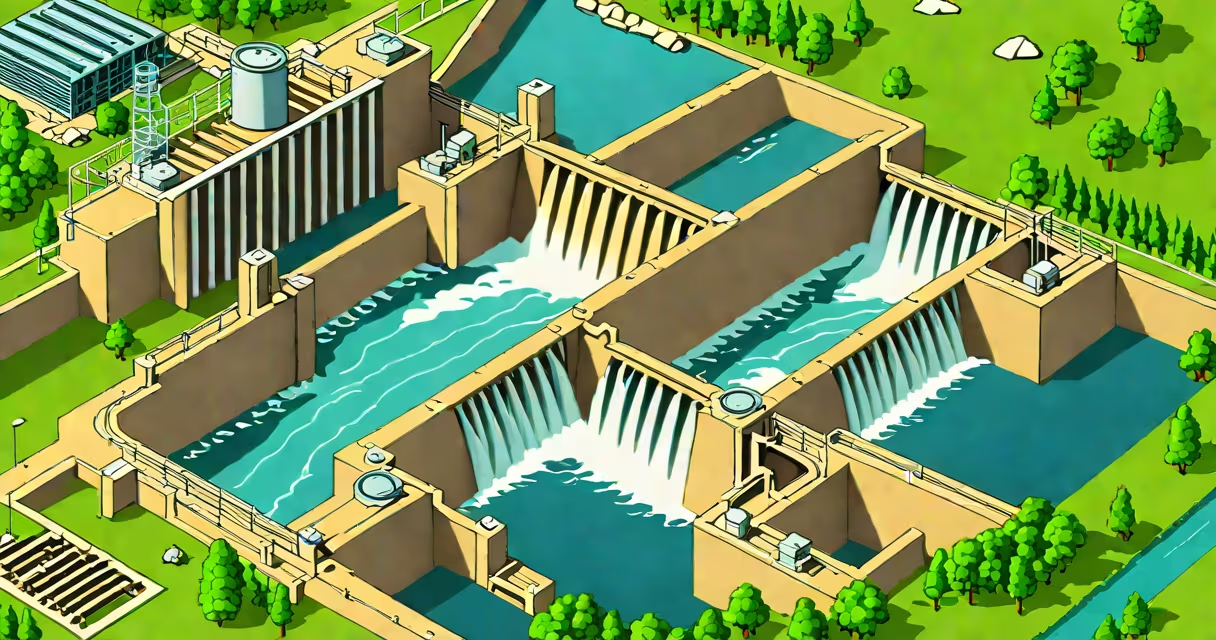
Hydropower generates electricity by converting the kinetic energy of moving water into mechanical energy via turbines, which then drive generators. This process relies on gravity and water flow, typically from dams or rivers, to produce consistent, low-carbon power.
At its core, hydropower uses the natural movement of water to spin turbines connected to electrical generators. Water flows from a higher elevation to a lower one, passing through a turbine. As the blades turn, they rotate a shaft linked to a generator, producing electricity through electromagnetic induction. The amount of power generated depends on water volume and drop height-known as head. A 10-meter head with 10 cubic meters per second of flow can yield around 1 megawatt of continuous output.
Most large-scale hydropower plants use dams to store water in reservoirs. When electricity demand rises, water is released through penstocks-large pipes-to drive turbines. After passing through, water exits the system and returns to the river downstream. Smaller systems, like run-of-river installations, don't require large reservoirs and rely on constant river flow, minimizing environmental disruption.
Hydropower systems follow a clear sequence: water enters through an intake, travels down a penstock under pressure, strikes turbine blades, spins the rotor, and activates a generator. The resulting alternating current is stepped up via transformers and sent to the grid. Once the turbine turns, the generator's magnetic field induces electric current in copper windings.
A typical hydroelectric plant operates continuously during peak flow periods. For example, the Grand Coulee Dam in Washington State, the largest U.S. hydropower facility, produces up to 6,809 megawatts-enough to power over 2 million homes annually. Its 28 turbines each handle 240 megawatts, driven by water falling 320 feet from Lake Roosevelt.
Some systems use pumped storage, where excess off-peak electricity pumps water uphill into a reservoir. During high-demand hours, the stored water is released to generate power. This acts as a battery for the grid. The Bath County Pumped Storage Station in Virginia holds 2.5 billion gallons and can deliver 3 gigawatts of power within minutes.
Hydropower projects fall into three main categories based on scale and infrastructure:
| Type | Capacity Range | Infrastructure Needs | Use Case |
|---|---|---|---|
| Dam-based (reservoir) | 10 MW - 10 GW | Large dam, reservoir, spillways | Grid-scale baseload power, flood control |
| Run-of-river | 100 kW - 10 MW | No reservoir; channel diversion | Remote communities, minimal ecological impact |
| Pumped storage | 100 MW - 3 GW | Twin reservoirs, reversible turbines | Grid balancing, energy storage |
Run-of-river systems avoid flooding vast areas. The Kootenai River project in Montana uses a 1.5-megawatt turbine installed in a natural river channel, supplying power to nearby towns without altering the river's flow.
Pumped storage is unique because it consumes electricity to pump water uphill and later recovers it. The Dinorwig Power Station in Wales stores 1.4 terawatt-hours of energy and can reach full output in under 12 seconds-a capability unmatched by most batteries.
Hydropower is often mistaken for tidal or wave energy. While both use water motion, tidal systems depend on ocean tides, not river flow or dam releases. Tidal barrages, like the La Rance plant in France, capture energy from rising and falling sea levels. They're limited to coastal regions with strong tidal ranges.
Another misconception is that all hydropower causes major environmental harm. While large dams can disrupt fish migration and displace communities, modern designs incorporate fish ladders and bypass channels. The Elwha Dam removal in Washington State, completed in 2014, restored salmon runs after 100 years of blocked access. Fish passage efficiency improved from 10% to over 90% in monitored sections.
Not all hydropower is renewable in practice. Some reservoirs emit methane due to decomposing organic matter trapped underwater. A 2021 study in *Nature* found that tropical reservoirs can release more greenhouse gases per unit of energy than coal plants in certain cases. However, temperate reservoirs like those in Norway show negligible emissions.
I once visited the Hoover Dam on the Colorado River and watched the water flow through its intake towers. The sheer volume-over 100,000 cubic feet per second during spring runoff-was overwhelming. Inside the powerhouse, eight generators each produced 130 megawatts, totaling 1,040 megawatts. The sound of spinning turbines echoed through steel corridors, a constant hum beneath the roar of water.
That visit clarified how hydropower integrates with regional grids. The dam supplies power to Nevada, Arizona, and California. During summer peaks, it adjusts output to meet demand. On average, it generates 4 billion kilowatt-hours annually-enough to serve 1.5 million homes.
Hydropower how it works is not just about physics-it's about engineering trade-offs. Balancing energy output, environmental impact, and community needs defines modern deployment. Countries like Norway derive over 90% of their electricity from hydropower, while China leads global capacity with over 390 gigawatts installed.
For smaller-scale users, micro-hydro systems can power remote cabins using just 10 liters per second of stream flow. A single 5-kilowatt unit in rural Nepal replaced kerosene lamps and reduced indoor air pollution. These systems prove hydropower isn't just for national grids-it scales down effectively.
Understanding hydropower how it works reveals a mature, adaptable technology. It's not a futuristic concept-it's operational today across continents. From massive dams to tiny turbines in mountain streams, it converts gravity and flow into usable electricity with minimal fuel costs and near-zero emissions during operation.